
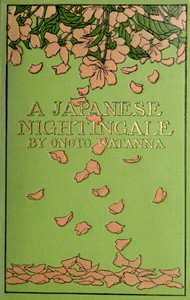
A Japanese Nightingale by Onoto Watanna
Published in 1901, 'A Japanese Nightingale' feels both of its time and startlingly modern. It’s a slim novel that packs a quiet emotional punch.
The Story
We meet Yuki, a beautiful and clever musume (young woman) in Tokyo. Her family is in dire financial straits. Enter Jack Bigelow, a rich American drawn to the 'mysterious Orient.' A deal is struck: Yuki will marry Jack in a temporary, contractual union. She gets money for her family; he gets a beautiful, 'authentic' Japanese companion to show off. Yuki, however, is no passive victim. She actively plays the part of the demure, bird-like 'Japanese nightingale' that Jack desires—singing for him, dressing the part, feeding his fantasy. But the lines between performance and reality start to blur for both of them. Jack begins to wonder if the real Yuki is more than the charming act, and Yuki grapples with her own growing, complicated feelings for the man who essentially owns her time.
Why You Should Read It
What grabbed me was how layered this story is. On the surface, it’s a cross-cultural romance. But scratch that surface, and you find a sharp commentary on performance and power. Yuki is incredibly aware. She knows exactly what stereotype Jack wants, and she gives it to him brilliantly. It’s a survival tactic, but it’s also deeply lonely. You feel her frustration when Jack misses the real intelligence and strength behind her 'act.' The author, Onoto Watanna (the pen name for Winnifred Eaton), was herself of mixed Chinese-British descent writing as a Japanese woman for a Western audience. That adds a fascinating, meta layer to Yuki’s story of cultural performance. It makes you think: who gets to tell a story, and for whom?
Final Verdict
This book is perfect for readers who love historical fiction with a smart, subversive edge. If you enjoyed the nuanced relationships in novels like 'The Remains of the Day' or the cultural explorations of early Amy Tan, you'll find a lot to love here. It’s also a must-read for anyone interested in early Asian American literature. Don't expect a fast-paced plot or grand declarations of love. The magic is in the subtlety—in what’s said with a sigh, a turned head, or a perfectly executed tea ceremony that’s really a silent rebellion. It’s a haunting, beautiful little book that stays with you.
This is a copyright-free edition. It is now common property for all to enjoy.
Patricia Perez
6 months agoImpressive quality for a digital edition.
Nancy Smith
10 months agoThe analytical framework presented is both innovative and robust.
William Moore
1 year agoAfter a thorough walkthrough of the table of contents, the inclusion of diverse viewpoints strengthens the overall narrative. Top-tier content that deserves more recognition.
Patricia Brown
2 years agoThe analytical framework presented is both innovative and robust.




George Smith
9 months agoI took detailed notes while reading through the chapters and the step-by-step breakdown of the methodology is extremely helpful for students. A refreshing and intellectually stimulating read.