
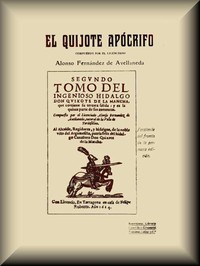
El Quijote apócrifo by Alonso Fernández de Avellaneda
Let's set the scene: It's 1614. Miguel de Cervantes's Don Quixote is the biggest book in Spain. Everyone is waiting for the promised second part. Then, out of nowhere, a book appears claiming to be that sequel. The author? A nobody named Alonso Fernández de Avellaneda (almost certainly a fake name). This book continues the adventures of the Knight of the Sorrowful Face and his squire, but it feels like a cheap imitation painted in ugly colors.
The Story
Avellaneda's Quixote and Sancho leave home again, but the soul of the story is gone. Their adventures are less about chivalric ideals and more about random, often cruel, encounters. Don Quixote isn't a tragically noble dreamer here; he's just a nasty, belligerent madman. Sancho Panza loses all his clever wit and becomes a gluttonous idiot. They travel to Zaragoza for a tournament (which Cervantes had mentioned in his first book), get into fights, and eventually, Don Quixote is captured and locked up in an asylum called the House of the Naked. The story ends with him being cured of his madness and becoming a boring, sensible man named Alonso Quijano once more. It's a flat, unsatisfying ending that tries to shut the book on Cervantes's iconic character for good.
Why You Should Read It
You don't read this book for a great story. You read it for the incredible real-world drama behind it. Holding this book is like holding a historical artifact of pure spite. Every page buzzes with the question: Who was Avellaneda, and why was he so angry? The introduction alone is a legendary insult, directly attacking Cervantes as an old, envious cripple. Reading this, you get a front-row seat to one of literature's first and biggest controversies. It also makes you appreciate Cervantes's genius even more. When you see how badly Avellaneda misses the point—the heart, the humor, the humanity of the original characters—you understand what made Cervantes's work so special. This apocryphal sequel is the dark reflection that makes the real thing shine brighter.
Final Verdict
This is a niche book, but a thrilling one for the right reader. It's perfect for superfans of Don Quixote who have read both parts and want to complete the strange, real-life trilogy. It's also great for literature history nerds who love gossip, feuds, and mysteries. If you've never read Cervantes's masterpiece, start there—this book will make no sense and give you all the wrong impressions. But if you know and love the original, diving into this bizarre, bitter 'fanfic' is a unique and unforgettable experience. It's less of a novel and more of a 400-year-old literary crime scene, and it's utterly compelling.
This masterpiece is free from copyright limitations. Share knowledge freely with the world.
Donna Lopez
1 year agoI was skeptical at first, but the narrative structure is incredibly compelling. One of the best books I've read this year.
Andrew White
6 months agoHonestly, it creates a vivid world that you simply do not want to leave. I will read more from this author.
Mason Wright
1 year agoSolid story.
Nancy Brown
1 year agoJust what I was looking for.

Donna Miller
1 year agoThis is one of those stories where the character development leaves a lasting impact. Absolutely essential reading.