
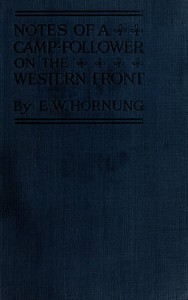
Notes of a Camp-Follower on the Western Front by E. W. Hornung
If you think you know what a World War I memoir sounds like, Notes of a Camp-Follower on the Western Front might surprise you. Forget sweeping battle narratives. This is the personal, day-to-day journal of E.W. Hornung, who spent 1915-1916 visiting the front not as a soldier, but as a writer and a supporter of the troops.
The Story
There isn't a single plot, but a series of vivid snapshots. Hornung travels from one Allied camp to another in France and Belgium, delivering books and small comforts to the men. We see the war through the back door. He describes terrible army tea, the mud that gets into everything, and the incredible patience of the soldiers. He shares conversations with everyone from generals to cooks, capturing their dark humor and quiet resilience. The real tension comes from his own position. He’s a visitor in a world of permanent residents, always aware that he gets to leave and they do not. The story is in the contrast—the normalcy of a shared cigarette against the backdrop of unimaginable violence.
Why You Should Read It
This book gets under your skin because it’s so honest about feeling out of place. Hornung doesn’t pretend to be a hero. His guilt and admiration for the fighting men is palpable. You get the sense of a whole society turned upside down. One minute he's complaining about a bad omelette, the next he's staring at a ruined cathedral. It’s this mix of the mundane and the monumental that makes it feel so real. He also has a novelist’s eye for character, sketching unforgettable portraits of the people he meets with warmth and wit.
Final Verdict
Perfect for readers who prefer the human side of history over military diagrams. If you liked the quiet observation of All Quiet on the Western Front but want a perspective from just outside the trench, this is your book. It’s also a must for fans of Hornung’s fiction, offering a poignant look at the man behind Raffles. Don’t expect epic charges; expect a moving, thoughtful, and often surprisingly funny walk through the quieter corners of a world at war.
This publication is available for unrestricted use. Use this text in your own projects freely.
Linda Anderson
2 years agoLoved it.
Matthew Clark
1 year agoWithout a doubt, the narrative structure is incredibly compelling. Thanks for sharing this review.
Melissa King
2 months agoBeautifully written.


David Johnson
1 year agoAmazing book.