
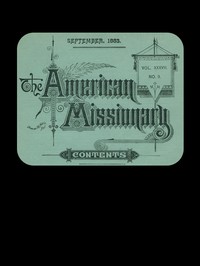
The American Missionary — Volume 37, No. 9, September, 1883 by Various
This isn't a story with a single plot or main character. 'The American Missionary' from September 1883 is a collection of real reports, letters, and appeals. It's the monthly newsletter of an organization dedicated to education and uplift in the aftermath of the Civil War, primarily in the American South.
The Story
The 'story' here is the day-to-day struggle of reconstruction. You read letters from teachers in one-room schoolhouses, describing students hungry to learn but lacking even basic books. You see financial reports that show how desperately every dollar was needed. There are updates on new churches and schools being built, often in the face of local resistance. Arguments are made for why this work is essential to the nation's future. The narrative is the ongoing effort to turn the promise of freedom into a lived reality, against steep odds.
Why You Should Read It
What hit me hardest was the immediacy. History books summarize this era, but here you sit with the people living it. Their frustration is palpable when they beg for more resources. Their small victories—a new student learning to read, a community donating land for a school—feel huge. You get a clear, unvarnished look at the sheer scale of the challenge. It strips away modern hindsight and shows a moment in time where the future was still being written, one difficult decision and hard-won lesson at a time. It's a powerful reminder of the human cost and effort behind broad historical trends.
Final Verdict
This is a niche but incredibly rewarding read. It's perfect for history buffs who want to move beyond textbooks, for anyone interested in the roots of America's social justice movements, or for writers seeking authentic voices from the past. It's not a light read—some sections are dry reports—but the personal letters are gold. If you've ever wondered what it actually felt like to be there, trying to mend a broken country, this volume opens a direct window. Just be ready for a perspective that's challenging, hopeful, and deeply human.
Legal analysis indicates this work is in the public domain. Knowledge should be free and accessible.
Melissa Gonzalez
10 months agoLoved it.
Emily Gonzalez
1 year agoFast paced, good book.
Joseph Ramirez
1 year agoThis is one of those stories where the plot twists are genuinely surprising. I couldn't put it down.
Ava Moore
1 year agoAmazing book.




Kenneth Flores
2 years agoSolid story.