
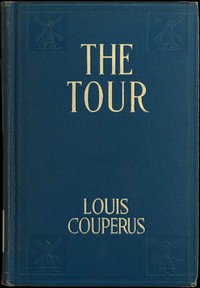
The Tour: A Story of Ancient Egypt by Louis Couperus
Picture this: a steamer full of European tourists chugs along the Nile in the early 1900s. They're there for the pyramids, the temples, the winter sun—a standard grand tour. Their guide is a peculiar Dutch professor, a man whose knowledge of ancient Egypt feels less academic and more... personal. As the group visits majestic sites like Karnak and Luxor, the professor's stories become vivid and immersive. He doesn't just describe history; he seems to channel it, narrating the lives, loves, and intrigues of the pharaohs with unsettling intimacy.
The Story
The plot is deceptively simple on the surface. It's a travelogue that slowly transforms into something else. Through the professor's captivating monologues, the tourists (and we, the readers) are pulled into the dramatic world of the Egyptian New Kingdom. We hear of powerful kings, cunning priests, and divine rituals. The real tension builds not from action, but from atmosphere. The relentless desert sun, the silent, towering statues, and the professor's hypnotic voice create a creeping sense of dislocation. The central question becomes: Is this man a brilliant storyteller, a madman, or something far more mysterious? The journey becomes a dual exploration: of ancient ruins and of the professor's own profound, possibly supernatural, connection to them.
Why You Should Read It
This book surprised me. It’s not a swashbuckling adventure; it’s a slow, hypnotic immersion. Couperus is a master of mood. He makes you feel the heat haze over the river and the weight of centuries in the stone. The real magic is in how he connects two worlds. The tourists, with their modern sensibilities and cameras, are constantly contrasted with the eternal, spiritual world the professor describes. It made me think about how we engage with history today—as a distant spectacle. What if it wasn't so distant? The professor is a fantastic, enigmatic character who will have you guessing until the very end.
Final Verdict
Perfect for readers who love historical fiction with a strong, eerie atmosphere rather than just battles and politics. If you enjoyed the slow-burn mystery of Donna Tartt's The Secret History or the immersive, place-as-character feel of some of Michael Ondaatje's work, you'll find a lot to love here. It's a short, potent novel for anyone who's ever stood in front of an ancient monument and felt a strange, quiet pull from the past. Just be warned: you might look at your next museum visit a little differently.
This historical work is free of copyright protections. Use this text in your own projects freely.
Donald Moore
6 months agoI wanted to compare this perspective with traditional views, the emphasis on ethics and sustainability within the topic is commendable. Thanks for making such a high-quality version available.
Nancy White
5 months agoI decided to give this a try based on a colleague's recommendation, the attention to detail regarding the core terminology is flawless. I appreciate the effort that went into this curation.
Karen Rodriguez
7 months agoVery satisfied with the depth of this material.
Robert Wilson
2 years agoAfter a thorough walkthrough of the table of contents, the wealth of information provided exceeds the average market standard. Truly a masterpiece of digital educational material.





Charles Lopez
7 months agoA must-have for graduate-level students in this discipline.