
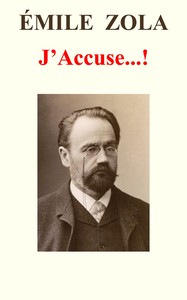
J'accuse...! by Émile Zola
Let's get the plot out of the way first, because 'J'accuse...!' isn't a story in the traditional sense. It's an open letter, published on the front page of the newspaper L'Aurore. The background is the Dreyfus Affair. In 1894, Captain Alfred Dreyfus, the only Jewish officer on the French General Staff, was convicted of selling military secrets to Germany and sentenced to life on Devil's Island. The evidence was flimsy, the trial was secret, and anti-Semitism was the real fuel for the conviction.
The Story
Years later, evidence emerged pointing to another officer, Major Esterhazy. But the army, desperate to avoid admitting a catastrophic mistake, closed ranks. They covered up the new evidence, promoted the guilty man, and silenced anyone who questioned the verdict. Enter Émile Zola. Frustrated by the cover-up, he wrote this public letter directly to the President of France. He doesn't just suggest there might be an error. He methodically names the generals, judges, and experts involved and accuses each one of specific acts of forgery, lies, and obstruction of justice. He lays out the entire conspiracy, step by step, daring the government to sue him for libel and put the whole truth on trial.
Why You Should Read It
You read this for the raw, electric feeling of moral courage. Zola isn't writing a careful argument; he's conducting an orchestra of outrage. Each 'J'accuse...' feels like a hammer strike. It's breathtaking to see someone use their fame and skill not for personal gain, but as a weapon for justice. He sacrificed his comfort and safety knowing it might not even work (Dreyfus wasn't fully exonerated until 1906). This letter reminds us that words have weight, that speaking truth to power isn't a cliché—it's a deliberate, dangerous, and essential act. It's about the individual's duty to a society that has lost its way.
Final Verdict
This is a must-read for anyone interested in the power of journalism, social justice, or history that feels urgently relevant. It's perfect for readers who love true stories of incredible bravery, for activists who need a shot of inspiration, and for anyone who believes a single voice can make a difference. At just a few pages long, it packs more punch than most 500-page novels. Keep it on your shelf or in your pocket for when the world feels too heavy. It's a reminder that sometimes, the right thing to do is to stand up and simply, loudly, accuse.
This is a copyright-free edition. Feel free to use it for personal or commercial purposes.
John Lee
3 months agoI started reading this with a critical mind, the attention to detail regarding the core terminology is flawless. A refreshing and intellectually stimulating read.
Linda Hernandez
3 months agoAfter a thorough walkthrough of the table of contents, the way the author breaks down the core concepts is remarkably clear. Top-tier content that deserves more recognition.
Robert Wilson
1 month agoWhile browsing through various academic sources, the formatting on mobile devices is surprisingly crisp and clear. Definitely a five-star contribution to the field.
Patricia Thomas
1 year agoMy first impression was quite positive because the cross-referencing of different chapters makes it a great study tool. I’ll definitely be revisiting some of these chapters again soon.


Paul White
3 weeks agoThe layout of the digital version made it easy to start immediately, the quality of the diagrams and illustrations (if applicable) is top-notch. I’ll definitely be revisiting some of these chapters again soon.