
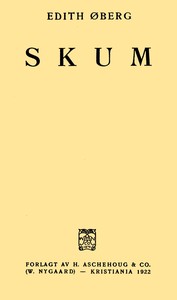
Skum by Edith Øberg
Edith Øberg's Skum pulls you into the cold, salty air of a 1920s Norwegian coastal village. It's a place where everyone knows your business, and the past is never really past.
The Story
The book follows Ragna, a woman who returns to her isolated hometown after a long absence. She's different now—wiser, perhaps more wounded—and her arrival acts like a stone thrown into a still pond. The villagers are suspicious. Where has she been? Why has she come back? Old rumors surface, and long-held judgments are passed around like bitter coffee.
As Ragna tries to find her place, we see the village through her eyes: the harsh beauty of the landscape, the relentless work of fishing, and the tight-knit community that can offer warmth or become a prison. The central conflict isn't a single, dramatic event, but a growing unease. It's the weight of collective memory and the question of whether someone can ever escape the person a small town decided they were.
Why You Should Read It
This book got to me because of its atmosphere. Øberg makes you feel the isolation and the judgment. Ragna is a fascinating character—not always likable, but always understandable. You feel her frustration as she bumps up against traditions she no longer fits into.
The real strength is how it explores the idea of truth. In a place like this, truth isn't just facts; it's the story everyone agrees to tell. It's about reputation, shame, and the quiet rebellions of women in a world that gives them little room to breathe. It's not a fast-paced thriller, but a deep, psychological look at a community and one woman's struggle within it.
Final Verdict
Skum is perfect for readers who love immersive historical fiction where the setting is a main character. If you enjoyed the moody tension of novels like My Brilliant Friend or the stark community portraits in the works of Willa Cather, you'll find a lot to love here. It's a slow, thoughtful, and ultimately powerful read about the stories we tell about each other, and the ones we tell about ourselves.
You are viewing a work that belongs to the global public domain. Knowledge should be free and accessible.
Michael White
1 year agoI've been looking for a reliable source on this topic, and the nuanced approach to the central theme was better than I expected. It definitely lives up to the reputation of the publisher.
James Wilson
10 months agoThe analytical framework presented is both innovative and robust.
James Torres
8 months agoSimply put, the content flows smoothly from one chapter to the next. I couldn't put it down.
George Hill
8 months agoGreat reference material for my coursework.



Patricia Perez
1 month agoExactly what I was looking for, thanks!