About 230 minutes
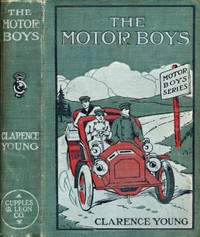
The Motor Boys; or, Chums Through Thick and Thin — A Closer Reading
Fairy Moral Tales
52,896 recorded words. 7 minutes difference from this book's estimate.
View Gutenberg source #42461

The source record for Jasper — Context and Discussion measures this digital text at 51,175 words, 3 hr 43 min estimated reading time, and 5 detected text sections.
The text analysis averages about 17.4 words per sentence, while the detected sections provide another way to judge how the source is divided.
Project Gutenberg metadata also associates the work with “Children -- Conduct of life -- Juvenile fiction,” connecting these edition facts with the source record’s subject description.
Explore this collection
These alternatives are selected using recorded categories and estimated reading time.
About 230 minutes
Fairy Moral Tales
52,896 recorded words. 7 minutes difference from this book's estimate.
View Gutenberg source #42461About 212 minutes
Fairy Moral Tales
48,555 recorded words. 11 minutes difference from this book's estimate.
View Gutenberg source #43269About 211 minutes
Fairy Moral Tales
48,323 recorded words. 12 minutes difference from this book's estimate.
View Gutenberg source #43197Search stored excerpts and compare books → Choose by your preferences →
Choices use stored catalog measurements. Estimates vary with reading speed. A shared category is a catalog label, not a claim that two books have the same argument or literary quality.
Search reads excerpt text stored with this catalog and links to its associated Gutenberg record. The connection is stored in the site database; this tool does not recheck that every excerpt is word-for-word identical to that external record. Excerpt search does not cover every chapter and does not verify historical publication dates.
Catalog snapshot checked: 2026-09-26. Coverage: 90 public books, 90 available source excerpts.
Calculated from edition completeness, EPUB availability, text structure and catalogue metadata. Not a user rating.
Total of 100 points, scaled to a 2.5-5.0 range. Editions with an empty description or a missing EPUB file are not scored.
Public-domain source text
The source text is kept in the dedicated reader, separate from this catalogue record and its commentary.
The first chapter of Mrs. Molesworth's Jasper opens not with the title character but with his sister Chrissie, who sits staring at her blue-crimson toes, refusing to put on her own stockings. The narrator immediately establishes a tone of wry observation: the toes are “pretty little toes, pink and plump and even,” but their colour is “not seen to advantage on toes.” This small, vivid detail signals a story attentive to the physical and emotional textures of childhood. The standoff between Chrissie and Nurse—each bound by a promise, one to a mother, the other to herself—introduces a household where willpower and obligation collide. The dialogue is sharp and natural, with Chrissie’s defiant “I’ve promised myself that I won’t put them on” met by Nurse’s weary reference to “trouble in the house.” The reader is drawn into a domestic drama that is both specific and universal.
Mrs. Molesworth’s word choices carry moral weight without becoming preachy. When Nurse refuses to dress Chrissie, she says she “cannot break my promise” to their mother. Chrissie counters with her own self-imposed vow: “I’ve promised myself that I won’t put them on this morning, so there you see.” The symmetry of the two promises—one external, one internal—creates a miniature conflict about authority and autonomy. The narrator does not judge directly but lets the absurdity of a ten-year-old freezing for the sake of a self-made pledge speak for itself. Later, Leila dismisses Nurse’s scolding with “I didn’t promise anything, so leave me alone,” revealing a different moral stance: promises matter only if one chooses to make them. The author uses the same word—promise—to expose three distinct attitudes toward obligation, all through natural, unforced dialogue.
The narrator frequently addresses the reader with casual asides, such as “as you will already, I daresay, have guessed” and “I think you will remember.” This technique creates a confiding, almost conspiratorial tone, drawing the reader into the story’s moral universe. The voice is not omniscient in a distant sense; it is gently knowing, sometimes ironic. When Chrissie decides to get up early, the narrator remarks that “she could be both sensible and self-controlled when it suited her”—a comment that undercuts the praise while acknowledging the child’s capacity for effort. The narrator also withholds judgment on the children’s hygiene: “I fear the amount of washing that she had stealthily performed with cold water and a basin only, had better not be inquired into.” This blend of affection and gentle mockery is a hallmark of Molesworth’s style, making the moral lessons palatable through humour.
The excerpts reveal a striking structural contrast between the opening chapters’ gritty domestic realism and Jasper’s dreamlike vision of a silver gate. The first chapter is anchored in the nursery: a cold morning, a fire blazing in the next room, a standoff over stockings. The details are tactile and specific—the “bee-clock,” the “milk cart or two rattling by,” the “big can of water.” Later, the narrative shifts to a dream sequence where Jasper stands before a silver gate and an angel tells him to “bring a living plant.” The language becomes lyrical: “the shining seemed to clothe the stunted figure as with a garment, till he stood there erect and beautiful—a very angel himself.” This juxtaposition of the mundane and the transcendent is a deliberate authorial choice, suggesting that moral growth requires both everyday effort and imaginative vision. The dream does not resolve the story but deepens its symbolic register.
Throughout the excerpts, physical discomfort—especially cold—serves as a catalyst for action and reflection. Chrissie’s toes turn “blue and crimson” while she waits for Nurse; later, she rises early in a “very chilly” drawing-room. The cold is not merely atmospheric; it tests the children’s resolve. Light also recurs as a motif: Chrissie waits until it is “faintly light” to dress, and the dream sequence is suffused with “shining.” Waiting, too, is a repeated experience—Chrissie waits for Nurse, waits for the half-hour, waits for the servants to come down. These small, patient or impatient intervals accumulate, giving the narrative a rhythm of delay and reward. The author uses these concrete, sensory details to ground abstract lessons about self-control and kindness in the physical realities of a Victorian nursery.
Readers approaching Jasper will find a story that balances sharp domestic observation with moments of dreamlike moral instruction. Mrs. Molesworth’s authorial choices—her precise diction, her intimate narrative voice, her structural juxtaposition of the everyday and the visionary—reward attention to language and pattern. The excerpts offer only a partial view; the full novel may develop these threads in unexpected directions. Pay particular attention to how promises, waiting, and small physical details recur, and how the narrator’s tone shifts between irony and tenderness. The book invites a slow, attentive reading.
Reading about Chrissie’s stubborn little refusals, I found myself remembering the easy loyalty of the chums in The Motor Boys; or, Chums Through Thick and Thin — A Closer Reading. Both books understand how much character shows in small tests—a silver gate or a shared bicycle—and that wistful ache when childhood choices start shaping who we become. It’s that quiet feeling I keep returning to.
Your answers remain private and are stored only in this browser.