About 193 minutes
A Young Inventor's Pluck; or, The Mystery of the Willington Legacy — Inside the Classic
Fairy Moral Tales
44,183 recorded words. 12 minutes difference from this book's estimate.
View Gutenberg source #42142
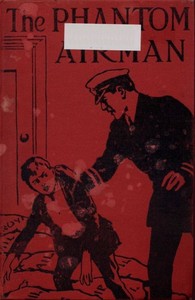
The Phantom Airman — A Closer Reading can be approached with a clearer sense of reading commitment from its source measurements: 41,550 words, 3 hr 1 min estimated reading time, and 7 detected text sections.
The text analysis averages about 17.9 words per sentence, while the detected sections provide another way to judge how the source is divided.
Project Gutenberg metadata also associates the work with “Science fiction,” connecting these edition facts with the source record’s subject description.
Explore this collection
These alternatives are selected using recorded categories and estimated reading time.
About 193 minutes
Fairy Moral Tales
44,183 recorded words. 12 minutes difference from this book's estimate.
View Gutenberg source #42142About 211 minutes
Fairy Moral Tales
48,323 recorded words. 30 minutes difference from this book's estimate.
View Gutenberg source #43197About 212 minutes
Fairy Moral Tales
48,555 recorded words. 31 minutes difference from this book's estimate.
View Gutenberg source #43269Search stored excerpts and compare books → Choose by your preferences →
Choices use stored catalog measurements. Estimates vary with reading speed. A shared category is a catalog label, not a claim that two books have the same argument or literary quality.
Search reads excerpt text stored with this catalog and links to its associated Gutenberg record. The connection is stored in the site database; this tool does not recheck that every excerpt is word-for-word identical to that external record. Excerpt search does not cover every chapter and does not verify historical publication dates.
Catalog snapshot checked: 2026-09-26. Coverage: 90 public books, 90 available source excerpts.
Calculated from edition completeness, EPUB availability, text structure and catalogue metadata. Not a user rating.
Total of 100 points, scaled to a 2.5-5.0 range. Editions with an empty description or a missing EPUB file are not scored.
Public-domain source text
The source text is kept in the dedicated reader, separate from this catalogue record and its commentary.
The novel opens with a pointed historical grievance: Rittmeister Heinrich von Spitzer, a former German flight-commander, refuses to accept the post-WWI peace terms and resolves to become “an aerial brigand, an outlaw of the nations.” The language is direct and embittered, naming Britain as “the evil genius of the Entente.” Walker immediately establishes a villain with a motive rooted in recent history, not mere villainy. The scene is set in the Schwarzwald, where von Spitzer recruits two disciples—one a former Richthofen “circus” pilot, the other a Gotha bomber veteran—by appealing to their pride and promising a secret. This opening frames the story as a revenge-driven aerial campaign, with the Phantom Airman as a deliberate, organized threat.
The first chapter, “The Secret of the Schwarzwald,” introduces von Spitzer as a Prussian irreconcilable who “resolved to become an aerial brigand.” The excerpts show Walker’s method: he gives the antagonist a clear backstory and a secret that is not yet revealed, creating suspense. The setting—a half-dismantled aerodrome on the edge of the Black Forest—is both specific and symbolic, suggesting a fallen empire. The dialogue among the three Germans is stilted but purposeful, with lines like “Glorious we have lived, like kings of the air; let us not inglorious die.” This tone, mixing melodrama with historical reference, sets the stage for a conflict that is as much ideological as physical.
In the middle excerpt, the narrative shifts to the Arabian desert, where a character called the Sultan von Selim, styled “Air-King of the Hamadian desert,” appears. He forces the captain of an air-liner to deliver a sealed packet to Colonel Tempest, using a crest with a scorpion and the Latin word “Scorpio.” This section introduces a second power center—a bandit ruler who commands loyalty and divides spoil among Bedouins. The description of the desert at night, “when the full round moon approached the meridian and changed the gold of the desert to silver,” shows Walker’s occasional lyrical touch. The episode also reveals that the air-liner Empress carries a ton of gold for the Bank of England, linking the desert encounter to a larger plot of theft and pursuit.
Later in the text, the focus returns to the gold shipment aboard the Empress. A commissioner in Cairo learns that the air-liner carries “nearly a ton of gold” for the Bank of England, along with the Indian mail. Von Spitzer, now using the alias “Scorpio,” sends a laconic wireless message giving the air-liner’s coordinates and claiming its wireless is deranged. This moment ties together the earlier threads: the secret from the Schwarzwald, the desert encounter, and the impending theft. The commissioner’s assistant remarks, “Piece of bad luck, sir!”—a dry understatement that contrasts with the high stakes. Walker uses these brief exchanges to advance the plot without lengthy exposition, relying on the reader to connect the dots.
The chapter titles in the contents list—such as “The Secret of the Schwarzwald,” “The Phantom Bird,” and “The Devil’s Workshop”—suggest a serialized, episodic structure. Each chapter appears to introduce a new location or set piece: a German aerodrome, an Arabian desert camp, an aerial liner, a Cairo office. The excerpts show that Walker moves quickly between these settings, using dialogue and brief descriptive passages to maintain momentum. First-time readers should expect a fast-paced narrative that prioritizes action and intrigue over character depth. The recurring motif of the “Phantom Airman” and the scorpion crest provide continuity, while the gold shipment acts as a MacGuffin driving the plot forward.
Readers approaching The Phantom Airman for the first time will benefit from paying attention to the chapter titles, which function as signposts for the shifting locations and conflicts. The novel’s post-WWI setting is not merely background but a driving force for the antagonist’s motivation. The excerpts suggest that Walker expects his audience to follow a multi-threaded plot involving multiple antagonists and a race to secure the gold. Treat each chapter as a self-contained episode that builds toward a larger confrontation, and note how the author uses historical resentment, exotic settings, and technological marvels (airships, wireless) to create a distinctly early-20th-century adventure.
There’s something in Walker’s air-king, ruling his desert from above, that clings to you—that strange, solitary pride. It made me think of the other one, the quieter one, and how these characters seem to carry their lonely victories like a private weight. I keep returning to both, more for that feeling than the plotting. The Motor Scout: A Story of Adventure in South America — Context and Discussion sits beside it now, gently, on the shelf.
Your answers remain private and are stored only in this browser.