About 409 minutes
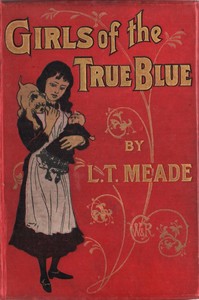
Girls of the True Blue — Background and Themes
Fairy Moral Tales
94,008 recorded words. 42 minutes difference from this book's estimate.
View Gutenberg source #42556
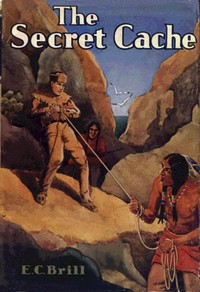
This digital edition of The Secret Cache: An Adventure and Mystery Story for Boys — Context and Discussion is described by source-level measurements including 84,340 words, 6 hr 7 min estimated reading time, and 11 detected text sections.
The text analysis averages about 16.0 words per sentence, while the detected sections provide another way to judge how the source is divided.
Project Gutenberg metadata also associates the work with “Adventure stories,” connecting these edition facts with the source record’s subject description.
Explore this collection
These alternatives are selected using recorded categories and estimated reading time.
About 409 minutes
Fairy Moral Tales
94,008 recorded words. 42 minutes difference from this book's estimate.
View Gutenberg source #42556About 291 minutes
Fairy Moral Tales
66,921 recorded words. 76 minutes difference from this book's estimate.
View Gutenberg source #42953About 230 minutes
Fairy Moral Tales
52,896 recorded words. 137 minutes difference from this book's estimate.
View Gutenberg source #42461Search stored excerpts and compare books → Choose by your preferences →
Choices use stored catalog measurements. Estimates vary with reading speed. A shared category is a catalog label, not a claim that two books have the same argument or literary quality.
Search reads excerpt text stored with this catalog and links to its associated Gutenberg record. The connection is stored in the site database; this tool does not recheck that every excerpt is word-for-word identical to that external record. Excerpt search does not cover every chapter and does not verify historical publication dates.
Catalog snapshot checked: 2026-09-26. Coverage: 90 public books, 90 available source excerpts.
Calculated from edition completeness, EPUB availability, text structure and catalogue metadata. Not a user rating.
Total of 100 points, scaled to a 2.5-5.0 range. Editions with an empty description or a missing EPUB file are not scored.
Public-domain source text
The source text is kept in the dedicated reader, separate from this catalogue record and its commentary.
The narrative of The Secret Cache is built on a rhythm of movement between open water and hidden land, a structure evident from the first chapter. The story opens with Hugh Beaupré watching birch canoes on a river, the roaring rapids and fresh wind establishing a sensory world where water is both setting and obstacle. The action repeatedly shifts from the lake's exposed expanses to concealed ponds, narrow channels, and rocky shores, creating a geography of hiding and pursuit. This pattern of movement—paddling, portaging, climbing—drives the plot and shapes the characters' decisions, as every journey requires reading the weather, the currents, and the shadows.
The lake in this story is not a passive backdrop but an active force that dictates the characters' choices. Brill repeatedly describes the wind, waves, and currents with precise detail: the "fresh wind reddened his cheeks" in the opening, and later the boys navigate "close to the shores of the islands and the long point" to avoid open water. The lake's moods shift from peaceful to threatening, as when Hugh feels the bay has "turned sinister and threatening" under a low, starless sky. The characters' survival depends on reading these signs—knowing when to paddle, when to hide, when to trust the wind. This attention to the lake's physicality grounds the adventure in a tangible, unpredictable world.
Brill uses light and shadow to create tension and mark transitions between safety and danger. The excerpts show a careful contrast: the bright morning of the spring fishing, the "thick darkness" that provides cover for escape, and the "pale flashes of lightning" that reveal the jagged tree line. Hugh's fear is heightened by the darkness, yet it also conceals the boys from Ohrante. The author often describes the quality of light—"the low hanging, starless sky," "clear patches" after a storm—to signal changes in mood or fortune. This visual patterning reinforces the story's central dynamic of visibility versus concealment.
The text is punctuated by moments of intense silence and sudden noise. The roaring rapids of the opening give way to the "intense silence broken only by the far-away rumble of thunder" during the night crossing. The characters' actions are often measured by sound: the "noiseless" dip of paddles, the "grating" of a boat on rock, the "high-pitched, squeaking cry" of a night bird. These auditory details build atmosphere and signal danger—a sudden noise could betray their position. The contrast between the cacophony of the rapids and the stillness of the hidden pond mirrors the story's alternation between action and concealment.
The physical setting of Isle Royale is mapped through the characters' movements between hidden and exposed spaces. The "hidden pond near the cache of furs" becomes a refuge, while the open lake is a place of risk. The boys navigate by landmarks—a "round islet," a "narrow passage," a "gap" between point and islands—that create a mental map of the terrain. This geography is not merely decorative; it structures the chase. Ohrante lurks in the shadows, and the boys must use the landscape to evade him. The repeated pattern of finding shelter, then venturing out, then retreating again gives the narrative a pulse of tension and release.
Readers will find that the story's momentum depends on paying close attention to the physical world Brill constructs. The lake, the islands, and the weather are not just settings but active participants in the plot. Watching how Hugh and Blaise read the environment—the direction of the wind, the shape of a shadow, the sound of a paddle—reveals the craft behind the adventure. The book rewards those who follow the map of its movements as closely as its characters do.
Some stories stay with you like a long shoreline after the boat has passed. That 1932 Isle Royale adventure—the hidden furs, the shadows between pines—left that exact quiet ache in me. It reminded me of another old tale, The Forest of Mystery — Edition Insights, which lingers in its own gentle way, like a half-remembered campfire.
Answer a few questions and save a private reflection on this device.