About 223 minutes
Jasper — Context and Discussion
Fairy Moral Tales
51,175 recorded words. 7 minutes difference from this book's estimate.
View Gutenberg source #43128
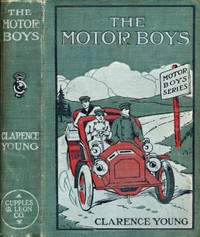
This digital edition of The Motor Boys; or, Chums Through Thick and Thin — A Closer Reading is described by source-level measurements including 52,896 words, 3 hr 50 min estimated reading time, and 6 detected text sections.
The text analysis averages about 12.6 words per sentence, while the detected sections provide another way to judge how the source is divided.
Project Gutenberg metadata also associates the work with “Motorcycles -- Juvenile fiction,” connecting these edition facts with the source record’s subject description.
Explore this collection
These alternatives are selected using recorded categories and estimated reading time.
About 223 minutes
Fairy Moral Tales
51,175 recorded words. 7 minutes difference from this book's estimate.
View Gutenberg source #43128About 212 minutes
Fairy Moral Tales
48,555 recorded words. 18 minutes difference from this book's estimate.
View Gutenberg source #43269About 211 minutes
Fairy Moral Tales
48,323 recorded words. 19 minutes difference from this book's estimate.
View Gutenberg source #43197Search stored excerpts and compare books → Choose by your preferences →
Choices use stored catalog measurements. Estimates vary with reading speed. A shared category is a catalog label, not a claim that two books have the same argument or literary quality.
Search reads excerpt text stored with this catalog and links to its associated Gutenberg record. The connection is stored in the site database; this tool does not recheck that every excerpt is word-for-word identical to that external record. Excerpt search does not cover every chapter and does not verify historical publication dates.
Catalog snapshot checked: 2026-09-26. Coverage: 90 public books, 90 available source excerpts.
Calculated from edition completeness, EPUB availability, text structure and catalogue metadata. Not a user rating.
Total of 100 points, scaled to a 2.5-5.0 range. Editions with an empty description or a missing EPUB file are not scored.
Public-domain source text
The source text is kept in the dedicated reader, separate from this catalogue record and its commentary.
Clarence Young's The Motor Boys; or, Chums Through Thick and Thin (1906) opens its narrative with a bicycle encounter that immediately establishes a pattern of verbal sparring and physical risk. The author's diction in dialogue—marked by exclamations like “He’s killed. They’re killed!”—signals a world where excitement and danger are never far apart. Young relies heavily on speech tags such as “exclaimed,” “asserted,” and “counseled” to telegraph emotion and hierarchy among the three chums: Jerry often takes the lead, Ned urges caution, and Bob provides comic relief. These choices in dialogue and description shape the reader's sense of the boys' camaraderie and the stakes of their adventures.
Young differentiates the three protagonists almost entirely through what they say and how they say it. Jerry speaks in declarative, planning sentences: “We must begin practice at once.” Ned’s lines are moderating, as when he tells Bob, “Don’t reply to him. It may make trouble.” Bob’s dialogue often circles back to food or enthusiasm, as in his question about dinner: “Where are we going to stop for dinner?” The bully Noddy Nixon is given a mocking, taunting tone: “Not the least in the world. In fact I don’t see why they hold any contest at all.” These vocal signatures allow readers to identify each character quickly, even in scenes without explicit description.
Young plants specific objects that reappear to advance conflict. The knife with the initials N. N., found after the boys’ cycles are disabled, becomes a piece of evidence that Jerry brandishes in a later confrontation. When Jerry offers it to Noddy with the remark about cutting wires, the object carries the weight of an unspoken accusation. Similarly, the motor-cycles themselves are described with practical detail—the “last touches” given before a trip—and serve as both tools and symbols of the boys’ shared ambition. These recurring items create a sense of continuity and consequence across chapters.
Young’s descriptive prose is efficient and action-oriented, rarely lingering on setting. In the storm chapter, the narrative moves quickly from planning to departure: “Eight o’clock the next morning saw them assembled in Bob’s yard.” The author favors verbs of motion and speech over sensory detail. When Jerry complains about Bob’s appetite, the line “You’d think he was all stomach” is presented as direct dialogue rather than narrative commentary. This choice keeps the focus on the boys’ interactions rather than on an omniscient narrator’s judgments, giving the story a brisk, conversational feel that matches its serial origins.
The excerpts show a clear pattern: a chapter often begins with a plan or a problem, moves through dialogue that raises stakes, and ends with a new complication. Chapter XVII, “Caught in the Storm,” opens with Jerry proposing a training ride, then shifts to Bob’s comic concern about dinner, and the storm itself is not yet described in the excerpt—the chapter title promises action to come. This structure, visible in the table of contents as well, relies on cliffhanger chapter endings and rapid scene changes. Young’s pacing prioritizes forward momentum over introspection, a choice suited to the intended audience of young readers eager for adventure.
Readers attentive to Young’s craft will notice how much of the story’s tension is carried by what characters say and how they say it, rather than by elaborate plot machinery. The motor-cycles themselves are almost secondary to the verbal jousting and the objects that pass between friends and rivals. Approaching the text with an ear for these authorial choices—the quick exchanges, the repeated props, the efficient scene-setting—reveals a deliberate method behind the seemingly simple adventure.
Reading about Jerry, Bob, and Ned’s little squabbles over their motorcycle repairs, I found myself thinking of quieter afternoons with another old friend. There’s a similar dusty, patient loyalty in those pages. It reminds me of stumbling upon The Secret Cache: An Adventure and Mystery Story for Boys — Context and Discussion, where the same kind of trust quietly carries the plot forward, like a familiar hand on a shoulder.
Save your reaction, strongest insight, and memorable passage.