About 230 minutes
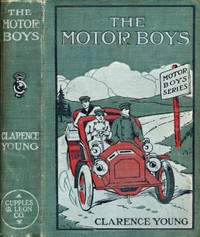
The Motor Boys; or, Chums Through Thick and Thin — A Closer Reading
Fairy Moral Tales
52,896 recorded words. 61 minutes difference from this book's estimate.
View Gutenberg source #42461
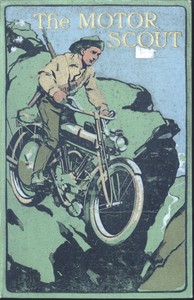
The source record for The Motor Scout: A Story of Adventure in South America — Context and Discussion measures this digital text at 66,921 words, 4 hr 51 min estimated reading time, and 9 detected text sections.
The text analysis averages about 16.5 words per sentence, while the detected sections provide another way to judge how the source is divided.
Project Gutenberg metadata also associates the work with “Adventure stories,” connecting these edition facts with the source record’s subject description.
Explore this collection
These alternatives are selected using recorded categories and estimated reading time.
About 230 minutes
Fairy Moral Tales
52,896 recorded words. 61 minutes difference from this book's estimate.
View Gutenberg source #42461About 223 minutes
Fairy Moral Tales
51,175 recorded words. 68 minutes difference from this book's estimate.
View Gutenberg source #43128About 367 minutes
Fairy Moral Tales
84,340 recorded words. 76 minutes difference from this book's estimate.
View Gutenberg source #43293Search stored excerpts and compare books → Choose by your preferences →
Choices use stored catalog measurements. Estimates vary with reading speed. A shared category is a catalog label, not a claim that two books have the same argument or literary quality.
Search reads excerpt text stored with this catalog and links to its associated Gutenberg record. The connection is stored in the site database; this tool does not recheck that every excerpt is word-for-word identical to that external record. Excerpt search does not cover every chapter and does not verify historical publication dates.
Catalog snapshot checked: 2026-09-26. Coverage: 90 public books, 90 available source excerpts.
Calculated from edition completeness, EPUB availability, text structure and catalogue metadata. Not a user rating.
Total of 100 points, scaled to a 2.5-5.0 range. Editions with an empty description or a missing EPUB file are not scored.
Public-domain source text
The source text is kept in the dedicated reader, separate from this catalogue record and its commentary.
The story begins not with the boy hero but with the town's astonishment at seeing the gobernador—land-owner, chief magistrate, and father—clinging to a motor-cycle carrier, his fat hands clasped around the waist of the boy in the saddle. The machine clatters through ill-paved streets, scattering dogs and poultry, while the gobernador's head is bare, his cheeks shining with perspiration. This comic yet urgent image establishes the motor-cycle as both a source of chaos and a tool of escape.
Strang's prose moves quickly from this farcical entrance into a world of revolution. The boy, Tim, is soon leading a band of Japanese and Cholo fighters, capturing barracks, and firing volleys from balconies. The excerpts show a narrative that prizes tactical detail—barring gates, bursting locks with revolver shots—over character interiority.
The motor-cycle is not merely a vehicle but a narrative engine. In the opening, its vibration shakes the gobernador's rotund figure, and its noise nearly drowns out the din of barking dogs and screaming fowls. Later, chapter titles like “The Motor-Cycle” and “Free Wheel” suggest the machine’s centrality. The story treats the motor-cycle as a source of both comedy and tactical advantage: it allows Tim to outpace horsemen and navigate rough terrain. Readers should note how Strang describes the machine’s mechanical sounds and movements—the clattering, the jolting—as part of the sensory texture of the adventure.
Tim is defined by his quick thinking under fire. After capturing the barracks, he does not exult prematurely; he calculates how long before the enemy returns, barricades gates, and orders his men to line the balcony. He bursts a lock with a revolver shot, directs volleys to avoid hitting comrades, and uses the element of surprise. The excerpts show a boy who learns from earlier mistakes—at the hacienda he was lulled by success, but at the barracks he remains vigilant. This growth is conveyed through action, not introspection.
Tim commands a diverse group: Japanese and Cholos (mixed-race Peruvians). The excerpts mention “eager Japanese” who join him in pouring volleys, and the enemy includes “Japanese and Cholos mounting behind the lad.” This coalition is unusual for the period and suggests a pragmatic alliance rather than a nationalist one. Strang does not develop these characters individually; they function as a collective force. The reader should watch how the group’s composition affects the story’s dynamics—loyalty, language barriers, and shared goals are hinted at but not explored.
The story is set in the Peruvian Andes, in the town of San Rosario. The opening describes a hot, sultry afternoon with ill-paved roads. Later, the action moves to a plaza, barracks, and a hacienda. The setting is sketched lightly—enough to evoke a sense of place without overwhelming the plot. The night air carries sounds of firing across open country; the gates are barred against horsemen. Strang uses the environment to create obstacles and opportunities: the motor-cycle’s speed on roads, the cover of balconies, the confusion of a crowded plaza.
Readers approaching The Motor Scout should attend to how Strang balances mechanical detail with swift action. The motor-cycle is not a mere prop but a central element that shapes the plot and the protagonist’s identity. The excerpts offer a clear view of the narrative’s pace and its focus on tactical problem-solving rather than emotional depth. This is a story that moves as fast as its machine.
Reading about Tim’s frantic ride through San Rosario, I felt that same breathless, boyish thrill I remember from an older tale of youthful grit. The Motor Scout’s mechanical clatter and dusty road somehow quieted into a memory of simpler chums and their own stubborn adventures. It made me think of The Motor Boys; or, Chums Through Thick and Thin — A Closer Reading, where friendship steered every turn just as surely as any handlebar.
Build a private reading journal entry for this title.