About 170 minutes
Two on the Trail: A Story of Canada Snows — Reading Companion
Young Readers
39,089 recorded words. 0 minutes difference from this book's estimate.
View Gutenberg source #40663
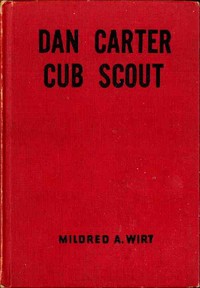
The catalog record for Dan Carter-- Cub Scout — Context and Discussion provides practical reading context through 38,871 words, 2 hr 50 min estimated reading time, and 6 detected text sections.
The text analysis averages about 11.1 words per sentence, while the detected sections provide another way to judge how the source is divided.
Project Gutenberg metadata also associates the work with “Mystery and detective stories,” connecting these edition facts with the source record’s subject description.
Explore this collection
These alternatives are selected using recorded categories and estimated reading time.
About 170 minutes
Young Readers
39,089 recorded words. 0 minutes difference from this book's estimate.
View Gutenberg source #40663About 178 minutes
Young Readers
40,771 recorded words. 8 minutes difference from this book's estimate.
View Gutenberg source #41446About 185 minutes
Young Readers
42,338 recorded words. 15 minutes difference from this book's estimate.
View Gutenberg source #40721Search stored excerpts and compare books → Choose by your preferences →
Choices use stored catalog measurements. Estimates vary with reading speed. A shared category is a catalog label, not a claim that two books have the same argument or literary quality.
Search reads excerpt text stored with this catalog and links to its associated Gutenberg record. The connection is stored in the site database; this tool does not recheck that every excerpt is word-for-word identical to that external record. Excerpt search does not cover every chapter and does not verify historical publication dates.
Catalog snapshot checked: 2026-09-26. Coverage: 90 public books, 90 available source excerpts.
Calculated from edition completeness, EPUB availability, text structure and catalogue metadata. Not a user rating.
Total of 100 points, scaled to a 2.5-5.0 range. Editions with an empty description or a missing EPUB file are not scored.
Public-domain source text
The source text is kept in the dedicated reader, separate from this catalogue record and its commentary.
The story opens not with a mystery but with weather: rain drumming on a tin roof, a river that "steadily had risen," and a cabin dissolving into "a sea of mud." From the first whispered exchange between Dan and Sam Hatfield, the narrative anchors itself in sensory detail—the splash of droplets, the creak of a door, the pound of a boat against a dock. This is a world where environment is antagonist, where every action is shadowed by flood risk.
The excerpts reveal a pattern of watchfulness: adults and Cubs alike monitor water levels, check boats, and debate whether to return to a post or seek shelter. The tension is not between characters but between impulse and judgment—a Cub leader's calm versus a boy's eagerness, the pull of responsibility against the pull of safety.
Rain is not merely backdrop in these excerpts; it dictates pacing and decision-making. The opening chapter, "Trespassers," begins with Dan stirred from sleep by "a splatter of rain" that beats "a tattoo on his sleep-drugged brain." The repetition of "Rain! Rain! Always rain!" establishes a percussive rhythm that mirrors the storm's persistence. Later, a filling station attendant calls the downpour "a regular cloudburst," and the truck driver reports that creeks are "out of their banks most places." Each mention of weather escalates the stakes: the river will rise, Crooked Creek may flood, and the pheasant farm's log jam—if uncleared—could drown the birds. The narrative uses rain as a countdown, compressing time and forcing choices.
The dialogue is clipped and functional, yet carries emotional weight through what is left unsaid. When Dan and Brad reach the filling station, the attendant's laugh—"You look like a couple of drowned rats"—is the only moment of levity. Otherwise, exchanges are brief: "I'll go with you," "May we use your telephone?," "No use." The characters rarely express fear directly; instead, worry surfaces in actions—Sam tucking a blanket around Chips, Brad drumming his fingers against the wall. The telephone calls that go unanswered (Mr. Hatfield is already driving; Saul Dobbs does not pick up) heighten the isolation. The prose mirrors this restraint: sentences are short, descriptions spare, and interior thoughts are implied rather than stated.
Though Saul Dobbs never appears in the excerpts, his presence looms through the log jam he has neglected. Brad worries aloud: "I sure wish I knew if Saul Dobbs ever cleared away that log jam." Dan's reply—"Your guess is as good as mine. But knowing him, I'd say he hasn't touched those logs"—establishes a history of friction between Dobbs and the Cubs. The log jam becomes a concrete symbol of preventable disaster: a task left undone that could cost the pheasants their lives. The narrative withholds Dobbs's perspective entirely; he is judged only through the Cubs' frustration and the attendant's overheard remark. This asymmetry creates a quiet moral tension: the boys must act responsibly toward a man who has been "mighty unpleasant" to them.
Readers should attend to how the story balances multiple threads—the rising river, the missing Cub leader, the unanswered phone, the log jam—without resolving any of them in the opening chapters. The excerpts offer no clear villain, only a series of accumulating pressures. Pay particular attention to the way small details (a nickel for a call, a towel from a restroom, the steam rising from pavement after rain) anchor the narrative in a tactile, mid-century American landscape. The mystery here is not who did what, but what will break first: the weather, the boys' resolve, or the neglected dam of logs upstream.
That rainy, muddy stretch in the Dan Carter book reminded me of another quiet struggle with weather and patience—where snow replaces rain, but the same feeling of being small against the land lingers. I found myself thinking of Two on the Trail: A Story of Canada Snows — Reading Companion afterward, the way certain scenes just stay with you, softly.
A brief reflection can help important ideas stay with you longer.