About 170 minutes
Dan Carter-- Cub Scout — Context and Discussion
Young Readers
38,871 recorded words. 0 minutes difference from this book's estimate.
View Gutenberg source #41260
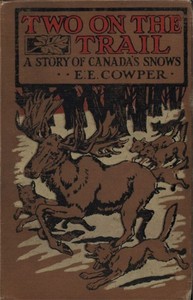
For Two on the Trail: A Story of Canada Snows — Reading Companion, the stored edition analysis reports 39,089 words, 2 hr 50 min estimated reading time, and 6 detected text sections.
The text analysis averages about 15.4 words per sentence, while the detected sections provide another way to judge how the source is divided.
Project Gutenberg metadata also associates the work with “Frontier and pioneer life -- Canada -- Juvenile fiction,” connecting these edition facts with the source record’s subject description.
Explore this collection
These alternatives are selected using recorded categories and estimated reading time.
About 170 minutes
Young Readers
38,871 recorded words. 0 minutes difference from this book's estimate.
View Gutenberg source #41260About 178 minutes
Young Readers
40,771 recorded words. 8 minutes difference from this book's estimate.
View Gutenberg source #41446About 185 minutes
Young Readers
42,338 recorded words. 15 minutes difference from this book's estimate.
View Gutenberg source #40721Search stored excerpts and compare books → Choose by your preferences →
Choices use stored catalog measurements. Estimates vary with reading speed. A shared category is a catalog label, not a claim that two books have the same argument or literary quality.
Search reads excerpt text stored with this catalog and links to its associated Gutenberg record. The connection is stored in the site database; this tool does not recheck that every excerpt is word-for-word identical to that external record. Excerpt search does not cover every chapter and does not verify historical publication dates.
Catalog snapshot checked: 2026-09-26. Coverage: 90 public books, 90 available source excerpts.
Calculated from edition completeness, EPUB availability, text structure and catalogue metadata. Not a user rating.
Total of 100 points, scaled to a 2.5-5.0 range. Editions with an empty description or a missing EPUB file are not scored.
Public-domain source text
The source text is kept in the dedicated reader, separate from this catalogue record and its commentary.
The story opens inside a log house, where twelve-year-old David repeatedly asks his sister Nell if something has happened to their absent father. Nell, at fifteen, is described as tall, strong, and capable—her greenish-grey eyes compared to those of a lynx. The early pages establish her as the dependable center of the family, handling chores and calming her brother's fears. The setting is intimate and tense, with the red-hot stove and the siblings' quiet anxiety setting the stage for the journey ahead.
The book moves from the confined log house to the vast, snow-covered landscape. The opening chapter focuses on interior space—the stove, the cabin, the siblings' conversation—creating a sense of waiting. Once the decision to leave is made, the narrative shifts to movement: driving on, stopping on riverbanks, and crossing lakes. The chapters alternate between moments of rest (making camp, cooking bacon) and sudden action (a midnight battle, a race for life). This rhythm of pause and pursuit mirrors the physical demands of travel in deep snow.
Fire appears repeatedly as a source of warmth and safety. Nell kneels to light birch bark, the fire burns up, and a cosy glow dances on the bushes. Snow is ever-present—falling at intervals, covering the ground, making objects hard to distinguish. Shadows and alien shapes melt into the underbrush, creating a sense of unseen danger. The dog Robin's restless behavior, nose to the ground, signals threats before they are visible. These images build a world where visibility is limited and security is fragile.
The plot is driven by the siblings' physical progress across the frozen landscape. Each chapter title marks a new location or event: "The Log House," "The Howl of the Wolf," "The Camp on the Wolf's Tooth Rocks." The journey is not linear but punctuated by obstacles—a mysterious campfire, a charging bull moose, rifle shots. The ice going out and the trail leading home provide a natural arc. The movement is both literal and symbolic, as the siblings travel from uncertainty toward resolution.
The narrative is filtered largely through David's admiration for his sister. She is "wonderful," able to do everything better than anyone he knows. Her actions—slicing bacon, drawing a revolver, deciding where to camp—are described with precision. The text uses short, declarative sentences for her decisions: "Here we camp," said Nell. David's perspective emphasizes her strength and resourcefulness, while Nell's own thoughts are often implied through her actions. This asymmetry creates a dynamic where the reader sees Nell as David does: capable and trustworthy.
Readers will find the story moves quickly, with each chapter advancing the journey. Pay attention to the small details—the way Nell handles an axe, the behavior of the dog, the descriptions of snow conditions. These elements ground the adventure in a specific, harsh environment. The book rewards attention to the practicalities of survival, from making camp to reading the landscape for signs of danger.
I’ve often thought the snow-locked woods in Two on the Trail whisper the same lesson as the quiet corners of childhood—how a steady pair of hands, even young ones, makes a shelter. Nell’s careful tracking reminds me of a certain scout’s quiet confidence. Dan Carter-- Cub Scout — Context and Discussion holds that same warmth, like finding an old mitten in a coat pocket.
A brief reflection can help important ideas stay with you longer.