About 225 minutes
The Boy Scouts' Mountain Camp — Text and Context
Young Readers
51,670 recorded words. 6 minutes difference from this book's estimate.
View Gutenberg source #42102
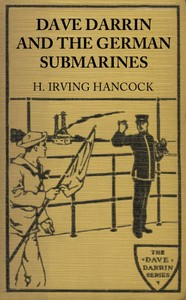
Dave Darrin and the German Submarines Or, Making a Clean-up of the Hun Sea Monsters — Story, Setting & Ideas can be approached with a clearer sense of reading commitment from its source measurements: 52,999 words, 3 hr 51 min estimated reading time, and 6 detected text sections.
The text analysis averages about 14.4 words per sentence, while the detected sections provide another way to judge how the source is divided.
Project Gutenberg metadata also associates the work with “World War, 1914-1918 -- Juvenile fiction,” connecting these edition facts with the source record’s subject description.
Explore this collection
These alternatives are selected using recorded categories and estimated reading time.
About 225 minutes
Young Readers
51,670 recorded words. 6 minutes difference from this book's estimate.
View Gutenberg source #42102About 197 minutes
Young Readers
45,219 recorded words. 34 minutes difference from this book's estimate.
View Gutenberg source #41772About 188 minutes
Young Readers
43,046 recorded words. 43 minutes difference from this book's estimate.
View Gutenberg source #41837Search stored excerpts and compare books → Choose by your preferences →
Choices use stored catalog measurements. Estimates vary with reading speed. A shared category is a catalog label, not a claim that two books have the same argument or literary quality.
Search reads excerpt text stored with this catalog and links to its associated Gutenberg record. The connection is stored in the site database; this tool does not recheck that every excerpt is word-for-word identical to that external record. Excerpt search does not cover every chapter and does not verify historical publication dates.
Catalog snapshot checked: 2026-09-26. Coverage: 90 public books, 90 available source excerpts.
Calculated from edition completeness, EPUB availability, text structure and catalogue metadata. Not a user rating.
Total of 100 points, scaled to a 2.5-5.0 range. Editions with an empty description or a missing EPUB file are not scored.
Public-domain source text
The source text is kept in the dedicated reader, separate from this catalogue record and its commentary.
H. Irving Hancock's Dave Darrin and the German Submarines opens not with a declaration of war but with a folded piece of paper—a small, tangible object that hints at the coded messages and secret intelligence that will drive the plot. The table of contents alone reveals a story built around technical naval maneuvers: "Dave springs a new trap for submarines," "The enemy's alarm clock," and "Searchlight men, stand ready!" These chapter headings promise a narrative that values procedural detail over character introspection. The early pages establish Dave Darrin as a capable, alert commander, already on patrol, with his friend Dan Dalzell providing a foil through his more relaxed demeanor. The reader is immediately placed aboard a destroyer, surrounded by the language of seamanship and the constant threat of unseen enemies.
The first excerpt plunges the reader into a nocturnal patrol. Dave Darrin is described in full gear—"rubber boots, strapping the hip extensions high up," a "sheepskin coat," and a "knitted helmet"—details that ground the story in the physical reality of service at sea. The author uses this moment to contrast Dave's focused professionalism with Dan Dalzell's reluctance to rest: "'Go below and get some sleep,' urged Dave. 'Don't need any,' Dalzell declared stubbornly." This exchange, along with the mention of "a desperate, tragic game of blind man's buff" over the waves, establishes the constant vigilance required. The dialogue between Dave and Lieutenant Curtin reveals a commander who is both strategic and cautious, refusing overconfidence: "'The greatest mistake that we can make is to become over-confident.'" This opening section primes the reader for a story where technical skill and mental discipline are as important as firepower.
As the narrative progresses, the excerpts show a shift toward broader tactical concerns and internal threats. Dave's council with naval headquarters introduces the scale of the enemy operation: "'Sixty submarines!'" The author uses this scene to elevate Dave from a mere destroyer commander to a strategist whose opinions are sought by superiors. The middle sections also introduce the theme of espionage. A "loiterer at the radio room door" and the accusation of a "traitor on board" add a layer of suspicion that complicates the straightforward naval combat. The chapter headings—"Dave Has a Spy Scare" and "The Work of a Spy"—signal that the enemy is not only beneath the waves but also within the crew. This dual threat keeps the reader alert to both external attacks and internal deception, a structure that rewards careful attention to character interactions.
The later excerpts depict a fleet action, with Dave's destroyer escorting troopships. The language becomes more urgent: "'They've got us!'" and "The biggest submarine fight of all." Yet even in the midst of battle, the author maintains a focus on command decisions. Dave's earlier caution about overconfidence is tested as the enemy scores hits. The excerpt shows the emotional toll on the soldiers: "The soldiers feel better. 'They can't hit us.'" This brief moment of bravado is immediately undercut by the next line: "'They've got us!'" The author uses these rapid reversals to create suspense. Dave's role as a leader is emphasized through his calm under pressure, a trait established from the opening pages. The reader who has followed the technical discussions in the earlier sections will better appreciate the tactical choices made in the heat of combat.
Throughout the excerpts, Hancock employs a consistent vocabulary of naval operations that rewards attentive reading. Terms like "periscope," "depth bomb," "torpedo," and "searchlight" recur, but the author also includes less common phrases such as "sound devices" and "the enemy's alarm clock" (a chapter heading). The physical environment is rendered with precision: "spray dashed over the decks and water flooded the scuppers." The dialogue often carries technical weight, as when Dave explains why a night attack is unlikely: "'Attacking on a night like this, the only sure way would be for them to come to the surface.'" These details are not mere decoration; they build a believable world where the reader can track the logic of the characters' decisions. The author's use of chapter titles as mini-summaries—"The Battle for the Troopship Fleet"—also helps orient the reader during complex action sequences.
For a first reading, pay close attention to the chapter titles; they often contain clues to the narrative's structure and the author's emphasis on technical innovation. The dialogue between Dave and his officers is the primary vehicle for character development, so note how each speaker's tone reveals their role. The excerpts suggest that Hancock values competence and caution over reckless heroism, a theme that becomes more pronounced as the story progresses. Readers interested in the period's naval technology will find the procedural details rewarding, while those seeking adventure will find it in the set-piece battles. The spy subplot adds a layer of mystery that may reward careful rereading.
There’s something grounding about returning to Hancock’s careful plotting, the way competence unfolds quietly. It reminds me of those long Canadian winters in Two on the Trail: A Story of Canada Snows — Reading Companion, where the cold itself becomes a character, patient and unblinking. Both worlds feel like places I once knew, measured in small, steady choices.
Use these questions to collect your thoughts before moving on.