About 231 minutes
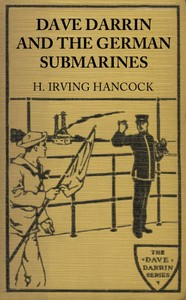
Dave Darrin and the German Submarines Or, Making a Clean-up of the Hun Sea Monsters — Story, Setting & Ideas
Young Readers
52,999 recorded words. 6 minutes difference from this book's estimate.
View Gutenberg source #41628
This digital edition of The Boy Scouts' Mountain Camp — Text and Context is described by source-level measurements including 51,670 words, 3 hr 45 min estimated reading time, and 8 detected text sections.
The text analysis averages about 14.6 words per sentence, while the detected sections provide another way to judge how the source is divided.
Project Gutenberg metadata also associates the work with “Boats and boating -- Juvenile fiction,” connecting these edition facts with the source record’s subject description.
Explore this collection
These alternatives are selected using recorded categories and estimated reading time.
About 231 minutes
Young Readers
52,999 recorded words. 6 minutes difference from this book's estimate.
View Gutenberg source #41628About 197 minutes
Young Readers
45,219 recorded words. 28 minutes difference from this book's estimate.
View Gutenberg source #41772About 188 minutes
Young Readers
43,046 recorded words. 37 minutes difference from this book's estimate.
View Gutenberg source #41837Search stored excerpts and compare books → Choose by your preferences →
Choices use stored catalog measurements. Estimates vary with reading speed. A shared category is a catalog label, not a claim that two books have the same argument or literary quality.
Search reads excerpt text stored with this catalog and links to its associated Gutenberg record. The connection is stored in the site database; this tool does not recheck that every excerpt is word-for-word identical to that external record. Excerpt search does not cover every chapter and does not verify historical publication dates.
Catalog snapshot checked: 2026-09-26. Coverage: 90 public books, 90 available source excerpts.
Calculated from edition completeness, EPUB availability, text structure and catalogue metadata. Not a user rating.
Total of 100 points, scaled to a 2.5-5.0 range. Editions with an empty description or a missing EPUB file are not scored.
Public-domain source text
The source text is kept in the dedicated reader, separate from this catalogue record and its commentary.
The Boy Scouts' Mountain Camp opens with a breathless auto chase: a white-faced girl gripping the steering wheel, a cloud of fair hair streaming, and the machine 'bumping and swaying wildly.' The scene establishes a pattern of abrupt, high-stakes action that recurs throughout the excerpts. Goldfrap's narrative voice shifts between brisk, declarative sentences during crises and more leisurely dialogue in quieter moments, a rhythm that rewards attention to pacing.
Dialogue carries much of the characterization. Rob Blake speaks in clipped, commanding phrases ('Not a word. Follow me'), while Jumbo's dialect ('Dis suttingly am a pawtuckitus state of affairs') provides both comic relief and a distinct vocal texture. The interplay between these voices—along with the author's use of cliffhanger chapter endings—shapes the reading experience.
Goldfrap differentiates characters primarily through speech patterns. Rob Blake, the patrol leader, uses direct, imperative language: 'Up with you, Jumbo,' he orders, and 'Hush! Not a word.' Merritt Crawford's opening line—'Hullo, Rob; what's up?'—is casual and colloquial, marking him as a secondary figure. The most distinctive voice belongs to Jumbo, whose dialect is rendered phonetically: 'Ah got ter clim' dat lilly ladder lak Massa Jacob in de Bibul?' This choice risks stereotype but also gives Jumbo a memorable, rhythmic presence. His exclamation during the escape—'Tak' yo' dirty paws off'n dat ladder, white man'—shifts from fearful to defiant, showing a range within the dialect. The narrator's own voice is neutral and efficient, rarely drawing attention to itself except during moments of heightened danger, when it adopts shorter, punchier sentences.
The excerpts reveal a deliberate manipulation of pace. Action sequences are compressed into rapid, breathless paragraphs. In the auto chase, the narrative accelerates through short clauses: 'It bumped and swayed wildly. A cloud...' The cliffside escape is similarly taut: 'Rob lost no time in further indulging his nervous thoughts, however. He gave the wire a good hard tug.' The chapter break at the end of XIV—with Dale aiming his rifle—exemplifies Goldfrap's technique of halting at the peak of tension. Chapter XV then opens with a split-second reaction: 'For only an instant did Rob remain motionless. Then, as if by instinct, he suddenly crouched.' This pattern of pause and release, repeated across chapters, creates a rhythmic urgency that propels the reader forward. Slower passages, such as the opening dialogue about 'things had stopped happening,' serve as necessary lulls before the next crisis.
Goldfrap anchors his action in specific, sensory details that ground the fantastical elements. The auto chase is set on a street leading to 'Hampton Inlet,' a 'glistening sheet of water,' giving the scene a real-world geography. The rope ladder escape relies on tactile and auditory cues: the 'filament of metal,' the 'faint glow cast by the fire,' the 'angry ping' of a bullet against rock. Jumbo's fear is conveyed through simile ('lak er fly kin git out of a mo'lasses bar'l'), a homely image that contrasts with the life-or-death stakes. The setting of the mountain camp itself is only hinted at—a cliff, a ladder, a fire—but these elements are enough to create a vivid, confined stage for the escape. The author's restraint in description keeps the focus on movement and danger rather than landscape.
Readers attentive to Goldfrap's craft will notice how he balances multiple voices—Rob's authority, Jumbo's dialect, the narrator's efficiency—to create a layered text. The pacing, with its sharp alternations between calm and crisis, rewards those who read with an eye for structure. The excerpts offer only a partial view of the full novel, but they reveal a writer skilled in the mechanics of suspense.
There’s something about the breathless pacing in The Boy Scouts’ Mountain Camp that stays with you, especially the cliffside scramble. It reminded me of another quiet afternoon, turning pages of The Silent Alarm — A Closer Reading, where the same urgency hums beneath calmer words. Funny how a century-old chase still feels like a held breath.
Answer a few questions and save a private reflection on this device.