About 188 minutes
The Secret Mark An Adventure Story for Girls — Story, Setting & Ideas
Young Readers
43,046 recorded words. 9 minutes difference from this book's estimate.
View Gutenberg source #41837
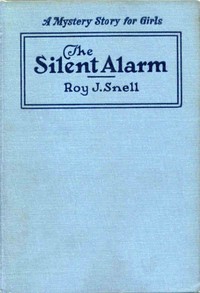
This digital edition of The Silent Alarm — A Closer Reading is described by source-level measurements including 45,219 words, 3 hr 17 min estimated reading time, and 7 detected text sections.
The text analysis averages about 13.5 words per sentence, while the detected sections provide another way to judge how the source is divided.
Project Gutenberg metadata also associates the work with “Railroad stories,” connecting these edition facts with the source record’s subject description.
Explore this collection
These alternatives are selected using recorded categories and estimated reading time.
About 188 minutes
Young Readers
43,046 recorded words. 9 minutes difference from this book's estimate.
View Gutenberg source #41837About 185 minutes
Young Readers
42,338 recorded words. 12 minutes difference from this book's estimate.
View Gutenberg source #40721About 178 minutes
Young Readers
40,771 recorded words. 19 minutes difference from this book's estimate.
View Gutenberg source #41446Search stored excerpts and compare books → Choose by your preferences →
Choices use stored catalog measurements. Estimates vary with reading speed. A shared category is a catalog label, not a claim that two books have the same argument or literary quality.
Search reads excerpt text stored with this catalog and links to its associated Gutenberg record. The connection is stored in the site database; this tool does not recheck that every excerpt is word-for-word identical to that external record. Excerpt search does not cover every chapter and does not verify historical publication dates.
Catalog snapshot checked: 2026-09-26. Coverage: 90 public books, 90 available source excerpts.
Calculated from edition completeness, EPUB availability, text structure and catalogue metadata. Not a user rating.
Total of 100 points, scaled to a 2.5-5.0 range. Editions with an empty description or a missing EPUB file are not scored.
Public-domain source text
The source text is kept in the dedicated reader, separate from this catalogue record and its commentary.
The first chapter of The Silent Alarm drops a reader into a locked-room mystery without preamble. Florence Huyler sits in a log cabin on Pine Mountain, a prisoner whose captors have not explained themselves. The prose moves between her internal questions—moonshiners? coal company agents?—and small physical actions: the crinkle of ten fifty-dollar bills pinned inside her blouse, the agile spring onto a chair to reach a hole in the ceiling. These details establish a protagonist who is both observant and resourceful, while the setting—Ages Creek, a flickering fire, a sentry outside—creates a confined, watchful atmosphere. The opening raises clear puzzles: why is she held, what is the railroad secret, and will she escape?
The first excerpt establishes Florence as an outsider in the Cumberland Mountains. Her dress is described as displaying “a taste too often missing” in the region, and she guesses she is from outside. The narrative withholds the reason for her captivity, letting the reader share her confusion. When she pats her blouse, the crinkling sound reveals hidden money, but she does not know if that is the motive. The sentry outside is “asleep” but not; the cabin is cold. These details build a sense of immediate, unexplained danger. The chapter ends with her climbing into a ceiling hole, an act of quiet initiative that hints at her resourcefulness. A first-time reader is left with several threads: the money, the railroad secret, and the identity of her captors.
In Chapter X, the setting shifts from the cabin to a night so dark that Florence must follow a child “by sound rather than by sight.” The prose becomes tactile: tripping over rocks, splashing into pools, slipping on moss. This sensory immersion contrasts with the earlier interior scene. The arrival at a lighted home is interrupted by baying hounds and a stumble over the unconscious form of Hallie. The giant who emerges is described in precise physical terms: a massive, full-bearded face, a powerful jaw, a hawk-like nose, and an empty right sleeve. He carries a rifle in his left arm. Florence recalls a story about a “one-armed giant” told by Ransom Turner, linking this figure to local legend. The excerpt ends with her carrying the child toward the light, uncertain of what awaits. The tension here is heightened by the darkness and the sudden violence of the dogs.
Across the excerpts, several motifs recur. The hidden money appears only in the opening, but it establishes a material stake. The “secret of the railroad” is mentioned but never explained in the excerpts, leaving a central mystery. Surveillance is constant: the sentry outside the cabin, the boy who “skulks from shadow to shadow” in Chapter IX, and the giant who peers into the darkness. Florence is always being watched or followed. The setting—Pine Mountain, Ages Creek, rockbound valleys—is rendered with specific place names that ground the story in Kentucky. These recurring elements give the reader a framework for interpreting later events: any character could be an observer or an agent of the coal company, and the landscape itself conceals dangers.
Roy J. Snell’s prose in these excerpts is direct and action-oriented, with short sentences that accelerate tension. In the opening, Florence’s internal questions are set off as separate paragraphs: “Are they moonshiners? Do they think I am a secret agent?” This technique gives the reader access to her uncertainty. Later, in the dark valley, the narrative shifts to sensory description: “the steady tick of her watch,” “the snap-snap of a bat’s jaws.” The giant’s speech is rendered in dialect: “Whoever y’ be, come! Them hounds won’t harm you narry bit.” This marks him as a local figure, distinct from Florence. The excerpts also use chapter titles that promise mystery—“The Prisoner in a Lone Cabin,” “A Mysterious People”—which cue the reader to expect revelations. The rhythm of the prose, alternating between interior thought and external action, keeps the story moving.
These excerpts offer a first reader a series of escalating confrontations: a locked room, a dark journey, a giant with a rifle. The narrative withholds key information—the reason for Florence’s captivity, the nature of the railroad secret, the fate of Hallie—while providing enough sensory detail to keep the reader grounded. Pay attention to how Snell uses the mountain setting as both obstacle and refuge, and how the characters’ motives are revealed through action rather than explanation. The story rewards close attention to small physical clues, like the crinkling money or the empty sleeve.
Sometimes I think of Florence Huyler slipping through those dark Kentucky valleys, and I remember another sort of escape—Dick Merriwell’s precarious path through the Terrible Ten’s ban, as recorded in Dick Merriwell Abroad; Or, The Ban of the Terrible Ten — Reading Notes. Both feel like lantern-light in a long, winding tunnel; one rarely finds such steady company.
Use these questions to collect your thoughts before moving on.