About 308 minutes
Dick Merriwell Abroad; Or, The Ban of the Terrible Ten — Reading Notes
Young Readers
70,689 recorded words. 28 minutes difference from this book's estimate.
View Gutenberg source #41827
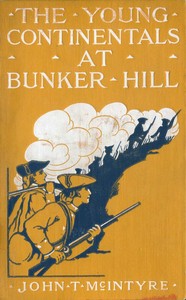
Before opening The Young Continentals at Bunker Hill — A Closer Reading, the edition data offers a quick orientation: 64,218 words, 4 hr 40 min estimated reading time, and 7 detected text sections.
The text analysis averages about 16.0 words per sentence, while the detected sections provide another way to judge how the source is divided.
Project Gutenberg metadata also associates the work with “Historical fiction,” connecting these edition facts with the source record’s subject description.
Explore this collection
These alternatives are selected using recorded categories and estimated reading time.
About 308 minutes
Young Readers
70,689 recorded words. 28 minutes difference from this book's estimate.
View Gutenberg source #41827About 231 minutes
Young Readers
52,999 recorded words. 49 minutes difference from this book's estimate.
View Gutenberg source #41628About 225 minutes
Young Readers
51,670 recorded words. 55 minutes difference from this book's estimate.
View Gutenberg source #42102Search stored excerpts and compare books → Choose by your preferences →
Choices use stored catalog measurements. Estimates vary with reading speed. A shared category is a catalog label, not a claim that two books have the same argument or literary quality.
Search reads excerpt text stored with this catalog and links to its associated Gutenberg record. The connection is stored in the site database; this tool does not recheck that every excerpt is word-for-word identical to that external record. Excerpt search does not cover every chapter and does not verify historical publication dates.
Catalog snapshot checked: 2026-09-26. Coverage: 90 public books, 90 available source excerpts.
Calculated from edition completeness, EPUB availability, text structure and catalogue metadata. Not a user rating.
Total of 100 points, scaled to a 2.5-5.0 range. Editions with an empty description or a missing EPUB file are not scored.
Public-domain source text
The source text is kept in the dedicated reader, separate from this catalogue record and its commentary.
John T. McIntyre opens The Young Continentals at Bunker Hill with a chapter title that signals both mystery and method: “How Ezra Prentiss Heard of a Stranger.” The phrasing is deliberate—not “met” but “heard of,” placing the reader at one remove from the action and establishing a pattern of indirect revelation that runs through the novel. Throughout the excerpts, McIntyre relies on reported intelligence, overheard conversations, and delayed disclosures to advance the plot. Ezra learns of British movements through gossip and official dispatches; his own identity is a secret he must guard. This layered approach to information creates a texture of uncertainty that mirrors the historical siege of Boston, where rumor and reconnaissance were as crucial as muskets.
McIntyre builds suspense not through dramatic action alone but through careful modulation of sensory detail. When describing the British troops in Boston, he writes that “their drums seemed to beat more briskly; their fifes to squeal more shrilly.” The word “seemed” is telling—it filters the observation through Ezra’s perception, reminding the reader that this is a subjective account. The verbs “beat” and “squeal” are chosen for their sharp, percussive quality, and the comparative adverbs “more briskly” and “more shrilly” create a sense of escalating pressure. Later, the description of General Gage’s headquarters as “a stately room filled with morning sunshine, and furnished after the stiff fashion of that day” contrasts the formal, orderly British world with the chaotic, improvised colonial effort. McIntyre uses such contrasts to underscore the ideological divide without stating it directly.
The dialogue in these excerpts serves a dual function: it conveys necessary plot information and reveals character through idiom and tone. Major Buckstone’s speech is blunt and military: “Hah! here is a communication just come to me regarding you, young sir.” The exclamation “Hah!” and the formal address “young sir” establish him as a bluff, no-nonsense officer. Gilbert Scarlett, the soldier of fortune, speaks in aphoristic, almost theatrical phrases: “Something is in the air. Within an hour you will be much wiser than you are now at this moment.” His language is more florid than Buckstone’s, hinting at a worldly, perhaps unreliable, nature. Ezra’s internal monologue, rendered in indirect discourse, reveals his moral struggle: “He was a lad who was frankness itself and one who detested methods that smacked of trickery.” The phrase “smacked of trickery” is colloquial and slightly old-fashioned, fitting the period and Ezra’s youthful earnestness.
McIntyre uses names and titles as markers of identity and allegiance. Ezra Prentiss is forced to answer to his brother’s name, George, a deception that “was a bitter thing” for him. The author emphasizes the psychological cost: “There was not a moment of his stay in Boston, during this period, or a time that he answered to his brother’s name, that his honesty and shame did not urge him to proclaim himself.” The repetition of “not a moment” and “or a time” underscores the constant pressure. Similarly, the British general is identified not by name but as “a striking-looking officer, attired in the brilliant uniform of a British general.” The adjective “brilliant” suggests both visual brightness and the perceived superiority of the British forces. The old merchant Seth Prentiss is referred to as “the old merchant” and “your grandfather,” emphasizing his role within the family and the community rather than his individual character.
The chapter titles in The Young Continentals at Bunker Hill are unusually elaborate, often running to a dozen words or more: “Shows How Ezra Met with Gilbert Scarlett, Soldier of Fortune” or “Tells How Ezra Entered the House of Abdallah.” This style, common in eighteenth- and nineteenth-century fiction, serves several purposes. It provides a summary of the chapter’s content, allowing readers to anticipate the action. It also creates a sense of episodic adventure, each chapter a self-contained unit with a clear beginning and end. The titles often include verbs of action and discovery—“hears,” “meets,” “enters,” “tells”—which reinforce the novel’s focus on movement and revelation. The phrase “Soldier of Fortune” in the second chapter title immediately marks Scarlett as a type, a wandering adventurer, and sets up expectations for his role in the story. McIntyre uses these titles to guide reader attention and to build a rhythm of anticipation and payoff.
Readers attentive to McIntyre’s craft will notice how he balances historical exposition with personal drama, using Ezra’s internal conflict as a lens through which to view the larger revolutionary struggle. The novel rewards close attention to its verbal textures—the choice of a single adjective, the rhythm of a sentence, the weight of a name. These details, rather than the broad sweep of battle, give the story its particular flavor and make it more than a simple adventure tale.
Sometimes the smallest details linger—like how McIntyre’s focus on a drumbeat’s echo in The Young Continentals at Bunker Hill quietly deepened a boy’s fear. That same gentle layering of moment against feeling stayed with me reading Dan Carter and the Cub Honor — Background and Themes, where a quiet choice of words softens even a simple tug-of-war into something remembered. It’s a nice comfort, that kind of closeness.
Capture what you thought, learned, and would like to remember.