About 207 minutes
Over There with the Canadians at Vimy Ridge — Reading Notes
Childrens Adventures
47,464 recorded words. 4 minutes difference from this book's estimate.
View Gutenberg source #46348
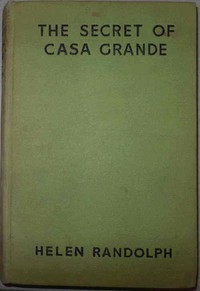
The Secret of Casa Grande Mexican Mystery Stories #1 — Themes and Context can be approached with a clearer sense of reading commitment from its source measurements: 46,590 words, 3 hr 23 min estimated reading time, and 7 detected text sections.
The text analysis averages about 13.9 words per sentence, while the detected sections provide another way to judge how the source is divided.
Project Gutenberg metadata also associates the work with “Young women -- Juvenile fiction,” connecting these edition facts with the source record’s subject description.
Explore this collection
These alternatives are selected using recorded categories and estimated reading time.
About 207 minutes
Childrens Adventures
47,464 recorded words. 4 minutes difference from this book's estimate.
View Gutenberg source #46348About 209 minutes
Childrens Adventures
47,958 recorded words. 6 minutes difference from this book's estimate.
View Gutenberg source #45485About 210 minutes
Childrens Adventures
48,229 recorded words. 7 minutes difference from this book's estimate.
View Gutenberg source #44013Search stored excerpts and compare books → Choose by your preferences →
Choices use stored catalog measurements. Estimates vary with reading speed. A shared category is a catalog label, not a claim that two books have the same argument or literary quality.
Search reads excerpt text stored with this catalog and links to its associated Gutenberg record. The connection is stored in the site database; this tool does not recheck that every excerpt is word-for-word identical to that external record. Excerpt search does not cover every chapter and does not verify historical publication dates.
Catalog snapshot checked: 2026-09-26. Coverage: 90 public books, 90 available source excerpts.
Calculated from edition completeness, EPUB availability, text structure and catalogue metadata. Not a user rating.
Total of 100 points, scaled to a 2.5-5.0 range. Editions with an empty description or a missing EPUB file are not scored.
Public-domain source text
The source text is kept in the dedicated reader, separate from this catalogue record and its commentary.
From its first sentence, The Secret of Casa Grande establishes a world where the ordinary and the mysterious coexist through precise sensory detail. Jo Ann wakes to the sound of shutters opening, her gaze traveling over a 'high, heavily beamed ceiling' and 'bare plastered walls' before resting on her sleeping friend. The author uses these concrete observations to ground the reader in the unfamiliar setting, while the iron bars on the window hint at confinement or danger. The narrative voice shifts seamlessly between description and dialogue, with the girls' banter revealing their personalities: Jo Ann's quickness to imagine revolution, Peggy's teasing practicality, and Florence's amused authority. Randolph's diction—words like 'turbulent black curls,' 'gentian-blue eyes,' and 'solid brass' key—creates a vivid, tactile world that rewards close attention.
Randolph invests physical objects with narrative significance. The brass key, described as 'about that long' with hands held eight inches apart and weighing 'a pound or more,' becomes a focal point of curiosity. Its size and heft are emphasized not just as description but as a marker of the house's history—'in olden days they took the mozo along just to carry the key.' The key is presented as a relic, a 'parlor ornament,' yet it immediately triggers Jo Ann's quest. Similarly, the 'solid doorlike shutters' and 'iron bars' of the window are not merely architectural details; they establish a sense of enclosure and secrecy. The author's habit of specifying materials—'plastered walls,' 'beamed ceiling,' 'brass'—grounds the mystery in a tangible environment, making the later revelations feel earned.
The three girls are distinguished primarily through their speech patterns. Jo Ann's dialogue is marked by exclamations and questions: 'I suppose I'm imagining things, am I?' and 'What in the world was that noise?' She is impulsive and dramatic, quick to suspect a revolution. Peggy, by contrast, uses teasing, deflating remarks: 'The key—weren't you hunting for a mysterious key? There you are! Your wish has been granted.' Her tone is playful but observant. Florence speaks with calm authority, often using Spanish phrases ('Buenos dias') and explaining local customs. When she says, 'I assure you everything is quiet and peaceful,' her confidence contrasts with Jo Ann's alarm. Randolph uses these vocal differences to create tension and humor, as when Florence's laughter at Jo Ann's 'revolution' theory reveals the mundane truth—a knock at the door.
The excerpts show Randolph weaving Spanish into the English text, not as decoration but as a source of confusion and learning. Jo Ann's struggle to understand Juana—'I think she's trying to tell me something about Florence, but I'm not sure'—highlights the language barrier that the characters must navigate. Florence's ability to 'speak rapidly in Spanish' sets her apart as a cultural intermediary. The author also includes untranslated phrases like 'Buenos dias, señorita' and 'mozo,' trusting the reader to infer meaning from context. This choice reflects the story's setting and adds authenticity, while also creating moments of humor, as when Peggy mishears 'mozo' as 'bozo.' The friction is not merely linguistic; it extends to customs, such as bolting the door after a late-night caller, which strikes Peggy as 'ridiculous.'
Randolph structures her opening chapters to build mystery through small, incremental revelations. The first chapter begins with Jo Ann's disorientation—'Where was she? Why the iron bars?'—and then slowly answers those questions through sensory details and dialogue. The 'mysterious window' of the chapter title is introduced but not explained; instead, the narrative shifts to the key, then to the locked door, and finally to the nighttime knocking. Each new element raises further questions. The author also uses time to create suspense: the girls search for the key 'with flashlights blinking' in the dark, and the knocking occurs 'in the middle of the night.' These temporal markers heighten the sense of urgency. The pacing is deliberate, with moments of humor (Florence's 'stopped the revolution') interspersed to relieve tension before the next puzzle is introduced.
Readers attentive to Randolph's craft will notice how she uses the physical environment—the heavy key, the iron bars, the bolted door—to externalize the characters' inner curiosity and unease. The dialogue not only advances the plot but also subtly establishes each girl's role in the investigation. As the mystery unfolds, these early details reward careful rereading, revealing how the author planted clues in plain sight through description and conversation.
Reading about Helen Randolph’s sun-warmed stone house and its quiet frictions, I found myself thinking of another old companion, the woodsmoke and river-light of The Bungalow Boys in the Great Northwest — Text and Context. Different landscapes, same ache for a place that feels remembered, even when first encountered. Some books simply hold that weather inside them.
A brief reflection can help important ideas stay with you longer.