About 185 minutes
The Brownie Scouts at Silver Beach — Story, Setting & Ideas
Childrens Adventures
42,532 recorded words. 0 minutes difference from this book's estimate.
View Gutenberg source #51696
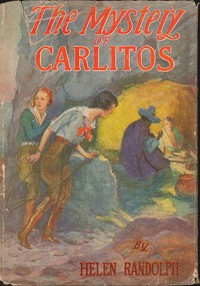
For The Mystery of Carlitos Mexican Mystery Stories #2 — A Closer Reading, the stored edition analysis reports 42,391 words, 3 hr 5 min estimated reading time, and 6 detected text sections.
The text analysis averages about 13.4 words per sentence, while the detected sections provide another way to judge how the source is divided.
Project Gutenberg metadata also associates the work with “Young women -- Juvenile fiction,” connecting these edition facts with the source record’s subject description.
Explore this collection
These alternatives are selected using recorded categories and estimated reading time.
About 185 minutes
Childrens Adventures
42,532 recorded words. 0 minutes difference from this book's estimate.
View Gutenberg source #51696About 186 minutes
Childrens Adventures
42,714 recorded words. 1 minutes difference from this book's estimate.
View Gutenberg source #44061About 186 minutes
Childrens Adventures
42,632 recorded words. 1 minutes difference from this book's estimate.
View Gutenberg source #50256Search stored excerpts and compare books → Choose by your preferences →
Choices use stored catalog measurements. Estimates vary with reading speed. A shared category is a catalog label, not a claim that two books have the same argument or literary quality.
Search reads excerpt text stored with this catalog and links to its associated Gutenberg record. The connection is stored in the site database; this tool does not recheck that every excerpt is word-for-word identical to that external record. Excerpt search does not cover every chapter and does not verify historical publication dates.
Catalog snapshot checked: 2026-09-26. Coverage: 90 public books, 90 available source excerpts.
Calculated from edition completeness, EPUB availability, text structure and catalogue metadata. Not a user rating.
Total of 100 points, scaled to a 2.5-5.0 range. Editions with an empty description or a missing EPUB file are not scored.
Public-domain source text
The source text is kept in the dedicated reader, separate from this catalogue record and its commentary.
Helen Randolph opens The Mystery of Carlitos with a scene that immediately establishes a contrast between the American girls' brisk, colloquial speech and the slower, more deliberate rhythms of their Mexican surroundings. Jo Ann's exclamation, "Your throne's ready, Your Majesty," and her description of the burro as "poky" set a tone of cheerful impatience, while the driver is noted as "sound asleep" and the burro responds with a "knowing 'heehaw.'" The author uses these small behavioral details—the flapping ears, the thrown-back head—to animate the setting without lengthy exposition. The dialogue is peppered with exclamations and interruptions, creating a sense of urgency that contrasts with the leisurely pace of the landscape. This tension between the girls' eagerness and the environment's resistance becomes a recurring structural device.
Randolph differentiates her young protagonists primarily through their speech. Jo Ann is impulsive and direct, often bursting out with declarations like "I was right! There is a mystery—about the blue-eyed boy!" Her sentences are short, exclamatory, and frequently interrupted by others. Florence, by contrast, is more measured: she "grabbed up a piece of paper and scribbled down the address" before allowing discussion, and her recounting of María's story is methodical. Peggy serves as a foil, asking clarifying questions that advance the exposition. The author avoids tagging every line with "she said," instead relying on action beats—"Jo Ann nodded her dark curly bob"—to keep the dialogue brisk. This technique mirrors the girls' collaborative problem-solving: they finish each other's thoughts and correct one another, as when Florence adds, "I gathered from what María said that his father was either the owner of the mine or had an interest in it."
Randolph grounds the Mexican setting in specific, tangible details rather than generic exoticism. The opening panorama includes "rugged, cloud-tipped mountain peaks, the deep valley covered with tropical growth, and a gleaming, silver waterfall." The chair is described as "crude, hand-made" and covered with a "bright rainbow-hued Mexican blanket." These objects are not merely decorative; they serve as markers of the characters' adaptation to a new environment. The author also uses sound: the burro's bray, the driver's silence, and the girls' laughter. Later, the mail carrier arrives "riding a burro leisurely up the cart road," and his deliberate movements—"slowly untying one of the bundles"—frustrate Jo Ann, who complains, "He's the slowest thing I ever saw." This impatience is a recurring motif, contrasting the girls' American efficiency with the local pace. The sensory details thus do double duty, advancing both setting and character.
The mystery unfolds through a pattern of delayed disclosure. In Chapter XI, the girls return "almost breathless from their rapid climb" and immediately Jo Ann announces her discovery. But Florence insists on recording the address first, creating a brief pause that heightens anticipation. The information is then relayed in stages: first the fact that Carlitos is an American orphan, then the role of the servant María, then the father's possible connection to a mine. Each piece is met with a question from Peggy or Mrs. Blackwell, forcing the girls to clarify and elaborate. Randolph uses this back-and-forth to mimic the process of deduction, where each answer raises new questions. Jo Ann explicitly names this pattern: "A mystery within a mystery." The author also withholds the full story; Florence admits, "I haven't got it straight in my mind either," signaling that the excerpts cover only part of the investigation. This structural honesty prevents the narrative from feeling contrived.
Randolph weaves Spanish terms into the English text without italics or translation, treating them as natural parts of the characters' vocabulary. Words like "burro," "sombrero," "Adios," and "piñata" appear without explanation, assuming a reader familiar with basic Mexican culture. The author also uses Spanish in dialogue: Florence asks the mail carrier, "Give them to me," in Spanish, and the man responds with "Ah, many letters!" This code-switching reflects the girls' growing comfort with their surroundings. However, the narrative voice remains firmly American; the girls refer to the driver as "the Indian" and describe the cave family as "poor ignorant Indians," a phrasing that dates the work to its 1936 publication. The author does not critique these attitudes but presents them as part of the characters' perspective. The contrast between the girls' colloquial English and the formal, slightly archaic speech of the Mexican characters (as seen in María's reported dialogue) reinforces the cultural distance that the mystery must bridge.
Readers attentive to Randolph's word choices will notice how she builds suspense through small, repeated details: the "soiled yellowed envelope," the "mean man" mentioned by María, and the delayed mail delivery that structures the investigation. The author trusts her audience to pick up on these clues without explicit signposting. As you read, pay attention to what the girls don't say—the pauses, the interruptions, the moments when they write things down rather than speak. These silences are as revealing as the dialogue.
There’s a quiet kinship between Helen Randolph’s measured diction in The Mystery of Carlitos and the unhurried pace of the old camping tales. Both trust the reader to sit with details—a fence line, a scuffed boot, a murmured phrase—letting characters emerge without haste. It’s the same patient pleasure I’ve found in The Boy Scouts in the Saddle — Inside the Classic, where the landscape itself becomes the story’s breath.
Create a short personal record of your experience with this book.