About 254 minutes
Bill Bruce on Forest Patrol — A Closer Reading
Childrens Adventures
58,332 recorded words. 2 minutes difference from this book's estimate.
View Gutenberg source #48377
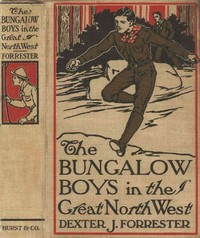
This digital edition of The Bungalow Boys in the Great Northwest — Text and Context is described by source-level measurements including 57,817 words, 4 hr 12 min estimated reading time, and 25 detected text sections.
The text analysis averages about 15.4 words per sentence, while the detected sections provide another way to judge how the source is divided.
Project Gutenberg metadata also associates the work with “Mystery and detective stories,” connecting these edition facts with the source record’s subject description.
Explore this collection
These alternatives are selected using recorded categories and estimated reading time.
About 254 minutes
Childrens Adventures
58,332 recorded words. 2 minutes difference from this book's estimate.
View Gutenberg source #48377About 258 minutes
Childrens Adventures
59,293 recorded words. 6 minutes difference from this book's estimate.
View Gutenberg source #50123About 245 minutes
Childrens Adventures
56,151 recorded words. 7 minutes difference from this book's estimate.
View Gutenberg source #45629Search stored excerpts and compare books → Choose by your preferences →
Choices use stored catalog measurements. Estimates vary with reading speed. A shared category is a catalog label, not a claim that two books have the same argument or literary quality.
Search reads excerpt text stored with this catalog and links to its associated Gutenberg record. The connection is stored in the site database; this tool does not recheck that every excerpt is word-for-word identical to that external record. Excerpt search does not cover every chapter and does not verify historical publication dates.
Catalog snapshot checked: 2026-09-26. Coverage: 90 public books, 90 available source excerpts.
Calculated from edition completeness, EPUB availability, text structure and catalogue metadata. Not a user rating.
Total of 100 points, scaled to a 2.5-5.0 range. Editions with an empty description or a missing EPUB file are not scored.
Public-domain source text
The source text is kept in the dedicated reader, separate from this catalogue record and its commentary.
The catalog subjects for this title—mystery and detective stories, inventions, smugglers, and the Pacific Northwest—find uneven support in the excerpts. The setting is indeed the Northwest, but the opening chapter places the Bungalow Boys in a Maine valley, not the Northwest. The smuggler element appears through a tunnel used to move “Mongolians” inland, and the mystery revolves around a man found suspended by his wrists. Inventions, however, are absent from the provided text; the boys’ resourcefulness with a knife and canoe is practical, not mechanical.
The smuggler plot emerges through Sam Hartley’s discovery of a river tunnel connecting the canyon to the sea. He explains that Bully Banjo’s men use it to land “Mongolians” on the beach and march them inland, sometimes wading “up to their knees.” The tunnel is screened by brush, and Hartley deduces its existence from tracks in the sand. This aligns with the catalog subject of smugglers, though the excerpts do not reveal the cargo’s nature or the operation’s scale. The tunnel itself is a concrete detail that drives the plot forward, but its full significance remains unclear from the excerpts alone.
The most striking scene involves a man found strung up by his wrists in a tree, his feet dangling “a foot or more off the ground.” Jack identifies him as one of the guards who fell asleep during an earlier escape. The man’s wrists show red bands where the flesh was “cut deeply into,” and his appearance—bloated face, lank hair, stained clothes—suggests dissipation. Sam Hartley calls him a “horrible example” of Bully Banjo’s methods. This incident provides a visceral mystery, but the excerpts do not explain why the man was punished or how he survived. The catalog subject of mystery is thus grounded in this violent tableau, though the larger detective thread is only hinted at.
The Bungalow Boys, Tom and Jack Dacre, are introduced as vigorous, clean-limbed youths paddling a green canoe. Their uncle, Mr. Dacre, receives a letter that startles him, but its contents are not disclosed. Later, Jack recognizes the bound man and questions Sam Hartley eagerly. The boys’ past adventure—being “marooned in the Tropics”—is mentioned but not detailed. In the excerpts, they are observers rather than instigators of action, though Jack’s earlier escape using a knife is referenced. The catalog subject of inventions is absent; the boys’ tools are a canoe and a knife, not any device. Their resourcefulness is physical, not technological.
Readers should note that the excerpts cover only the opening chapters and one later scene. The catalog subjects of inventions and detective work may appear in the full text, but they are not evident here. The smuggler plot and the mystery of the bound man are the primary threads visible. The boys’ past adventure is alluded to but not explained, so readers expecting a standalone story may need to consult earlier volumes in the series.
That rainy afternoon, The Bungalow Boys kept me turning pages, its tunnel and that bound man lingering long after the last one. I kept thinking about how resourcefulness blooms when the world turns sideways, water rising, plans washing away. Later, drying the windowsill, my fingers found another dog-eared volume, The Boy Scouts Along the Susquehanna; or, The Silver Fox Patrol Caught in a Flood — Reading Notes, and I simply sat back down.
Create a short personal record of your experience with this book.