About 129 minutes
The Boy Scouts of the Naval Reserve — Key Ideas to Explore
Childrens Adventures
29,510 recorded words. 3 minutes difference from this book's estimate.
View Gutenberg source #48410
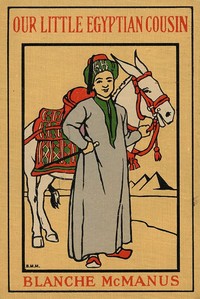
This digital edition of Nabul, Our Little Egyptian Cousin — Background and Themes is described by source-level measurements including 28,862 words, 2 hr 6 min estimated reading time, and 4 detected text sections.
The text analysis averages about 21.7 words per sentence, while the detected sections provide another way to judge how the source is divided.
Project Gutenberg metadata also associates the work with “Pyramids -- Juvenile fiction,” connecting these edition facts with the source record’s subject description.
Explore this collection
These alternatives are selected using recorded categories and estimated reading time.
About 129 minutes
Childrens Adventures
29,510 recorded words. 3 minutes difference from this book's estimate.
View Gutenberg source #48410About 122 minutes
Childrens Adventures
27,982 recorded words. 4 minutes difference from this book's estimate.
View Gutenberg source #49117About 133 minutes
Childrens Adventures
30,486 recorded words. 7 minutes difference from this book's estimate.
View Gutenberg source #49269Search stored excerpts and compare books → Choose by your preferences →
Choices use stored catalog measurements. Estimates vary with reading speed. A shared category is a catalog label, not a claim that two books have the same argument or literary quality.
Search reads excerpt text stored with this catalog and links to its associated Gutenberg record. The connection is stored in the site database; this tool does not recheck that every excerpt is word-for-word identical to that external record. Excerpt search does not cover every chapter and does not verify historical publication dates.
Catalog snapshot checked: 2026-09-26. Coverage: 90 public books, 90 available source excerpts.
Calculated from edition completeness, EPUB availability, text structure and catalogue metadata. Not a user rating.
Total of 100 points, scaled to a 2.5-5.0 range. Editions with an empty description or a missing EPUB file are not scored.
Public-domain source text
The source text is kept in the dedicated reader, separate from this catalogue record and its commentary.
Blanche McManus's Nabul, Our Little Egyptian Cousin (1908) introduces readers to a young Egyptian boy and his family during a voyage on the Nile. The catalog subjects list 'Pyramids -- Juvenile fiction; Children -- Egypt -- Juvenile fiction; Egypt -- Description and travel -- Juvenile fiction; Egypt -- Social life and customs -- Juvenile fiction.' Yet the excerpts reveal that the pyramids are barely mentioned; instead, the narrative concentrates on the daily life aboard a dahabeah (a houseboat), interactions with local villagers, and the customs of the crew. This note examines how the catalog categories both guide and misrepresent the book's actual content.
The catalog classifies the book under 'Description and travel,' and indeed the excerpts depict a detailed river journey. The party visits a village, observes a mosque minaret, and rides donkeys through fields. However, the travel is not a simple tour; it is woven into a fictional narrative with characters like Nabul, George, and Uncle Ben. The text describes the crew's food bag hung on the mast 'so that all can see it and no one can steal any of it without his fellows seeing him'—a specific cultural practice presented as part of the story. The travel elements serve as a backdrop for the plot, not as a guidebook. The catalog's travel subject is accurate but incomplete, as it omits the fictional frame.
The subject 'Social life and customs' is well represented, but the excerpts show customs filtered through the perspective of children. Nabul explains the crew's dinner routine, and the children climb the minaret 'to follow their example' of the natives. The donkey boys' reaction to the visitors' own donkeys—'they howled and shouted'—reveals local economic tensions. Mustapha's grumbling is likened to 'an old camel with a hard mouth and a soft heart,' a simile that reflects local idiom. These details offer authentic glimpses of Egyptian life, but they are always mediated by the young protagonists' experiences. The catalog subject does not capture this child-centric viewpoint.
The catalog lists 'Children -- Egypt -- Juvenile fiction,' but the excerpts prominently feature foreign characters. George and his uncle Ben are American or English tourists, and the narrative often contrasts their reactions with Nabul's knowledge. When George says 'I don't see anything but big stones,' Nabul responds by racing ahead, showing his familiarity with the landscape. The preface notes that 'many thousands of little American and English cousins have visited the banks of the Nile,' positioning the book as a bridge between cultures. Yet the story does not fully adopt an Egyptian perspective; it remains a foreigner's view of Egypt, with Nabul as a guide. This tension between the catalog's focus on Egyptian children and the actual narrative's dual viewpoint is a key feature of the text.
Readers approaching Nabul, Our Little Egyptian Cousin should expect a hybrid work: part travel narrative, part cultural introduction, and part children's adventure. The catalog subjects provide a starting point, but the book's value lies in its specific details—the food bag, the donkey race, the minaret climb—that bring early 20th-century Egypt to life through a child's eyes. The foreign characters remind us that this is an outsider's story, but Nabul's voice offers authentic glimpses of his world.
There’s something tender about watching a child from 1908 drift down the Nile, carrying both local wonder and a foreigner’s gaze. That same quiet ache for adventure lingers in The Motor Rangers' Cloud Cruiser — Key Ideas to Explore, where the sky replaces the river, yet the longing feels just as familiar. I suppose we never quite leave those early maps behind.
Capture what you thought, learned, and would like to remember.