About 209 minutes
The Sky Trail — Background and Themes
Childrens Adventures
47,958 recorded words. 1 minutes difference from this book's estimate.
View Gutenberg source #45485
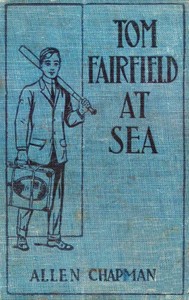
For Tom Fairfield at Sea; or, The Wreck of the Silver Star — Reading Notes, the stored edition analysis reports 48,229 words, 3 hr 30 min estimated reading time, and 5 detected text sections.
The text analysis averages about 13.4 words per sentence, while the detected sections provide another way to judge how the source is divided.
Project Gutenberg metadata also associates the work with “Sea stories,” connecting these edition facts with the source record’s subject description.
Explore this collection
These alternatives are selected using recorded categories and estimated reading time.
About 209 minutes
Childrens Adventures
47,958 recorded words. 1 minutes difference from this book's estimate.
View Gutenberg source #45485About 207 minutes
Childrens Adventures
47,464 recorded words. 3 minutes difference from this book's estimate.
View Gutenberg source #46348About 215 minutes
Childrens Adventures
49,223 recorded words. 5 minutes difference from this book's estimate.
View Gutenberg source #50431Search stored excerpts and compare books → Choose by your preferences →
Choices use stored catalog measurements. Estimates vary with reading speed. A shared category is a catalog label, not a claim that two books have the same argument or literary quality.
Search reads excerpt text stored with this catalog and links to its associated Gutenberg record. The connection is stored in the site database; this tool does not recheck that every excerpt is word-for-word identical to that external record. Excerpt search does not cover every chapter and does not verify historical publication dates.
Catalog snapshot checked: 2026-09-26. Coverage: 90 public books, 90 available source excerpts.
Calculated from edition completeness, EPUB availability, text structure and catalogue metadata. Not a user rating.
Total of 100 points, scaled to a 2.5-5.0 range. Editions with an empty description or a missing EPUB file are not scored.
Public-domain source text
The source text is kept in the dedicated reader, separate from this catalogue record and its commentary.
The novel opens not at sea but in a dormitory at Elmwood Hall, where Tom Fairfield and his chum Jack Fitch debate skipping Latin. The dialogue is brisk and colloquial—Jack calls the classics master "that old tyrant Skeel"—and the tone is one of casual rebellion. This schoolboy prologue, complete with plans to tip off friends and sneak into town for a musical comedy, establishes Tom as a likable, resourceful protagonist before any maritime action begins. The contrast between this landlocked ease and the later shipwreck is sharp, and the reader is primed to watch how Tom's schoolyard confidence translates into crisis.
The first excerpt gives no hint of disaster; it is pure boarding-school banter. Tom and Jack discuss running the guard, mention a proctor’s scouts, and debate whether to include friends Bert Wilson and Georgie Abbot. The only foreshadowing is the presence of Mr. Skeel, the disliked Latin teacher, who will later reappear among the castaways. A first-time reader might mistake this for a school story, but the chapter title “Startling News” and the book’s subtitle promise a wreck. The transition from Elmwood Hall to the Silver Star is abrupt, and the excerpts do not show how it occurs—only that it does. This gap invites the reader to imagine the intervening events, trusting that Tom’s quick thinking, hinted at in his easy rapport with Jack, will serve him when the ship founders.
By the middle excerpt, Tom and a small party are adrift on a derelict vessel. The prose shifts from dialogue-heavy school scenes to descriptive survival: the sea is “like the proverbial millpond,” the forward companionway is “almost out of water,” and the ship’s origin is unknown. The characters speculate about how long the derelict has been wrecked—“A year maybe, longer perhaps”—and wonder what became of its crew. This mystery is left unresolved in the excerpts, and the reader is encouraged to share the castaways’ uncertainty. The text also introduces young Jackie, a child who dislikes the dark and mosquitoes, and whose presence softens Tom’s demeanor. Tom’s promise to hold Jackie’s hand, and his playful lie about mosquitoes, reveal a protective side that was absent in the opening chapter.
The excerpts show a subtle shift in who commands. Early on, Tom defers to Jack’s plan and asks permission to include others. On the derelict, however, the sailor Abe asks Tom to “name the watches,” and Tom accepts the role of captain without protest. The dialogue retains its colloquial rhythm—“We can’t kick against Providence”—but the speaker is now often Abe or Joe, seasoned seamen, not schoolboys. Tom’s authority is provisional, granted by the adults around him. Notably, Mr. Skeel, the former teacher, performs his duties “in solemn silence” and is disliked even by Jackie. The reader may note that the classroom hierarchy has been overturned: the tyrant of Latin is now a silent subordinate, while the student leads.
The excerpts cover only the beginning and a middle stretch of the narrative. They do not reveal how Tom came to be on the Silver Star, what caused the wreck, or whether the lifeboat mentioned ever reached safety. The later chapters listed in the contents—“A Hand in the Night,” “Treachery,” “Days of Suffering”—suggest further trials, but the provided text stops before any resolution. A first reader must therefore accept that the story’s full arc is unknown. The value of the excerpts lies in their contrast: the carefree opening makes the later hardship more striking, and the unresolved mysteries (the derelict’s past, the fate of the Silver Star’s crew) create a sense of an ongoing, incomplete journey. The reader is left to wonder which of the hinted dangers will materialize.
Because the excerpts present only fragments of the full novel, a first reading is best approached as an exploration of tone and character rather than plot. Notice how Tom’s voice changes from schoolboy slang to quiet reassurance, and how the setting shifts from a known world of rules and proctors to an open ocean where authority must be earned. The gaps between excerpts are as instructive as the text itself: they remind the reader that this is a serial adventure, built on suspense and the promise of further peril.
There's something about watching Tom Fairfield trade schoolyard jokes for the open sea that stays with you—that quiet shift from safety to uncertainty. I felt the same lingering pull reading about the Scouts and their pennant, how small rivalries ripple into bigger tests of trust. It made me think of you, honestly. The Boy Scouts and the Prize Pennant — Text and Context holds that same gentle weight, like a warm afternoon remembered long after dark.
Your answers remain private and are stored only in this browser.