About 284 minutes
The Adventures of Billy Topsail — Reading Notes
Childrens Adventures
65,153 recorded words. 2 minutes difference from this book's estimate.
View Gutenberg source #44037
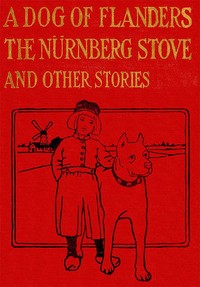
The catalog record for A Dog of Flanders, The Nürnberg Stove, and Other Stories — Key Ideas to Explore provides practical reading context through 64,645 words, 4 hr 42 min estimated reading time, and 14 detected text sections.
The text analysis averages about 23.5 words per sentence, while the detected sections provide another way to judge how the source is divided.
Project Gutenberg metadata also associates the work with “Dogs -- Juvenile fiction,” connecting these edition facts with the source record’s subject description.
Explore this collection
These alternatives are selected using recorded categories and estimated reading time.
About 284 minutes
Childrens Adventures
65,153 recorded words. 2 minutes difference from this book's estimate.
View Gutenberg source #44037About 292 minutes
Childrens Adventures
67,003 recorded words. 10 minutes difference from this book's estimate.
View Gutenberg source #45582About 271 minutes
Childrens Adventures
62,257 recorded words. 11 minutes difference from this book's estimate.
View Gutenberg source #47358Search stored excerpts and compare books → Choose by your preferences →
Choices use stored catalog measurements. Estimates vary with reading speed. A shared category is a catalog label, not a claim that two books have the same argument or literary quality.
Search reads excerpt text stored with this catalog and links to its associated Gutenberg record. The connection is stored in the site database; this tool does not recheck that every excerpt is word-for-word identical to that external record. Excerpt search does not cover every chapter and does not verify historical publication dates.
Catalog snapshot checked: 2026-09-26. Coverage: 90 public books, 90 available source excerpts.
Calculated from edition completeness, EPUB availability, text structure and catalogue metadata. Not a user rating.
Total of 100 points, scaled to a 2.5-5.0 range. Editions with an empty description or a missing EPUB file are not scored.
Public-domain source text
The source text is kept in the dedicated reader, separate from this catalogue record and its commentary.
Ouida’s collection repeatedly places vulnerable characters in extreme cold—snow, ice, and bitter winds—while enclosing them within cramped, dark spaces: a dog’s kennel, a stove, a poor cottage. The physical environment is not mere backdrop but an active force that shapes the action. In 'A Dog of Flanders,' Nello and his dog Patrasche are 'left all alone in the world' with only each other; in 'The Nürnberg Stove,' young August hides inside Hirschvogel, a massive ceramic stove, as it is transported through snowy streets. These openings establish a pattern of confinement and exposure that runs through all four tales.
The stories are built around journeys that are also imprisonments. In 'The Nürnberg Stove,' August is carried inside the stove for over a mile, 'sinking and rising, sinking and rising, with each of their steps.' He cannot see out, only peep through brass-work. The narrative follows his limited senses: the feel of carpet underfoot, the sound of distant music, the smell of flowers in November. Similarly, in 'A Dog of Flanders,' Nello and Patrasche are bound to their cart and their poverty, moving through the Flemish landscape but never escaping their condition. The structure of each story alternates between cramped interiors—a hut, a stove, a garret—and open, often hostile exteriors. This oscillation creates a rhythm of hope and despair, as characters are shuttled between safety and exposure.
Objects in these stories carry emotional and narrative weight far beyond their utility. The stove Hirschvogel is described as 'exceedingly beautiful,' a work of art that August worships. It becomes a refuge, a prison, and a vehicle. In 'A Dog of Flanders,' the charcoal with which Nello draws is both his livelihood and his link to art. The illustrations listed in the front matter—'Nello drew their likeness with a stick of charcoal'—point to the importance of these material things. The stories linger on the physicality of objects: the heaviness of the stove, the coldness of the snow, the roughness of the cart. These details ground the fantastical elements—a boy inside a stove, a dog’s unwavering loyalty—in a tangible world where hunger and exhaustion are real.
Ouida often conveys information through overheard speech and muffled sounds. August, trapped in the stove, hears 'a great many different voices' but cannot understand them. He interprets the world through fragments: a low voice saying 'So!', the 'dreamy, exquisite music' of Wagner playing 'Parsival.' The reader shares his limited perspective, piecing together the scene from his sensory clues. In 'A Dog of Flanders,' the narrative similarly filters through Nello’s perception, though with more direct access to his thoughts. This technique creates intimacy while also emphasizing the characters’ powerlessness. They are listeners, not speakers; they react to events they cannot control. The stories’ emotional impact comes from this asymmetry—the gap between what the characters know and what the reader infers.
Snow and cold are not just weather but active antagonists. The road in 'The Nürnberg Stove' is 'heavy with snow,' and the porters struggle under their burden. August feels 'the fresh icy wind' on his face through the brass-work. In 'A Dog of Flanders,' the winter setting is established from the start, with the story set at Noël (Christmas). The cold isolates the characters, making their poverty more acute. Yet winter also enables the plot: the stove is needed for warmth, the snow muffles sound, the holiday season creates a backdrop of contrast between rich and poor. Ouida uses the season to heighten both suffering and the possibility of rescue. The cold is relentless, but it also concentrates the characters’ desires on simple, elemental needs: warmth, food, shelter.
Readers should pay attention to how Ouida shifts between close interiority and distant observation. The stories often begin with a tight focus on a single character’s sensations—cold, hunger, fear—then pull back to show the larger social world that ignores or exploits them. This movement between scales is the collection’s central structural device. The illustrations by Maria Louise Kirk, listed in the front matter, emphasize key moments of encounter and isolation, and may offer a visual counterpart to the text’s alternation between confinement and release.
Reading about Nello and Patrasche shivering through that Flemish winter, I remembered how my own dog would press against me on cold mornings, asking for nothing but presence. That same quiet ache surfaced years ago while working through Crossed Trails in Mexico Mexican Mystery Stories #3 — Background and Themes, where survival also leans on small, unspoken loyalties between unlikely companions.
Build a private reading journal entry for this title.