About 284 minutes
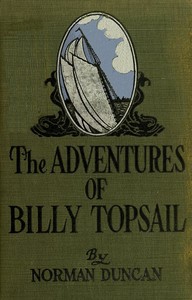
The Adventures of Billy Topsail — Reading Notes
Childrens Adventures
65,153 recorded words. 8 minutes difference from this book's estimate.
View Gutenberg source #44037
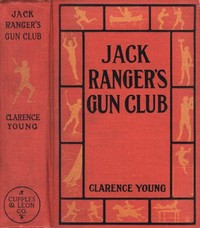
The catalog record for Jack Ranger's Gun Club; Or, From Schoolroom to Camp and Trail — A Reader’s Guide provides practical reading context through 67,003 words, 4 hr 52 min estimated reading time, and 8 detected text sections.
The text analysis averages about 12.7 words per sentence, while the detected sections provide another way to judge how the source is divided.
Project Gutenberg metadata also associates the work with “Western stories,” connecting these edition facts with the source record’s subject description.
Explore this collection
These alternatives are selected using recorded categories and estimated reading time.
About 284 minutes
Childrens Adventures
65,153 recorded words. 8 minutes difference from this book's estimate.
View Gutenberg source #44037About 301 minutes
Childrens Adventures
69,034 recorded words. 9 minutes difference from this book's estimate.
View Gutenberg source #45667About 282 minutes
Childrens Adventures
64,645 recorded words. 10 minutes difference from this book's estimate.
View Gutenberg source #50032Search stored excerpts and compare books → Choose by your preferences →
Choices use stored catalog measurements. Estimates vary with reading speed. A shared category is a catalog label, not a claim that two books have the same argument or literary quality.
Search reads excerpt text stored with this catalog and links to its associated Gutenberg record. The connection is stored in the site database; this tool does not recheck that every excerpt is word-for-word identical to that external record. Excerpt search does not cover every chapter and does not verify historical publication dates.
Catalog snapshot checked: 2026-09-26. Coverage: 90 public books, 90 available source excerpts.
Calculated from edition completeness, EPUB availability, text structure and catalogue metadata. Not a user rating.
Total of 100 points, scaled to a 2.5-5.0 range. Editions with an empty description or a missing EPUB file are not scored.
Public-domain source text
The source text is kept in the dedicated reader, separate from this catalogue record and its commentary.
Clarence Young's Jack Ranger's Gun Club opens with a brisk rowing race, establishing a pattern of competitive banter among the boys. The narrative voice is direct and colloquial, with characters like Dock Snaith and Sam Chalmers speaking in clipped, informal exchanges. The early chapters rely on dialogue to propel action, as seen in the opening line, “Now, then, are you all ready?” This conversational style gives way to more descriptive passages when the setting shifts to the bad lands, where the pace slows to accommodate survival tension.
The first chapter, “Jack Wins a Race,” immerses readers in a world of schoolboy rivalry through rapid-fire dialogue. Lines such as “I’m as ready as I ever shall be” and “Let her go!” establish a rhythm of short, urgent exchanges. Young uses these verbal cues to define character: Dock Snaith’s fussiness over oiling his oarlock contrasts with Jack’s easy confidence. The narrative rarely lingers on description in these early scenes; instead, it trusts the boys’ words to convey mood and momentum. This technique creates a sense of immediacy, pulling readers into the action without preamble.
Later chapters, such as “Lost in the Bad Lands,” mark a distinct change in pace. The prose becomes more measured, with longer sentences and sensory details: “the sun was barely visible from over the peaks,” “shadows growing longer and longer.” Dialogue remains important—Nat’s dejected “How about it?” and Jack’s plan to yell and fire rifles—but it is now interspersed with observations of the environment. The boys’ reliance on their horses’ “superior intelligence” to find camp introduces a note of trust in instinct over reason. This shift from schoolroom chatter to wilderness survival gives the narrative a dual texture: brisk social scenes and slower, more atmospheric passages.
Young repeatedly uses sound as a narrative device. In the bad lands, shouts and rifle shots produce echoes that “seemed to be their only answer,” and later, horse whinnies are mistaken for a bear. These auditory cues heighten tension and underscore the characters’ isolation. Earlier, the race chapter relies on the splash of oars and shouted commands. This motif of misheard or amplified sound recurs throughout the excerpts, linking the boys’ schoolyard bravado to their vulnerability in the wild. The echo effect also mirrors the narrative’s own structure: actions and words return, transformed, in new contexts.
Readers attentive to voice will notice how Young calibrates his prose to match the setting: clipped and competitive at school, more expansive and cautious on the trail. The gun club itself, though central to the title, appears only briefly in the excerpts; the story’s real engine is the interplay between group dynamics and individual resourcefulness. This edition invites a focus on how the author modulates pace and dialogue to sustain a long adventure.
Sometimes the echo of one old story lingers in another—Jack’s badlands haste feels like a photograph snapped mid-blink. I think of that quiet confession in The River Motor Boat Boys on the Columbia; Or, The Confession of a Photograph — Text and Context, where the river holds its breath, and each boy’s memory becomes its own developing print. A tender pairing, that.
Use these questions to collect your thoughts before moving on.