About 221 minutes
The Putnam Hall Rivals; or, Fun and Sport Afloat and Ashore — Inside the Classic
School Stories
50,723 recorded words. 7 minutes difference from this book's estimate.
View Gutenberg source #46872
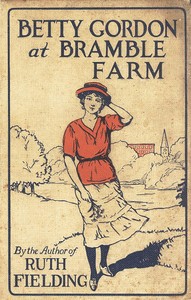
For Betty Gordon at Bramble Farm; Or, The Mystery of a Nobody — Reading Companion, the stored edition analysis reports 49,037 words, 3 hr 34 min estimated reading time, and 5 detected text sections.
The text analysis averages about 14.1 words per sentence, while the detected sections provide another way to judge how the source is divided.
Project Gutenberg metadata also associates the work with “Orphans -- Juvenile fiction,” connecting these edition facts with the source record’s subject description.
Explore this collection
These alternatives are selected using recorded categories and estimated reading time.
About 221 minutes
School Stories
50,723 recorded words. 7 minutes difference from this book's estimate.
View Gutenberg source #46872About 223 minutes
School Stories
51,201 recorded words. 9 minutes difference from this book's estimate.
View Gutenberg source #43362About 201 minutes
School Stories
46,173 recorded words. 13 minutes difference from this book's estimate.
View Gutenberg source #45308Search stored excerpts and compare books → Choose by your preferences →
Choices use stored catalog measurements. Estimates vary with reading speed. A shared category is a catalog label, not a claim that two books have the same argument or literary quality.
Search reads excerpt text stored with this catalog and links to its associated Gutenberg record. The connection is stored in the site database; this tool does not recheck that every excerpt is word-for-word identical to that external record. Excerpt search does not cover every chapter and does not verify historical publication dates.
Catalog snapshot checked: 2026-09-26. Coverage: 90 public books, 90 available source excerpts.
Calculated from edition completeness, EPUB availability, text structure and catalogue metadata. Not a user rating.
Total of 100 points, scaled to a 2.5-5.0 range. Editions with an empty description or a missing EPUB file are not scored.
Public-domain source text
The source text is kept in the dedicated reader, separate from this catalogue record and its commentary.
From the opening kitchen scene, Alice B. Emerson establishes Betty Gordon's voice through crisp, colloquial dialogue. When Mrs. Arnold urges a sunbonnet, Betty retorts, 'I know just how a horse feels with blinders on,' a simile that blends farm practicality with a child's resistance. The author avoids sentimentalizing Betty's orphan status; instead, she presents her as a spirited girl who argues her case with logic and humor. Emerson's descriptive choices—'fluting with nervous, skillful fingers' for Mrs. Arnold, 'brown eyes laughed' for Betty—anchor character in physical action. The farm setting is rendered in sensory specifics: onion beds, nickel holders, and the threat of a 'burnt black' complexion. These details ground the story in a tangible world where work and weather shape daily life.
Emerson uses dialogue to reveal personality without authorial commentary. Betty's speech is direct and often defiant: 'Take your old butter!' she storms at Mr. Peabody (chapter heading). The exclamation mark and verb 'stormed' convey her temper. In contrast, Mrs. Arnold's lines are laced with self-pity: 'nobody pays any attention to what I say.' The author lets these voices stand, trusting readers to infer power dynamics. When Betty asks a clerk about the nursery, the reply is precise: 'You go right up Main Street as far as the sidewalk goes. When it stops, keep right on.' The rhythm mimics spoken directions, creating a sense of place. Even minor characters speak in distinct cadences—the farmer's offhand remark about the nursery, the woman's urgent 'Come in, quick!' during the storm. Emerson varies sentence length in dialogue: Betty's gasps ('Where is that plaguey nursery!') contrast with Mrs. Guerin's measured hospitality. This technique makes each encounter feel immediate and unscripted.
Emerson builds the farm through tactile and visual specifics. The opening chapter mentions 'onion sets,' 'sunbonnet,' and 'ironing board'—objects that signal domestic labor. Later, the storm scene introduces 'dust of the road,' 'swaying trees,' and a 'tidy white picket fence.' The contrast between the dusty road and the 'well-kept green lawn' of the Guerin house underscores Betty's displacement. The author avoids generic descriptions; instead, she notes 'the nickel holder under the shelf' and 'cretonne-covered wicker furniture.' These details root the narrative in a particular material culture. The farm's name, Bramble Farm, suggests roughness, and the text hints at conflict through Mrs. Peabody's 'writes' (chapter title) and Betty's 'defends herself' (chapter XVI). Yet Emerson balances hardship with comfort: the Guerin home offers 'books, and much gay cretonne-covered wicker furniture.' The sensory shift from farm grit to domestic ease mirrors Betty's emotional journey.
The narrative is propelled by a series of delays and revelations. Chapter I, 'Waiting for Word,' establishes Betty's limbo: she awaits news from her uncle. This waiting motif recurs—waiting for photographs, waiting out a storm, waiting for explanations. Emerson uses weather as both obstacle and catalyst: the thunderstorm forces Betty to seek shelter, leading to the Guerin encounter. The author parcels out information gradually; the subtitle 'The Mystery of a Nobody' hints at hidden identity, but the excerpts reveal only hints. Betty's curiosity drives her to ask questions ('How far is it to the nursery?'), and each answer opens new possibilities. The structure mirrors a puzzle: characters like Mrs. Peabody and the 'poorhouse rat' (chapter VI) are introduced but not fully explained. Emerson maintains suspense through chapter titles that promise action ('The Escape,' 'Stormbound on the Way') while the text focuses on daily routines. This tension between expectation and event keeps readers engaged.
Emerson employs a close third-person perspective filtered through Betty's consciousness. The narration adopts Betty's idioms: 'plaguey nursery,' 'I'll be soaked!' The author rarely editorializes; instead, she reports Betty's sensations—'Betty had craved the sight of such a room'—allowing readers to infer her loneliness. The narrative voice shifts slightly for other characters: Mrs. Arnold's dialogue is tinged with complaint, while Mrs. Guerin speaks in warm, declarative sentences. Emerson uses free indirect discourse to blend Betty's thoughts with narration: 'Betty thought she had never heard a more cordial or welcome invitation.' This technique creates intimacy without first-person confession. The author avoids moralizing; Betty's judgments (like her dislike of sunbonnets) are presented as natural preferences. The point of view remains consistent, never straying from Betty's immediate experience. This focus gives the story a child's-eye clarity, where a storm is a physical threat and a friendly house a haven.
Readers attentive to Emerson's craft will notice how she builds a world through small, precise details: the weight of a sunbonnet, the taste of a sundae, the sound of thunder. Betty's voice—impatient, observant, resilient—carries the narrative without authorial nudging. The excerpts suggest a story where mystery unfolds through everyday encounters rather than dramatic reveals. Approach the text as a study in character revealed through action and dialogue, and let the farm's brambles and the Guerins' parlor speak for themselves.
There’s something about Betty’s stubborn kindness at Bramble Farm that lingers long after the last page, a quiet ache for fairness in small places. It reminded me, oddly, of another world where boys wrestle with similar loyalties, though their battles are chalk-dusted and summery. That old friends’ rivalry feels gentle beside Betty’s mystery, yet both whisper that home is where we learn who we are. Fairview Boys and Their Rivals; or, Bob Bouncer's Schooldays — Background and Themes holds that same warm, unassuming heartbeat.
Build a private reading journal entry for this title.