About 223 minutes
Riddle of the Storm A Mystery Story for Boys — Reading Companion
School Stories
51,201 recorded words. 2 minutes difference from this book's estimate.
View Gutenberg source #43362
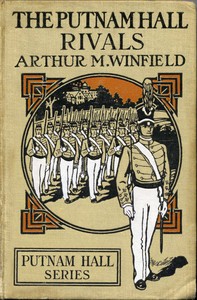
The catalog record for The Putnam Hall Rivals; or, Fun and Sport Afloat and Ashore — Inside the Classic provides practical reading context through 50,723 words, 3 hr 41 min estimated reading time, and 8 detected text sections.
The text analysis averages about 11.2 words per sentence, while the detected sections provide another way to judge how the source is divided.
Project Gutenberg metadata also associates the work with “Boarding schools -- Juvenile fiction,” connecting these edition facts with the source record’s subject description.
Explore this collection
These alternatives are selected using recorded categories and estimated reading time.
About 223 minutes
School Stories
51,201 recorded words. 2 minutes difference from this book's estimate.
View Gutenberg source #43362About 214 minutes
School Stories
49,037 recorded words. 7 minutes difference from this book's estimate.
View Gutenberg source #43907About 201 minutes
School Stories
46,173 recorded words. 20 minutes difference from this book's estimate.
View Gutenberg source #45308Search stored excerpts and compare books → Choose by your preferences →
Choices use stored catalog measurements. Estimates vary with reading speed. A shared category is a catalog label, not a claim that two books have the same argument or literary quality.
Search reads excerpt text stored with this catalog and links to its associated Gutenberg record. The connection is stored in the site database; this tool does not recheck that every excerpt is word-for-word identical to that external record. Excerpt search does not cover every chapter and does not verify historical publication dates.
Catalog snapshot checked: 2026-09-26. Coverage: 90 public books, 90 available source excerpts.
Calculated from edition completeness, EPUB availability, text structure and catalogue metadata. Not a user rating.
Total of 100 points, scaled to a 2.5-5.0 range. Editions with an empty description or a missing EPUB file are not scored.
Public-domain source text
The source text is kept in the dedicated reader, separate from this catalogue record and its commentary.
The Putnam Hall Rivals opens on ice. The first chapter, 'Out on the Ice,' immediately establishes a winter setting where boys line up for skating, and a loose skate strap delays the action. This opening is not merely seasonal color; it introduces a pattern of scenes set on frozen or open water that recur throughout the narrative—from the ice of chapter one to the lake for boat races and target practice near water. The subtitle 'Fun and Sport Afloat and Ashore' signals that the story will alternate between aquatic and land-based episodes, and the excerpts bear this out: the cadets move from ice to classroom, from boathouse to ball-field, and from a cave to a balloon ascent. The structure is episodic, with each chapter presenting a discrete incident—a game of snap-the-whip, a doctored cake, a boathouse fire—that advances the rivalry between the protagonists and the bully Dan Baxter.
The first chapter's ice setting does more than establish season; it provides a surface for physical rivalry. The boys 'line up' for skating, and the opening dialogue—'my skate strap is loose'—grounds the action in a specific, tangible detail. Ice appears again in chapter two, 'A Game of Snap-the-Whip,' where the game itself depends on slippery footing. Later, the lake becomes the site of boat races (chapter XIV) and target practice (chapter XV), where a mad dog is shot near the water's edge. The boathouse fire (chapter VIII) shifts the setting from frozen to liquid water, and the cave (chapter XVII) is reached by water. These recurring water-adjacent scenes are not merely backdrops; they are the arenas where the central rivalries play out, from the initial skating competition to the climactic boat race. The movement between ice, lake, and shore gives the narrative a rhythmic alternation between open, exposed spaces and enclosed ones like the classroom or cellar.
Dan Baxter, introduced in chapter III as 'The Bully of the School,' functions as a structural antagonist whose presence shapes the episodic plot. The excerpts show him grumbling about a rifle ('This rifle is no good!') and clashing with Captain Putnam over the mad dog incident. His role is not merely to cause trouble but to provide a consistent foil for Jack Ruddy and Pepper Ditmore. The narrative repeatedly places Baxter in scenes of competition—snap-the-whip, target practice, boat races—where his poor sportsmanship contrasts with the protagonists' fairness. This binary structure, common in school stories of the period, allows each episode to resolve around a small victory or setback. The bully's presence also motivates the protagonists' actions: Jack's decision to shoot the mad dog is partly a response to Baxter's cowardice. The excerpts do not reveal Baxter's ultimate fate, but his function as a recurring obstacle is clear from the chapter titles alone.
The subtitle 'Fun and Sport Afloat and Ashore' is not merely descriptive; it organizes the narrative into a series of discrete, often self-contained episodes. The table of contents lists thirty chapters, each with a specific activity or incident: 'A Game of Snap-the-Whip,' 'The Doctored Cake,' 'The Boathouse Fire,' 'Target Practice,' 'Up in a Balloon.' This episodic structure means that the story moves rapidly from one setting to another—from ice to classroom to lake to woods to balloon. The movement is often abrupt: a chapter ends with a challenge, and the next opens with a new scene. The excerpts show this pattern: the mad dog incident (chapter XV) leads directly to the horse-dealer's confrontation (chapter XVI), then to the cave (chapter XVII). The narrative does not linger; it proceeds by a series of set pieces, each with its own mini-conflict. This structure suits the promised 'fun and sport,' as each episode offers a new opportunity for competition or adventure.
Certain details recur across the excerpts, creating a web of connections between episodes. Dogs appear in multiple contexts: the mad dog shot by Jack, the horse-dealer's claim that the dog was 'playful,' and later, in chapter XXVIII, 'Three Boys and Three Dogs.' Rifles are another recurring object: they are used for target practice, but also become a point of contention (Baxter's complaint about his rifle) and a tool for decisive action (shooting the dog). Authority figures—Captain Putnam, the horse-dealer Sam Haverick, and the teacher Josiah Crabtree (chapter XI)—repeatedly intervene in the boys' conflicts. Captain Putnam's role is particularly consistent: he supports Jack against Haverick, instructs Baxter on rifle technique, and generally represents order. These recurring elements give the episodic narrative a sense of continuity, linking the boathouse fire to the target practice to the balloon ascent. They also ground the story in a specific material world of boarding-school life, where objects like skates, rifles, and boats are both practical tools and symbols of rivalry.
Readers approaching The Putnam Hall Rivals will find a story that moves quickly from one scene to the next, with each chapter offering a fresh contest or mishap. Pay attention to how the settings shift between open water, enclosed classrooms, and outdoor fields—this alternation is central to the book's rhythm. The bully Dan Baxter appears in nearly every episode, but his role is less about psychological depth than about providing a consistent obstacle for the heroes. The book rewards attention to recurring objects like rifles and dogs, which tie seemingly unrelated incidents together.
There’s something about the ice-locked scenes in The Putnam Hall Rivals that stayed with me—the way cold quiet slows everything down, letting feelings surface. Betty Gordon at Bramble Farm; Or, The Mystery of a Nobody — Reading Companion carries that same gentle stillness, where a lonely farmhouse holds secrets as softly as snow holds footprints. It lingered like a half-remembered winter afternoon.
Answer a few questions and save a private reflection on this device.