About 139 minutes
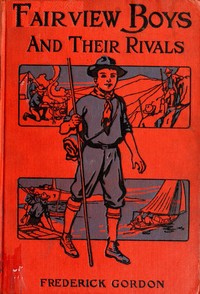
Fairview Boys and Their Rivals; or, Bob Bouncer's Schooldays — Background and Themes
School Stories
31,905 recorded words. 24 minutes difference from this book's estimate.
View Gutenberg source #51749
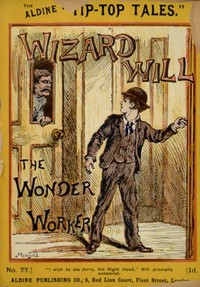
The source record for Wizard Will, the Wonder Worker — Story, Setting & Ideas measures this digital text at 37,317 words, 2 hr 43 min estimated reading time, and 6 detected text sections.
The text analysis averages about 21.1 words per sentence, while the detected sections provide another way to judge how the source is divided.
Project Gutenberg metadata also associates the work with “Detective and mystery stories,” connecting these edition facts with the source record’s subject description.
Explore this collection
These alternatives are selected using recorded categories and estimated reading time.
About 139 minutes
School Stories
31,905 recorded words. 24 minutes difference from this book's estimate.
View Gutenberg source #51749About 201 minutes
School Stories
46,173 recorded words. 38 minutes difference from this book's estimate.
View Gutenberg source #45308About 214 minutes
School Stories
49,037 recorded words. 51 minutes difference from this book's estimate.
View Gutenberg source #43907Search stored excerpts and compare books → Choose by your preferences →
Choices use stored catalog measurements. Estimates vary with reading speed. A shared category is a catalog label, not a claim that two books have the same argument or literary quality.
Search reads excerpt text stored with this catalog and links to its associated Gutenberg record. The connection is stored in the site database; this tool does not recheck that every excerpt is word-for-word identical to that external record. Excerpt search does not cover every chapter and does not verify historical publication dates.
Catalog snapshot checked: 2026-09-26. Coverage: 90 public books, 90 available source excerpts.
Calculated from edition completeness, EPUB availability, text structure and catalogue metadata. Not a user rating.
Total of 100 points, scaled to a 2.5-5.0 range. Editions with an empty description or a missing EPUB file are not scored.
Public-domain source text
The source text is kept in the dedicated reader, separate from this catalogue record and its commentary.
Prentiss Ingraham's Wizard Will, the Wonder Worker opens with a brisk, almost breathless narrative voice that wastes no time establishing stakes. The story's first chapter, 'The Boy Messenger,' plunges readers into a world where a young protagonist is immediately entangled with outlaws. The prose is direct, favoring action over introspection, and the dialogue—such as Night Hawk Jerry's warning, 'if you play us false, you'll be knifed sure'—carries a blunt menace that defines the tone.
The excerpts reveal a narrative that oscillates between tense standoffs and rapid movement. Ingraham uses short, declarative sentences to heighten urgency, as when Will Raymond 'softly he arose, grasped one of the rounds and drew himself up.' This economy of language, paired with vivid sensory details like 'the lightning came in vivid flashes,' creates a palpable sense of danger without lingering on description.
The narrative voice in Wizard Will is lean and functional, but it gains texture through dialogue that distinguishes characters by their speech patterns. Night Hawk Jerry speaks in clipped, threatening phrases: 'you'll be knifed sure, so just bear that in mind.' In contrast, Will's internal thoughts are more measured, revealing a boy weighing survival against loyalty: 'I don't wish to die, and I'd rather be rich than poor, if I can take care of my mother and sister.' This contrast in register—the outlaws' coarse directness versus Will's calculated reasoning—underscores the central conflict.
Ingraham also uses dialogue to advance plot efficiently. Jerry's exposition about Willie Rossmore, a previous boy who 'ran off and died on the prairie,' is delivered mid-conversation, layering backstory without halting momentum. The author trusts readers to absorb information through natural speech, a technique that keeps the pace swift.
The rooftop escape in Chapter XIV exemplifies Ingraham's control of pacing. The scene begins with a slow, deliberate buildup: Will lies still, 'quiet as a mouse,' observing the men fall asleep. The prose then shifts to a series of precise, incremental actions: 'Softly he arose, grasped one of the rounds and drew himself up.' Each step is described with mechanical clarity, mirroring the boy's careful movements.
Once on the roof, the pace accelerates. The storm arrives with 'lightning came in vivid flashes,' and the narrative shifts to short, staccato clauses: 'The clouds, black as night, were now flying low.' The tension peaks in a single, extended sentence: 'Step by step the boy advanced,' which stretches time and emphasizes the peril. Ingraham alternates between micro-detail—'the slats, a foot from the top'—and broad atmospheric strokes, creating a rhythm that mimics the boy's own heartbeat.
Ingraham employs a recurring structural motif: the 'game.' Night Hawk Jerry tells Will to 'play this game right,' and later the chapter title reads 'Will Plays his little Game.' This framing recurs throughout the excerpts, suggesting that the narrative itself is a series of strategic moves. The author reinforces this by structuring scenes around rules and consequences—Will's escape is a calculated risk, with 'death behind him, sure, and a struggle against death before him.'
The repetition of the word 'game' also hints at the dime novel's serialized nature, where each installment presents a new challenge. The chapters are short and action-driven, often ending on cliffhangers. The table of contents lists twenty-four chapters, each with a title that promises a discrete episode: 'The Boy Captive,' 'The Raid,' 'On Secret Service.' This modular structure allows Ingraham to maintain a brisk pace while introducing new threats and allies, keeping the reader engaged through incremental revelations.
Readers approaching Wizard Will, the Wonder Worker will find a fast-paced adventure that rewards attention to its narrative mechanics. The author's use of dialogue to convey character and plot, his careful modulation of tension in action sequences, and his structural reliance on the 'game' motif all contribute to a reading experience that is both efficient and engaging. Pay particular attention to how Ingraham balances exposition with action—the story moves quickly, but never at the expense of clarity.
There’s a certain boyish earnestness in Wizard Will, especially when danger perches on a rooftop and resourcefulness answers back. It reminds me of the quieter, storm-tossed kinship found in the Riddle of the Storm A Mystery Story for Boys — Reading Companion, where a young mind meets weather’s moody temper with equal pluck—both, in their separate shelves, whisper the same fond truth.
Save your reaction, strongest insight, and memorable passage.