About 139 minutes
Fairview Boys and Their Rivals; or, Bob Bouncer's Schooldays — Background and Themes
School Stories
31,905 recorded words. 27 minutes difference from this book's estimate.
View Gutenberg source #51749
Before opening Dotty Dimple at School — Key Ideas to Explore, the edition data offers a quick orientation: 25,686 words, 1 hr 52 min estimated reading time, and 18 detected text sections.
The text analysis averages about 14.6 words per sentence, while the detected sections provide another way to judge how the source is divided.
Project Gutenberg metadata also associates the work with “Schools -- Juvenile fiction,” connecting these edition facts with the source record’s subject description.
Explore this collection
These alternatives are selected using recorded categories and estimated reading time.
About 139 minutes
School Stories
31,905 recorded words. 27 minutes difference from this book's estimate.
View Gutenberg source #51749About 163 minutes
School Stories
37,317 recorded words. 51 minutes difference from this book's estimate.
View Gutenberg source #43301About 201 minutes
School Stories
46,173 recorded words. 89 minutes difference from this book's estimate.
View Gutenberg source #45308Search stored excerpts and compare books → Choose by your preferences →
Choices use stored catalog measurements. Estimates vary with reading speed. A shared category is a catalog label, not a claim that two books have the same argument or literary quality.
Search reads excerpt text stored with this catalog and links to its associated Gutenberg record. The connection is stored in the site database; this tool does not recheck that every excerpt is word-for-word identical to that external record. Excerpt search does not cover every chapter and does not verify historical publication dates.
Catalog snapshot checked: 2026-09-26. Coverage: 90 public books, 90 available source excerpts.
Calculated from edition completeness, EPUB availability, text structure and catalogue metadata. Not a user rating.
Total of 100 points, scaled to a 2.5-5.0 range. Editions with an empty description or a missing EPUB file are not scored.
Public-domain source text
The source text is kept in the dedicated reader, separate from this catalogue record and its commentary.
Dotty Dimple, a six-year-old with a quick temper and an even quicker change of heart, opens the first chapter by blaming her sister Prudy for wrinkling her apron, then instantly forgiving her. This pattern of impulsive emotion and immediate correction recurs throughout the excerpts, suggesting that the book's interest lies less in formal schooling than in the small moral dramas of a child's daily life. The catalog subjects label the work as a school story and a conduct-of-life tale, but the excerpts show Dotty's adventures—such as being blown through Portland streets in a snowstorm—often overshadowing classroom scenes.
The narrator adopts Dotty's perspective closely, using her vocabulary and exclamations. When Dotty says, “I wish I was a horse, and then my shoes would be nailed on,” the prose mimics her frustration. During the storm, the narration turns dramatic: “The wind shrieked at them like some wild animal.” This blend of childish idiom and heightened description creates a voice that is both intimate and theatrical. The excerpts rarely offer an adult's judgment; instead, they let Dotty's own words reveal her character—her fear, her bossiness, and her resilience.
The longest excerpt describes Dotty and her friend Tate lost in a blizzard after a nosebleed sends them outside. The scene is a sustained ordeal: the girls are blown down, disoriented by a recent fire that erased landmarks, and Tate speaks of dying. Dotty's response—“You stop it; stop dying this minute”—is both comically imperious and genuinely desperate. The storm functions as a crucible for the conduct-of-life theme, but it is not a tidy moral lesson. The girls survive by luck and stubbornness, not by any precept. The catalog subject “Girls -- Conduct of life” implies instruction, yet the excerpt shows confusion and fear more than clear guidance.
Despite the title, the excerpts contain only one brief classroom scene: the teacher, Miss Parker, sends the girls out into the storm without checking the weather. The chapter titles—'The First Day,' 'Doing a Lie,' 'The Screw-up Pencil'—suggest moral episodes, but the surviving text emphasizes domestic and outdoor adventures. The catalog subject “Schools -- Juvenile fiction” is accurate but incomplete; the school itself is a setting for social interactions rather than lessons. Dotty's real education happens in moments of crisis, such as the storm, where she must decide whether to abandon her friend or push forward.
Readers approaching Dotty Dimple at School should expect a story that moves quickly between home, school, and the streets of Portland, with Dotty's impulsive voice driving the narrative. The moral lessons are present but often emerge from accidents and arguments rather than direct instruction. The excerpts suggest that Sophie May's strength lies in capturing a child's logic and language, not in delivering tidy conclusions.
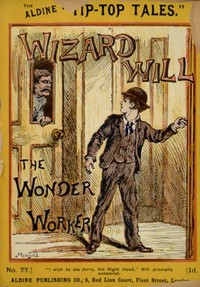
There’s something tender about watching Dotty stumble through rules and storms, that wobble between fear and pride. It reminds me of sitting with Wizard Will, the Wonder Worker — Story, Setting & Ideas, where wonder feels just as close and just as fleeting. Both hold that hush of childhood—the sense that a puddle or a page might be everything. Wizard Will, the Wonder Worker — Story, Setting & Ideas lingers the same way.
Answer a few questions and save a private reflection on this device.