About 163 minutes
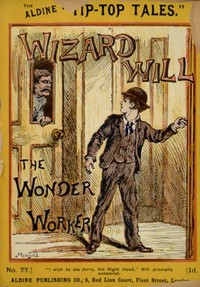
Wizard Will, the Wonder Worker — Story, Setting & Ideas
School Stories
37,317 recorded words. 24 minutes difference from this book's estimate.
View Gutenberg source #43301
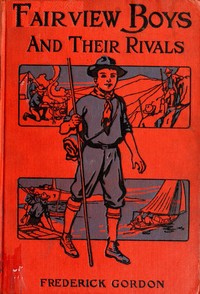
The catalog record for Fairview Boys and Their Rivals; or, Bob Bouncer's Schooldays — Background and Themes provides practical reading context through 31,905 words, 2 hr 19 min estimated reading time, and 18 detected text sections.
The text analysis averages about 11.6 words per sentence, while the detected sections provide another way to judge how the source is divided.
Project Gutenberg metadata also associates the work with “Schools -- Juvenile fiction,” connecting these edition facts with the source record’s subject description.
Explore this collection
These alternatives are selected using recorded categories and estimated reading time.
About 163 minutes
School Stories
37,317 recorded words. 24 minutes difference from this book's estimate.
View Gutenberg source #43301About 112 minutes
School Stories
25,686 recorded words. 27 minutes difference from this book's estimate.
View Gutenberg source #48951About 201 minutes
School Stories
46,173 recorded words. 62 minutes difference from this book's estimate.
View Gutenberg source #45308Search stored excerpts and compare books → Choose by your preferences →
Choices use stored catalog measurements. Estimates vary with reading speed. A shared category is a catalog label, not a claim that two books have the same argument or literary quality.
Search reads excerpt text stored with this catalog and links to its associated Gutenberg record. The connection is stored in the site database; this tool does not recheck that every excerpt is word-for-word identical to that external record. Excerpt search does not cover every chapter and does not verify historical publication dates.
Catalog snapshot checked: 2026-09-26. Coverage: 90 public books, 90 available source excerpts.
Calculated from edition completeness, EPUB availability, text structure and catalogue metadata. Not a user rating.
Total of 100 points, scaled to a 2.5-5.0 range. Editions with an empty description or a missing EPUB file are not scored.
Public-domain source text
The source text is kept in the dedicated reader, separate from this catalogue record and its commentary.
From its opening lines, Fairview Boys and Their Rivals establishes a rapid, conversational rhythm. The three chums—Frank, Sammy, and Bob—trade remarks in short, punchy sentences: “Well, fellows,” said Frank Haven, “the long vacation is over at last.” “And now for school and study,” added Sammy Brown. “And fun!” echoed Bob Bouncer. This back-and-forth immediately signals a story built on dialogue and camaraderie. Bob’s nickname is no accident; his bounding energy drives the narrative forward, even as the plot introduces a more serious undercurrent.
Bob Bouncer is introduced with a physical description that matches his name: “He skipped along the pretty village road like the active lad he was, bounding through life with a laugh and a cheer.” The narrator’s voice here is light and approving, aligning with Bob’s perspective. His dialogue is peppered with exclamations and a sense of immediacy—“If any fellows had a grand old vacation to brag of, it’s us three.” This buoyant tone dominates the early chapters, but it shifts noticeably when Bob faces suspicion over a stolen spelling list. His speech becomes clipped and guarded: “I’m sort of feeling cross, that’s all.” The change in his language mirrors the story’s pivot from carefree adventure to moral tension.
The mystery of the missing spelling list introduces a slower, more introspective pace. Bob’s internal reasoning is laid out in careful steps: “He remembered that… Bob had put some facts together that had not at first come to his mind.” The narrative lingers on his dilemma—he suspects his friend Tom Chubb but refuses to betray him. This section contrasts with the rapid-fire dialogue of earlier scenes. The teacher, Miss Williams, speaks in formal, weighty sentences: “It is my duty to tell them what has happened.” The shift in pacing emphasizes the seriousness of the accusation and Bob’s isolation. The story’s rhythm becomes one of hesitation and worry, a deliberate slowdown from the opening frolic.
The excerpts show a clear structural pattern: lively, outdoor group scenes alternate with tense, indoor confrontations. Chapter VIII, “The Mad Bull,” begins with Dick Hazelton shouting “News from the North Pole!” and quickly moves to plans for a nutting party. The dialogue is full of exclamations and laughter. Yet this chapter follows directly on Bob’s gloomy exit from the schoolroom. The juxtaposition is stark. The playground banter—“You can hold the bag,” chuckled Sammy—feels hollow after Bob’s internal turmoil. Gordon uses these shifts to keep the reader off balance, never letting the tone settle for long. The setting itself reinforces mood: the “crisp, bright days” of autumn contrast with Bob’s feeling of disgrace.
Readers will notice how Gordon’s narrative voice adapts to the story’s emotional beats. Bob’s bounding energy gives way to quiet suspicion, and the dialogue shifts from playful to guarded. Pay attention to the moments when the pace slows—those are where the real conflict lies. The mystery is not just about a lost list, but about how a boy’s conscience works when loyalty and honesty pull in opposite directions.
Reading about Bob Bouncer’s stolen spelling list brought back the hush of my own schooldays, when a small injustice felt enormous. The same quiet ache surfaced in Wizard Will, the Wonder Worker — Story, Setting & Ideas, where cleverness hides a lonely heart. Both books hold that tenderness between mischief and worry, like a breath held before laughter.
Answer a few questions and save a private reflection on this device.