About 214 minutes
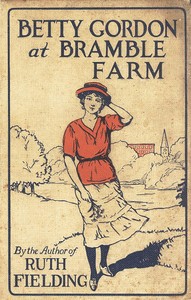
Betty Gordon at Bramble Farm; Or, The Mystery of a Nobody — Reading Companion
School Stories
49,037 recorded words. 13 minutes difference from this book's estimate.
View Gutenberg source #43907

The catalog record for The Adventure Girls in the Air — Themes and Context provides practical reading context through 46,173 words, 3 hr 21 min estimated reading time, and 22 detected text sections.
The text analysis averages about 12.4 words per sentence, while the detected sections provide another way to judge how the source is divided.
Project Gutenberg metadata also associates the work with “Adventure stories,” connecting these edition facts with the source record’s subject description.
Explore this collection
These alternatives are selected using recorded categories and estimated reading time.
About 214 minutes
School Stories
49,037 recorded words. 13 minutes difference from this book's estimate.
View Gutenberg source #43907About 221 minutes
School Stories
50,723 recorded words. 20 minutes difference from this book's estimate.
View Gutenberg source #46872About 223 minutes
School Stories
51,201 recorded words. 22 minutes difference from this book's estimate.
View Gutenberg source #43362Search stored excerpts and compare books → Choose by your preferences →
Choices use stored catalog measurements. Estimates vary with reading speed. A shared category is a catalog label, not a claim that two books have the same argument or literary quality.
Search reads excerpt text stored with this catalog and links to its associated Gutenberg record. The connection is stored in the site database; this tool does not recheck that every excerpt is word-for-word identical to that external record. Excerpt search does not cover every chapter and does not verify historical publication dates.
Catalog snapshot checked: 2026-09-26. Coverage: 90 public books, 90 available source excerpts.
Calculated from edition completeness, EPUB availability, text structure and catalogue metadata. Not a user rating.
Total of 100 points, scaled to a 2.5-5.0 range. Editions with an empty description or a missing EPUB file are not scored.
Public-domain source text
The source text is kept in the dedicated reader, separate from this catalogue record and its commentary.
The opening chapter of Clair Blank's 1936 novel introduces a beach scene where six girls and three boys watch a stunt pilot, but the conversation quickly turns to exams and college plans. The airplane is a familiar sight, not a source of wonder. This casual treatment of aviation sets the tone: the 'air' of the title is less about flight itself and more about the characters' social world, where a plane crash later serves as a plot device.
The excerpts show that the catalog subject 'Aeronautics' is accurate but secondary. The real engine of the story is the mystery surrounding Gale Howard, who loses her memory after a crash and is taken in by a French-Canadian family. The narrative shifts from group dynamics to Gale's isolated recovery, where a locket engraved with her first name becomes a clue.
The catalog lists 'Adventure stories' and 'Young women -- Juvenile fiction,' but the excerpts emphasize friendship over action. The beach scene is dominated by dialogue about grades and college preferences: 'I like Briarhurst,' Gale says, and the others agree. The group is called 'the Adventure Girls,' yet their first adventure is a conversation about exams. This suggests the book belongs to the 'series girl' tradition, where camaraderie and everyday concerns are as important as any plot.
Later, when Gale is missing, the search is mentioned but not shown in the excerpts. The focus remains on her personal struggle with amnesia. The 'adventure' is internal, not external. The catalog subject 'Adventure stories' may mislead readers expecting constant action; the text delivers a quieter, character-driven narrative.
The catalog subject 'Aeronautics' is justified by the title and the crash, but the excerpts treat flight as a means to an end. The plane in chapter I is a spectacle, not a vehicle for the characters—none of them fly it. The crash that causes Gale's amnesia happens off-screen; we only see its aftermath. The airplane later appears as a distant humming noise in the night, which Gale watches without recognition.
This limited use of aviation suggests the book is not a technical or adventure-focused aviation story. Instead, flight is a plot device to separate Gale from her friends and create mystery. The catalog subject may overstate the role of aeronautics; the excerpts show it as a backdrop rather than a central element.
The most detailed excerpt concerns Gale's recovery from amnesia. She wakes in a cabin with a French-Canadian woman, Antoinette, and a dog named Toto. The locket with 'Gale' engraved is her only link to her past. The text describes her nightly attempts to remember: 'trying to find a thread that would unravel the mystery of her past life.' This psychological focus is at odds with the catalog's 'Adventure stories' label.
The narrative slows to describe daily chores, language lessons, and the 'simple life.' Gale feels 'the freshness and cleanness of the life here.' This pastoral interlude contrasts with the group scenes. The catalog does not hint at this amnesia plot, which occupies a significant portion of the excerpts. Readers expecting non-stop aerial exploits will find a different kind of story.
The excerpts from The Adventure Girls in the Air reveal a book that balances social realism with mystery. The catalog subjects point to adventure and aviation, but the text invests more in friendship and Gale's internal journey. Readers should expect a series-style narrative where character relationships and a missing-person puzzle take precedence over technical flight details. The amnesia plot, in particular, offers a reflective counterpoint to the group's lively banter.
This 1936 story brought back summer afternoons spent on my grandmother’s porch, a stack of old series novels beside me. The girls’ easy camaraderie, their shared secrets and quiet worries, felt achingly familiar—much like the friendships in The Putnam Hall Rivals; or, Fun and Sport Afloat and Ashore — Inside the Classic. Both books understood that adventure is merely the excuse for what truly matters: being together.
A brief reflection can help important ideas stay with you longer.