About 276 minutes
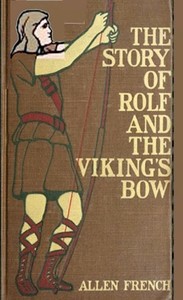
The Story of Rolf and the Viking's Bow — Text and Context
School Stories
63,380 recorded words. 98 minutes difference from this book's estimate.
View Gutenberg source #43381
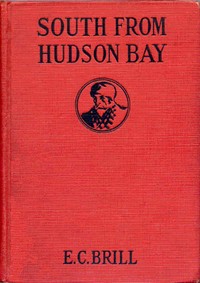
South from Hudson Bay: An Adventure and Mystery Story for Boys — A Closer Reading can be approached with a clearer sense of reading commitment from its source measurements: 85,933 words, 6 hr 14 min estimated reading time, and 11 detected text sections.
The text analysis averages about 14.8 words per sentence, while the detected sections provide another way to judge how the source is divided.
Project Gutenberg metadata also associates the work with “Adventure stories,” connecting these edition facts with the source record’s subject description.
Explore this collection
These alternatives are selected using recorded categories and estimated reading time.
About 276 minutes
School Stories
63,380 recorded words. 98 minutes difference from this book's estimate.
View Gutenberg source #43381About 272 minutes
School Stories
62,419 recorded words. 102 minutes difference from this book's estimate.
View Gutenberg source #48849About 223 minutes
School Stories
51,201 recorded words. 151 minutes difference from this book's estimate.
View Gutenberg source #43362Search stored excerpts and compare books → Choose by your preferences →
Choices use stored catalog measurements. Estimates vary with reading speed. A shared category is a catalog label, not a claim that two books have the same argument or literary quality.
Search reads excerpt text stored with this catalog and links to its associated Gutenberg record. The connection is stored in the site database; this tool does not recheck that every excerpt is word-for-word identical to that external record. Excerpt search does not cover every chapter and does not verify historical publication dates.
Catalog snapshot checked: 2026-09-26. Coverage: 90 public books, 90 available source excerpts.
Calculated from edition completeness, EPUB availability, text structure and catalogue metadata. Not a user rating.
Total of 100 points, scaled to a 2.5-5.0 range. Editions with an empty description or a missing EPUB file are not scored.
Public-domain source text
The source text is kept in the dedicated reader, separate from this catalogue record and its commentary.
The novel opens with Walter Rossel waking to an unusually quiet ship, his first awareness of arrival at Fort York filtered through sensory detail—the dead roll of the vessel, the fog veiling the shore. Brill establishes Walter's dual linguistic identity early: his native French and the English he has “picked up” during the voyage, a skill that will prove central to his interactions. The fog-bound landing, the crowd lining the shore, and the boy's disappointment at seeing “nothing but gray water” set a tone of cautious expectation rather than triumphant arrival.
Brill repeatedly foregrounds language as both a practical tool and a marker of cultural difference. Walter's English is imperfect, yet he uses it to question a sailor; later, he teaches Neil and Louis to read using his mother's Bible. The author specifies that Neil's pronunciation is that of a “Highland Scot” and his spelling erratic, while Louis can only read markings on bales. These details are not merely background—they shape the boys' relationships and Walter's role as an informal instructor. The lessons by firelight, with a charred stick on a hearth stone, underscore the scarcity of resources and the improvisation required in the settlement. Brill does not romanticize this education: Neil is restless, Louis is quick, and Walter's own literacy becomes a form of currency in a world where written communication is rare.
Walter's Swiss upbringing gives him a distinctive perspective on the terrain around Pembina. Where his companions see ordinary hills, he notes that the “first mountain” is a rough plateau, and the “second mountain” a ridge nowhere more than five hundred feet high. Yet he admits that the steep-walled ravines, eroded by streams, feel “almost mountain-like on a small scale.” Brill uses Walter's internal comparison to convey both his homesickness and his adaptability: climbing is a “real joy,” and he chooses the steepest routes deliberately. The author's descriptions of the landscape are precise—the eight-mile width of the plateau, the depth of the ravines—grounding the adventure in a specific geography. Walter's judgment that this is “mere hill country” reveals his prior experience without diminishing the challenges the terrain presents.
Brill gives Walter a quiet but firm ethical stance on trapping. Though he hunts when food is needed, he considers traps “mere instruments of torture” and resolves to find another livelihood—farming, tinkering, even working as a voyageur. This internal conflict is handled without overt moralizing; Walter simply “said nothing to his comrades of this feeling.” The author contrasts his sensibility with the practical attitudes of Neil and Louis, whose “training and way of looking at life” differ. The trap lines themselves demand long tramps of twelve or fifteen miles, and the boys build lean-to shelters for overnight stays. Brill integrates the physical toll of the work—frostbite, the crack of trees splitting in the cold—with Walter's growing unease about the activity itself. The result is a protagonist whose actions are shaped by necessity but whose values remain distinct.
Brill fills the narrative with small, concrete details that evoke the material conditions of the Red River Settlement. The boys have no paper, pens, or pencils; they write with a charred stick on a flat hearth stone. Louis's literacy is limited to “making out the markings on bales of goods and pelts” and signing his name. The cold is described not abstractly but through its effects: fingers and faces frost-bitten quickly, and the stillness of the night is shattered by the sharp crack of freezing trees. Even the food supply is precarious—game grows scarce, forcing the trap lines farther into the hills. These details accumulate to create a world where survival depends on resourcefulness and where every object, from a Bible to a lean-to, carries weight. Brill's prose is plain but precise, letting the circumstances speak for themselves.
Readers attentive to the author's choices in diction and description will find a story that rewards close attention to its small, deliberate details—the fog that hides the shore, the charred stick used as a pen, the moral discomfort that Walter keeps to himself. Brill's handling of language, landscape, and daily labor gives the adventure a texture that goes beyond plot. Approach the text as a record of how one boy navigates a world where every skill, from reading to climbing, has immediate practical value.
That rainy afternoon, tucked under a blanket with South from Hudson Bay, I kept thinking about how Walter’s quiet teaching role mattered more than any adventure. The same unhurried patience surfaced weeks later, almost by accident, when I stumbled upon Frank Armstrong, Drop Kicker — Text and Context. Different setting, same gentle thread of growth through small, steady moments.
Answer a few questions and save a private reflection on this device.