About 236 minutes
The River Motor Boat Boys on the Ohio; Or, The Three Blue Lights — Background and Themes
Childrens Adventures
54,182 recorded words. 1 minutes difference from this book's estimate.
View Gutenberg source #50327
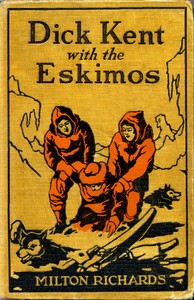
Dick Kent with the Eskimos — Background and Themes can be approached with a clearer sense of reading commitment from its source measurements: 53,902 words, 3 hr 55 min estimated reading time, and 8 detected text sections.
The text analysis averages about 18.0 words per sentence, while the detected sections provide another way to judge how the source is divided.
Project Gutenberg metadata also associates the work with “Adventure stories,” connecting these edition facts with the source record’s subject description.
Explore this collection
These alternatives are selected using recorded categories and estimated reading time.
About 236 minutes
Childrens Adventures
54,182 recorded words. 1 minutes difference from this book's estimate.
View Gutenberg source #50327About 233 minutes
Childrens Adventures
53,538 recorded words. 2 minutes difference from this book's estimate.
View Gutenberg source #50253About 231 minutes
Childrens Adventures
53,097 recorded words. 4 minutes difference from this book's estimate.
View Gutenberg source #46127Search stored excerpts and compare books → Choose by your preferences →
Choices use stored catalog measurements. Estimates vary with reading speed. A shared category is a catalog label, not a claim that two books have the same argument or literary quality.
Search reads excerpt text stored with this catalog and links to its associated Gutenberg record. The connection is stored in the site database; this tool does not recheck that every excerpt is word-for-word identical to that external record. Excerpt search does not cover every chapter and does not verify historical publication dates.
Catalog snapshot checked: 2026-09-26. Coverage: 90 public books, 90 available source excerpts.
Calculated from edition completeness, EPUB availability, text structure and catalogue metadata. Not a user rating.
Total of 100 points, scaled to a 2.5-5.0 range. Editions with an empty description or a missing EPUB file are not scored.
Public-domain source text
The source text is kept in the dedicated reader, separate from this catalogue record and its commentary.
The opening sentence of Dick Kent with the Eskimos immediately establishes a tone of grim determination: five figures, “muffled from head to foot in hooded caribou shirts and bearskin trousers,” plod across a tundra under a “ball of baleful red” sun. The author, Milton Richards (a pseudonym for M. M. Oblinger), relies on concrete, tactile details—the weight of fur, the lolling tongues of huskies, the “icy air” that makes a shout sound “startlingly loud and high”—to build a sensory landscape of cold and effort. Dialogue is clipped and functional, often serving to advance action rather than reveal interiority: “Hey, Dick!” Sandy calls, and Dick replies “I’m not tired” before dropping back. This economy of speech, paired with descriptive passages that emphasize physical strain and visual starkness, shapes a narrative voice that prioritizes forward momentum over introspection.
Richards selects nouns and verbs that emphasize the materiality of the Arctic environment. Words like “tundra,” “huskies,” “sledge,” “parka,” and “kayacks” (the text’s spelling) are not merely decorative but functional, grounding the story in a specific geography. The prose often pairs a concrete subject with a verb of forced movement: “plodded,” “dragged,” “broke through the snow.” When Dick and Sandy discover the “camp of frozen men,” the description shifts to static horror: “The body was immovable as stone to the touch, and from the depths of the parka stared a pair of glassy, sightless eyes.” The simile “immovable as stone” and the adjective “glassy” create a chilling stillness that contrasts with the earlier kinetic energy. This lexical choice—favoring hard, cold, inert imagery—reinforces the constant threat of death by exposure.
Conversations in the excerpts are terse and often transactional, revealing character through what is said—and what is left unsaid. When Sandy suggests resting, Dick’s “I’m not tired” asserts his stamina and leadership. Later, after finding the frozen men, Dick scolds himself and Sandy: “It’s silly of us to act like a couple of babies when we see two dead men.” This line does double duty: it shows Dick’s attempt to impose rationality on fear, and it exposes his own unease (he “assumed a calmness he did not feel”). Sandy’s reply—“it was worse than finding a skeleton in a dark clothes closet”—introduces a rare simile from everyday life, momentarily bridging the exotic setting and a reader’s possible experience. The dialogue never lingers; it propels the plot forward, as when the boys quickly agree to hide: “Sounds pretty good to me,” says Sandy. “Let’s mush!”
Richards uses description to create a sense of uncanny danger. The “camp of frozen men” is discovered in an “amphitheater formed by walls of ice-covered stone,” a setting that feels both natural and stage-like, as if the boys have stumbled into a tableau of death. The men are not described as corpses but as figures “from whom life had long since fled,” and their stillness is emphasized by the lack of response to Dick’s calls. The narrative voice here shifts from adventurous to Gothic: “Something in the very stillness of the two figures boded no good.” The author avoids graphic detail, instead focusing on the psychological effect—the “unpleasant goose-flesh” and the lump in the throat. This restraint makes the scene more eerie than gruesome, aligning with the book’s classification as children’s adventure while still delivering a genuine chill.
The excerpts reveal a pattern of alternating rapid action with moments of tense stillness. Chapter I opens with a long, descriptive paragraph establishing the setting and characters, then shifts to dialogue and movement. Later, the discovery of the frozen men is preceded by a stealthy crawl through a cave, described in careful detail: “the hole grew larger as the boys traversed it, and finally they were able to run along at a crouch.” The pacing slows as they approach the amphitheater, building suspense. Richards also uses chapter breaks to heighten cliffhangers: Chapter XI ends with Dick grasping the frozen man’s shoulder, and Chapter XII begins with the revelation. This structural choice—ending a chapter on a moment of horror—is a deliberate authorial technique to keep readers turning pages, typical of serial adventure fiction from the period.
Readers approaching Dick Kent with the Eskimos should attend to how Richards balances the exotic with the familiar. The Arctic is rendered through specific, often tactile details, while the dialogue keeps the boys’ reactions relatable. The author’s restraint in describing violence or gore—opting instead for psychological tension—makes the story suitable for younger readers without sacrificing suspense. Note also the recurring motif of hidden spaces (caves, ice windows, fog) that serve as both refuge and trap. These choices, grounded in the excerpts, suggest a careful craft aimed at sustaining adventure without overwhelming its audience.
There’s a particular hush in Dick Kent with the Eskimos, that patient dread of snow and silence, which always makes me think of another old shelf-mate, A Boy Crusoe; or, The Golden Treasure of the Virgin Islands — Background and Themes. Both share that same boys-own earnestness, yet the warmth of the islands somehow makes the Arctic’s chill feel all the more real, and I miss that quiet contrast.
Build a private reading journal entry for this title.