About 235 minutes
Dick Kent with the Eskimos — Background and Themes
Childrens Adventures
53,902 recorded words. 1 minutes difference from this book's estimate.
View Gutenberg source #50816
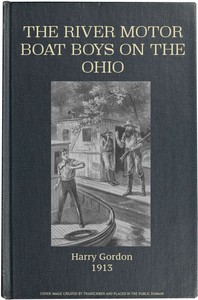
The catalog record for The River Motor Boat Boys on the Ohio; Or, The Three Blue Lights — Background and Themes provides practical reading context through 54,182 words, 3 hr 56 min estimated reading time, and 26 detected text sections.
The text analysis averages about 14.0 words per sentence, while the detected sections provide another way to judge how the source is divided.
Project Gutenberg metadata also associates the work with “Boats and boating -- Juvenile fiction,” connecting these edition facts with the source record’s subject description.
Explore this collection
These alternatives are selected using recorded categories and estimated reading time.
About 235 minutes
Childrens Adventures
53,902 recorded words. 1 minutes difference from this book's estimate.
View Gutenberg source #50816About 233 minutes
Childrens Adventures
53,538 recorded words. 3 minutes difference from this book's estimate.
View Gutenberg source #50253About 240 minutes
Childrens Adventures
55,087 recorded words. 4 minutes difference from this book's estimate.
View Gutenberg source #50102Search stored excerpts and compare books → Choose by your preferences →
Choices use stored catalog measurements. Estimates vary with reading speed. A shared category is a catalog label, not a claim that two books have the same argument or literary quality.
Search reads excerpt text stored with this catalog and links to its associated Gutenberg record. The connection is stored in the site database; this tool does not recheck that every excerpt is word-for-word identical to that external record. Excerpt search does not cover every chapter and does not verify historical publication dates.
Catalog snapshot checked: 2026-09-26. Coverage: 90 public books, 90 available source excerpts.
Calculated from edition completeness, EPUB availability, text structure and catalogue metadata. Not a user rating.
Total of 100 points, scaled to a 2.5-5.0 range. Editions with an empty description or a missing EPUB file are not scored.
Public-domain source text
The source text is kept in the dedicated reader, separate from this catalogue record and its commentary.
Harry Gordon's The River Motor Boat Boys on the Ohio; Or, The Three Blue Lights opens with a broken motor and a debate about hunting coons. The boys' dialogue—"That Kentucky shore looks to me like good hunting"—immediately establishes a colloquial, regional voice. Gordon uses dialect sparingly but effectively, as in Mose's "don't you go near those motors," to distinguish characters. The narrative voice shifts between the boys' casual banter and moments of tense description, such as when Alex observes the steamer's lights and the threat of pirates. This editorial note focuses on Gordon's authorial choices in diction, dialogue, and description, drawing on the provided excerpts.
The boys' speech patterns reveal their personalities without authorial intrusion. Cornelius Witters laughs and shakes until "little wavelets sprang from the sides of the boat," a physical detail that underscores his amusement. Alex Smithwick's retort—"Well, there's another night coming, ain't there?"—uses colloquial grammar to mark him as practical and impatient. Jule Shafer's cutting remark about Clay not knowing how to fix the motor introduces tension among the group. Gordon avoids tagging every line with adverbs; instead, he lets the rhythm of conversation carry the scene. The dialogue is functional, advancing the plot while hinting at each boy's role: Clay as the mechanic, Alex as the impulsive one, and Jule as the skeptic.
Gordon employs dialect to anchor the story in its Ohio River setting. Mose's command—"Here you, don't you go near those motors"—uses a dropped subject and imperative tone to signal his authority and regional background. The boys' own speech includes contractions like "ain't" and phrases such as "you'll get lots of coons in the middle of the afternoon," which reflect a rural, informal register. This choice contrasts with the more formal narration during action sequences, such as when Alex "restrained an exclamation of disgust with great difficulty." The shift between colloquial dialogue and standard narration creates a layered texture, grounding the adventure in a specific vernacular while maintaining readability.
Gordon's descriptive passages build atmosphere through concrete details. The steamer's lights make "a fair illumination on the bank," and the men pass "within six feet of where Alex lay, concealed." The lagoon is described as a trap, with Alex noting that the Rambler's lights "flared out" at the worst moment. The threat is articulated through the pirates' dialogue: "the lagoon is a pretty good place to leave them." Gordon uses the setting—the island, the thicket, the inner channel—to create a confined, dangerous space. The bulldog Captain Joe appears suddenly, with a "damp muzzle" thrust into Alex's face, blending animal presence with the human menace. These descriptions are economical, relying on sensory details rather than lengthy exposition.
The title's "three blue lights" appear in the chapter list and are referenced in the narrative as a signal or clue. In the excerpts, the boys discuss lights: the Rambler's lights are lit inadvertently, betraying their hiding place. The pirates' steamer also shows lights. Gordon uses lights as a motif for visibility and danger. The three blue lights likely serve as a plot device, but the excerpts show how light and darkness structure the action. Alex moves "in the night time," and the steamer's lights create "a fair illumination." The contrast between concealment and exposure drives the tension. Gordon's choice to embed the title's symbol in the narrative—rather than explaining it—invites readers to track its significance through the story.
Readers attentive to Gordon's craft will notice how he balances action with character through dialogue and description. The boys' voices remain distinct, and the setting is rendered through functional, sensory details. The three blue lights, though not fully explained in these excerpts, operate as a recurring visual cue. This edition invites observation of how Gordon constructs suspense through limited perspective—Alex's hidden viewpoint, for instance—and how the river itself becomes a character, shaping the boys' choices.
Those three blue lights on the Ohio always felt less like a signal and more like a held breath, the kind of quiet tension that lingers after the campfire dies. It's a particular old-fashioned patience, and I find myself thinking of it whenever I revisit the flood waters in The Boy Scouts in the Great Flood — Context and Discussion, where the waiting feels just as heavy.
Save your reaction, strongest insight, and memorable passage.