About 229 minutes
The Motor Rangers' Cloud Cruiser — Key Ideas to Explore
Childrens Adventures
52,474 recorded words. 2 minutes difference from this book's estimate.
View Gutenberg source #48270
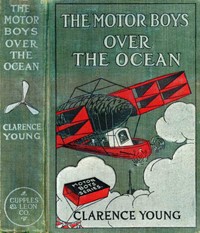
The Motor Boys Over the Ocean; Or, A Marvelous Rescue in Mid-Air — Context and Discussion can be approached with a clearer sense of reading commitment from its source measurements: 53,097 words, 3 hr 51 min estimated reading time, and 32 detected text sections.
The text analysis averages about 13.5 words per sentence, while the detected sections provide another way to judge how the source is divided.
Project Gutenberg metadata also associates the work with “Airships -- Juvenile fiction,” connecting these edition facts with the source record’s subject description.
Explore this collection
These alternatives are selected using recorded categories and estimated reading time.
About 229 minutes
Childrens Adventures
52,474 recorded words. 2 minutes difference from this book's estimate.
View Gutenberg source #48270About 233 minutes
Childrens Adventures
53,538 recorded words. 2 minutes difference from this book's estimate.
View Gutenberg source #50253About 235 minutes
Childrens Adventures
53,902 recorded words. 4 minutes difference from this book's estimate.
View Gutenberg source #50816Search stored excerpts and compare books → Choose by your preferences →
Choices use stored catalog measurements. Estimates vary with reading speed. A shared category is a catalog label, not a claim that two books have the same argument or literary quality.
Search reads excerpt text stored with this catalog and links to its associated Gutenberg record. The connection is stored in the site database; this tool does not recheck that every excerpt is word-for-word identical to that external record. Excerpt search does not cover every chapter and does not verify historical publication dates.
Catalog snapshot checked: 2026-09-26. Coverage: 90 public books, 90 available source excerpts.
Calculated from edition completeness, EPUB availability, text structure and catalogue metadata. Not a user rating.
Total of 100 points, scaled to a 2.5-5.0 range. Editions with an empty description or a missing EPUB file are not scored.
Public-domain source text
The source text is kept in the dedicated reader, separate from this catalogue record and its commentary.
Clarence Young opens The Motor Boys Over the Ocean with a preface that directly addresses his readers, noting that this is the eleventh volume in the series and hinting at a possible twelfth. The story itself begins with Ned Slade worried about his father's business troubles, a personal stake that sets the plot in motion. Young's narrative voice is brisk and functional, favoring action over introspection. Dialogue drives the story forward, often punctuated by exclamations like “By Jinks!” and “Look out or we’ll turn turtle!” The author's choice to include a preface and a detailed table of contents signals a formulaic but earnest approach, typical of early twentieth-century series fiction for boys.
Young relies heavily on dialogue to advance the plot and define his characters. In the excerpt where the Comet's anchor rips through a barn, the farmer's dialect is thick and menacing: “Don’t ye dare t’ move! … I’ve got th’ drop on ye, an’ I’m goin’ t’ keep it!” The contrast between the farmer's rural speech and the boys' more standard English underscores the social tension. Jerry responds with deliberate calm: “I guess we’re not likely to stir, until we get the anchor loose, at any rate.” This exchange not only moves the scene forward but also establishes Jerry as the cool-headed leader. Bob and Ned, by contrast, react with alarm—“Look out or we’ll turn turtle!”—showing their more impulsive natures. Young uses these vocal differences to create distinct personalities without lengthy description.
The author blends technical descriptions of the airship with slapstick mishaps. When the anchor catches on the barn, Young describes the damage in concrete terms: “boards and pieces of timber that had been ripped off, as the dangling, sharp-pointed anchor had caught in the eaves.” The Comet's subsequent descent is checked by the gas bag, which was “partly inflated ready for a landing at the balloon grounds.” This attention to mechanical function grounds the fantasy in plausible detail. Yet the scene quickly turns comic: the farmer brandishes a gun, and his hired men advance “grinning in appreciation of the plight.” Young balances the danger with absurdity, as when the farmer threatens to tie the boys up with clothesline because “th’ women folks ain’t goin’ t’ wash t’-day.” The humor arises from the collision of high-tech adventure and rural practicality.
Young's preface reveals his awareness of his audience: “Dear Boys: It hardly seems possible that I have written as many as eleven volumes of this series, yet such is the case.” This direct address establishes a friendly, almost conspiratorial tone. The narrative itself follows series conventions: a group of friends (Jerry, Ned, Bob) with distinct roles, a professor (Snodgrass) who provides comic relief with his specimen boxes, and a recurring antagonist (Noddy Nixon, mentioned in the contents). The chapters are short and titled with cliffhangers like “Held Prisoners” and “In the Hurricane.” Young's prose is efficient, rarely pausing for description beyond what is needed for action. The result is a fast-paced story that prioritizes incident over atmosphere, a choice that keeps young readers engaged but limits depth.
The setting in the excerpts is primarily the airship Comet and the rural landscape it encounters. Young uses the environment to create obstacles: the anchor snags on a barn, the craft settles “almost on the roof of the barn,” and the farmer's property becomes a prison. The airship itself is both a marvel and a liability; its need for forward motion to stay aloft is a recurring technical constraint. The ocean crossing hinted at in the title is not yet reached in the provided text, but the journey is framed as a rescue mission. Young's descriptions of the farm are minimal—“the house which the boys could just make out through the trees of the orchard”—focusing instead on the immediate physical threat. This spare approach keeps the narrative moving but leaves the world largely untextured, a trade-off typical of adventure series of the period.
Readers approaching The Motor Boys Over the Ocean should expect a formulaic but energetic adventure, where dialogue and action take precedence over description. Young's choices—the brisk pacing, the mechanical details, the dialect humor—reflect the conventions of early twentieth-century boys' series fiction. The story's appeal lies in its relentless forward motion, much like the airship it describes. For those interested in the evolution of genre fiction, this volume offers a clear example of how authors balanced technical novelty with familiar storytelling patterns.
The rain drummed on the windows as Jerry argued with that farmer over a torn barn roof, and I felt a fondness for that stubborn, anxious grip on property. It made me think of the Silver Fox Patrol, hunkered down as the Susquehanna rose around them. There’s a shared tenderness in that old-fashioned worry, a quiet panic that feels almost comforting. The Boy Scouts Along the Susquehanna; or, The Silver Fox Patrol Caught in a Flood — Reading Notes caught that same mood perfectly.
A brief reflection can help important ideas stay with you longer.