About 217 minutes
Sparky Ames of the Ferry Command — Inside the Classic
Childrens Adventures
49,816 recorded words. 2 minutes difference from this book's estimate.
View Gutenberg source #47793
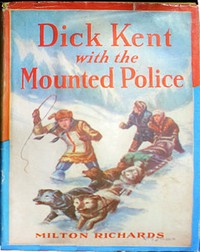
Before opening Dick Kent with the Mounted Police — Text and Context, the edition data offers a quick orientation: 49,223 words, 3 hr 35 min estimated reading time, and 7 detected text sections.
The text analysis averages about 14.0 words per sentence, while the detected sections provide another way to judge how the source is divided.
Project Gutenberg metadata also associates the work with “Adventure stories,” connecting these edition facts with the source record’s subject description.
Explore this collection
These alternatives are selected using recorded categories and estimated reading time.
About 217 minutes
Childrens Adventures
49,816 recorded words. 2 minutes difference from this book's estimate.
View Gutenberg source #47793About 210 minutes
Childrens Adventures
48,229 recorded words. 5 minutes difference from this book's estimate.
View Gutenberg source #44013About 209 minutes
Childrens Adventures
47,958 recorded words. 6 minutes difference from this book's estimate.
View Gutenberg source #45485Search stored excerpts and compare books → Choose by your preferences →
Choices use stored catalog measurements. Estimates vary with reading speed. A shared category is a catalog label, not a claim that two books have the same argument or literary quality.
Search reads excerpt text stored with this catalog and links to its associated Gutenberg record. The connection is stored in the site database; this tool does not recheck that every excerpt is word-for-word identical to that external record. Excerpt search does not cover every chapter and does not verify historical publication dates.
Catalog snapshot checked: 2026-09-26. Coverage: 90 public books, 90 available source excerpts.
Calculated from edition completeness, EPUB availability, text structure and catalogue metadata. Not a user rating.
Total of 100 points, scaled to a 2.5-5.0 range. Editions with an empty description or a missing EPUB file are not scored.
Public-domain source text
The source text is kept in the dedicated reader, separate from this catalogue record and its commentary.
The opening chapter of Dick Kent with the Mounted Police introduces the protagonists through a single, telling detail: Dick Kent tosses aside a wolf trap he had been trying to repair. This small action signals a world where repairing gear is routine, and restlessness quickly leads to new danger. The catalog subjects list the Royal Canadian Mounted Police and Northern Canada, but the excerpts show the Mounties as a distant authority—the story’s engine is the boys’ own initiative and the immediate threats of outlaws, ice, and exhaustion.
Dick’s complaint that Fort du Lac is “getting too quiet” sets the plot in motion. The excerpts repeatedly show the characters acting on impulse: Dick and Sandy decide to return to Fort Good Faith on a whim, and later Dick ventures into danger without fully weighing the risks. This restlessness is not merely a character trait but a structural device—each chapter title (e.g., “Dick Shoots the Rapids,” “Through the Flames”) promises a new crisis triggered by the protagonists’ own decisions. The narrative rarely pauses for reflection; instead, it moves from one physical ordeal to the next, with the boys’ energy driving the pace.
The excerpts depict the northern environment not as a passive setting but as a force that resists human presence. Dick mentally lists the hazards: “Treacherous rivers, forest fires, wild beasts, the danger of freezing to death in the extreme cold or getting lost in a blizzard.” This catalog of threats is borne out in the text—a river breaks under a sled, a blizzard forces a desperate camp, and the cold is described as a tangible presence. The wilderness is never conquered; it is merely endured. The characters’ survival depends on constant vigilance and physical labor, such as gathering wood or improvising shelter, rather than on any technological advantage.
One of the most striking passages in the excerpts is Dick’s encounter with a figure he initially mistakes for a ghost: “fashioned out of a substance as hard and unyielding as a block of ice.” The narrative leans into the supernatural for several paragraphs before revealing the figure is a human messenger. This moment is notable because it shows the story willing to entertain the inexplicable—Dick’s terror is described in visceral detail, and the rational explanation (a man covered in ice) does not fully dispel the eerie atmosphere. The episode suggests that the novel occasionally uses the trappings of horror to heighten tension, even within an adventure framework.
Readers approaching Dick Kent with the Mounted Police should expect a fast-paced series of survival tests rather than a detailed portrait of the Mounted Police or Canadian governance. The excerpts offer no evidence of character development or thematic depth; instead, the appeal lies in the relentless sequence of physical challenges. Pay attention to how the narrative handles moments of fear—the ghost scene, in particular, shows a willingness to blur the line between natural and supernatural that may surprise readers expecting a straightforward adventure.
That old Dick Kent story lingered because it was less about heroics than about the quiet grit of enduring cold and fear. I found myself thinking about how those northern nights felt like a held breath. Reading Motor Matt's Submarine; or, The Strange Cruise of the Grampus — A Reader’s Guide brought that same strange, submerged patience back to me—that feeling of waiting underneath everything.
Answer a few questions and save a private reflection on this device.