About 179 minutes
The Phantom Friend A Judy Bolton Mystery — Reading Companion
Childrens Adventures
41,088 recorded words. 3 minutes difference from this book's estimate.
View Gutenberg source #50604
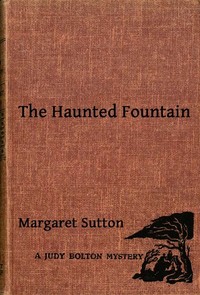
Before opening The Haunted Fountain A Judy Bolton Mystery — Key Ideas to Explore, the edition data offers a quick orientation: 40,374 words, 2 hr 56 min estimated reading time, and 6 detected text sections.
The text analysis averages about 10.5 words per sentence, while the detected sections provide another way to judge how the source is divided.
Project Gutenberg metadata also associates the work with “Mystery and detective stories,” connecting these edition facts with the source record’s subject description.
Explore this collection
These alternatives are selected using recorded categories and estimated reading time.
About 179 minutes
Childrens Adventures
41,088 recorded words. 3 minutes difference from this book's estimate.
View Gutenberg source #50604About 173 minutes
Childrens Adventures
39,725 recorded words. 3 minutes difference from this book's estimate.
View Gutenberg source #51745About 181 minutes
Childrens Adventures
41,475 recorded words. 5 minutes difference from this book's estimate.
View Gutenberg source #45397Search stored excerpts and compare books → Choose by your preferences →
Choices use stored catalog measurements. Estimates vary with reading speed. A shared category is a catalog label, not a claim that two books have the same argument or literary quality.
Search reads excerpt text stored with this catalog and links to its associated Gutenberg record. The connection is stored in the site database; this tool does not recheck that every excerpt is word-for-word identical to that external record. Excerpt search does not cover every chapter and does not verify historical publication dates.
Catalog snapshot checked: 2026-09-26. Coverage: 90 public books, 90 available source excerpts.
Calculated from edition completeness, EPUB availability, text structure and catalogue metadata. Not a user rating.
Total of 100 points, scaled to a 2.5-5.0 range. Editions with an empty description or a missing EPUB file are not scored.
Public-domain source text
The source text is kept in the dedicated reader, separate from this catalogue record and its commentary.
From its opening chapter, The Haunted Fountain establishes a distinctive narrative rhythm by alternating between Judy's confident problem-solving reputation and her immediate, visceral reactions to danger. The dialogue in the first scene—where Lois insists 'There isn’t anything that Judy can’t solve'—sets up a tension between expectation and reality that the novel exploits repeatedly. Sutton's prose shifts between brisk, declarative exchanges and longer, sensory-laden passages when the fountain's spray becomes a physical obstacle. The tunnel sequence, for instance, relies on short, urgent sentences ('Lift me up, Horace,' 'Real bad,' 'There’s no way out') that accelerate the pace, while earlier scenes use more measured description to establish setting. This variation in sentence length and dialogue density creates a rhythm that mirrors the story's central mechanism: the fountain's unpredictable flow.
Judy's narrative voice is marked by a blend of competence and vulnerability that becomes more pronounced under pressure. In the tunnel, her thoughts shift from strategic ('That drain is there to keep the tunnel from being flooded') to emotional ('I wish Peter were here to help us'). Sutton uses this internal oscillation to build tension without relying on external exposition. Horace's voice provides a contrasting, more pragmatic counterpoint—his admission 'I made a mistake' and his focus on physical solutions ('We’ve got to get it off!') ground the scene in concrete action. The dialogue often overlaps or interrupts, as when Judy cuts off Horace's cheerful speculation with 'More ifs!' This technique keeps the pace urgent and reflects the characters' differing approaches to crisis.
The fountain is not merely a setting but a mechanism that controls the story's tempo. Sutton describes its spray in sensory terms—'foaming spray,' 'falling water,' 'the pressure is terrific'—and uses its activation to mark shifts from investigation to entrapment. The tunnel's drain cover, initially a minor obstacle ('a skunk box'), becomes a critical plot point when it jams, forcing Judy and Horace to improvise. The fountain's water also serves as a barrier to perception: Judy 'couldn’t see a thing through the water,' which limits both characters' and readers' knowledge. This physical limitation heightens suspense and prevents easy solutions, as the characters must rely on memory and deduction rather than direct observation.
Sutton controls pacing by repeating key phrases with slight variations. The word 'trap' appears multiple times in the tunnel scene—Horace says 'Either way, it’s a trap!' and Judy later echoes the idea—reinforcing the sense of enclosure. Similarly, the phrase 'skunk box' recurs from Judy's childhood memory, linking past and present while adding a note of dark irony. The author also varies paragraph length: short, one-sentence paragraphs ('There isn’t time!') punctuate longer descriptive passages, creating a staccato effect during moments of high tension. This technique, combined with the countdown implied by rising water levels, gives the narrative a forward momentum that mirrors the characters' desperation.
Readers may find it useful to track how often Judy's confidence is undercut by physical circumstances—the stuck drain, the overwhelming spray, the absent Peter. Sutton's willingness to let her protagonist panic, even briefly, adds depth to a series that might otherwise rely solely on cleverness. The novel's effectiveness depends on this interplay between competence and contingency, making the fountain itself a character that resists solution.
There’s something about being trapped with Judy Bolton in that tunnel—Gloria’s spray cutting off sight and sense—that reminds me of the Colorado cliffs in The River Motor Boat Boys on the Colorado; Or, The Clue in the Rocks — Inside the Classic. Both stories hold that same old-fashioned thrill, the rock pressing close, the water hissing, time measured in held breath, not pages. I miss that feeling.
Save your reaction, strongest insight, and memorable passage.