About 352 minutes
Interrupted — A Reader’s Guide
Childrens Adventures
80,776 recorded words. 15 minutes difference from this book's estimate.
View Gutenberg source #45537
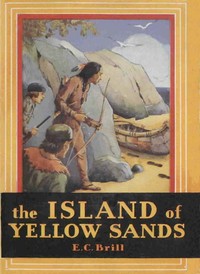
The catalog record for The Island of Yellow Sands: An Adventure and Mystery Story for Boys — Text and Context provides practical reading context through 84,337 words, 6 hr 7 min estimated reading time, and 8 detected text sections.
The text analysis averages about 20.1 words per sentence, while the detected sections provide another way to judge how the source is divided.
Project Gutenberg metadata also associates the work with “Adventure stories,” connecting these edition facts with the source record’s subject description.
Explore this collection
These alternatives are selected using recorded categories and estimated reading time.
About 352 minutes
Childrens Adventures
80,776 recorded words. 15 minutes difference from this book's estimate.
View Gutenberg source #45537About 301 minutes
Childrens Adventures
69,034 recorded words. 66 minutes difference from this book's estimate.
View Gutenberg source #45667About 292 minutes
Childrens Adventures
67,003 recorded words. 75 minutes difference from this book's estimate.
View Gutenberg source #45582Search stored excerpts and compare books → Choose by your preferences →
Choices use stored catalog measurements. Estimates vary with reading speed. A shared category is a catalog label, not a claim that two books have the same argument or literary quality.
Search reads excerpt text stored with this catalog and links to its associated Gutenberg record. The connection is stored in the site database; this tool does not recheck that every excerpt is word-for-word identical to that external record. Excerpt search does not cover every chapter and does not verify historical publication dates.
Catalog snapshot checked: 2026-09-26. Coverage: 90 public books, 90 available source excerpts.
Calculated from edition completeness, EPUB availability, text structure and catalogue metadata. Not a user rating.
Total of 100 points, scaled to a 2.5-5.0 range. Editions with an empty description or a missing EPUB file are not scored.
Public-domain source text
The source text is kept in the dedicated reader, separate from this catalogue record and its commentary.
Ethel C. Brill opens The Island of Yellow Sands with a scene of two boys startled by the sudden appearance of an Ojibwa man named Nangotook. The dialogue immediately establishes a layered cultural encounter: the dark-skinned lad, Jean, greets Nangotook in French-accented English, while the Indian responds with formal, measured speech—"My white brother speaks wisdom"—and a gesture toward the lake. Brill's choice to render Nangotook's voice in a dignified, slightly archaic register sets him apart from the boys and signals his role as a knowledgeable guide. The author also weaves Ojibwa terms like "Nanabozho" (the Sleeping Giant) and "Awishtoya" (evil man) into the narrative, grounding the story in the specific geography and folklore of Lake Superior's north shore.
Brill uses dialogue to differentiate her characters' backgrounds and relationships. Jean, the French-Canadian boy, speaks with a colloquial warmth: "Etienne, Nangotook," he cries, "how came you here?" Ronald, the red-haired Montrealer, is more direct and practical. Nangotook's speech is consistently formal and metaphorical: "Even as you, little brother, over those great waters." This contrast is not merely decorative; it reflects the power dynamics and mutual respect among the trio. When Nangotook asks Jean if he will be a trader who "steal the wits of the Indian," the question carries historical weight, and Jean's earnest reply—"Not I, Nangotook, unless I can be an honest one"—shows Brill using dialogue to address colonial trade ethics without didacticism.
Brill's descriptions of Lake Superior's landscape are anchored in specific, observable details rather than vague grandeur. The lake "gleamed between the long point and the island that protected the bay of the Grande Portage from wind and waves." She names real places—Grande Portage, the Sleeping Giant—and uses them to orient the reader geographically. When the boys are lost in fog, the narrative notes that "Nanabozho" was "faintly but unmistakably discernible lying on the water," grounding the supernatural in a recognizable landmark. The author also pays close attention to natural phenomena: the "strong north wind," the "heaving waves," and the "pebble beach" that "retained no clear traces of moccasined feet." This precision makes the setting feel tangible and inhospitable.
Brill constructs a mystery that the characters solve through careful observation and deduction. When the boys find a campsite with "the ashes of a fire and the bones and uneatable remains of a hare," Nangotook examines the site and concludes the fire had been burning "since the rain of two nights before." He then finds footprints and identifies them as belonging to a man "whose right foot turned out and who threw his weight more heavily upon that foot." This forensic detail is not just plot device; it demonstrates Brill's commitment to realistic survival skills. The characters debate whether the Frenchman Le Forgeron Tordu could have crossed the lake in bad weather, weighing evidence against superstition. Nangotook's suggestion that the man "maybe he can put spell on waters" is left unresolved, blending rational inquiry with Ojibwa belief.
Brill integrates Ojibwa words and legends into the narrative without explanatory footnotes, trusting the reader to infer meaning from context. Nangotook refers to "Nanabozho" (the Sleeping Giant) and "Awishtoya" (evil man), and Jean responds seriously: "I have heard it said that he has sold himself to the devil." This exchange shows the characters operating within a mixed cultural framework where European and Indigenous beliefs coexist. The author also uses Ojibwa place names and terms like "Grande Portage" (a historical fur-trade route) to root the story in a specific time and place. By having Nangotook speak in a formal, almost biblical cadence, Brill avoids caricature while still marking his speech as distinct from the boys' colloquial English.
Readers attentive to Brill's authorial choices will notice how she balances adventure plotting with ethnographic detail. The dialogue does not merely advance the story; it reveals character and cultural friction. The descriptions of Lake Superior's shores and weather are functional, not decorative, and the mystery unfolds through logical deduction as much as action. This is a book that rewards careful reading of its language and landscape.
Years at this desk have taught me how one story often whispers to another. The Island of Yellow Sands carries that northern lake’s patient, quiet watchfulness, the way terrain shapes a boy’s courage. I find the same attentive stillness in The Phantom Friend A Judy Bolton Mystery — Reading Companion, where loyalty grows from listening. Both feel like autumn afternoons—calm, but never alone.
A brief reflection can help important ideas stay with you longer.