About 292 minutes
Jack Ranger's Gun Club; Or, From Schoolroom to Camp and Trail — A Reader’s Guide
Childrens Adventures
67,003 recorded words. 9 minutes difference from this book's estimate.
View Gutenberg source #45582
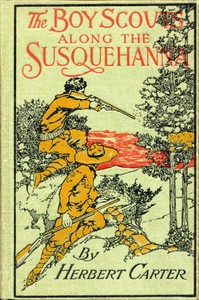
The source record for The Boy Scouts Along the Susquehanna; or, The Silver Fox Patrol Caught in a Flood — Reading Notes measures this digital text at 69,034 words, 5 hr 1 min estimated reading time, and 9 detected text sections.
The text analysis averages about 21.6 words per sentence, while the detected sections provide another way to judge how the source is divided.
Project Gutenberg metadata also associates the work with “Boy Scouts -- Juvenile fiction,” connecting these edition facts with the source record’s subject description.
Explore this collection
These alternatives are selected using recorded categories and estimated reading time.
About 292 minutes
Childrens Adventures
67,003 recorded words. 9 minutes difference from this book's estimate.
View Gutenberg source #45582About 284 minutes
Childrens Adventures
65,153 recorded words. 17 minutes difference from this book's estimate.
View Gutenberg source #44037About 282 minutes
Childrens Adventures
64,645 recorded words. 19 minutes difference from this book's estimate.
View Gutenberg source #50032Search stored excerpts and compare books → Choose by your preferences →
Choices use stored catalog measurements. Estimates vary with reading speed. A shared category is a catalog label, not a claim that two books have the same argument or literary quality.
Search reads excerpt text stored with this catalog and links to its associated Gutenberg record. The connection is stored in the site database; this tool does not recheck that every excerpt is word-for-word identical to that external record. Excerpt search does not cover every chapter and does not verify historical publication dates.
Catalog snapshot checked: 2026-09-26. Coverage: 90 public books, 90 available source excerpts.
Calculated from edition completeness, EPUB availability, text structure and catalogue metadata. Not a user rating.
Total of 100 points, scaled to a 2.5-5.0 range. Editions with an empty description or a missing EPUB file are not scored.
Public-domain source text
The source text is kept in the dedicated reader, separate from this catalogue record and its commentary.
The narrative voice in Herbert Carter's 1915 adventure shifts nimbly between brisk, colloquial dialogue and more measured descriptive passages. The opening chapter establishes a pattern: the scouts trade banter about weather signs, with Davy citing "the dampness in the air" and a gray sky, while Giraffe dismisses the prediction. This back-and-forth, punctuated by nicknames like "Step Hen" and "Bumpus," creates an informal, energetic tone that contrasts with later, more urgent scenes.
As the flood threat grows, the prose tightens. The patrol leader Thad begins "shaping his course to avoid every tree that had a suspicious look," and the language becomes more terse. The excerpts show a clear shift from leisurely observation to focused action, with the river's rising waters dictating the pace.
The scouts address each other almost exclusively by nicknames: Davy, Giraffe, Step Hen, Bumpus, Smithy, Bob White. This choice does more than signal camaraderie; it shapes the rhythm of every exchange. When Bumpus retorts with the Irishman-on-the-jury anecdote, the humor depends on the reader knowing who is speaking. The nicknames also allow Carter to differentiate voices without lengthy attributions. Giraffe tends toward boastful complaints—"all our fine tracking work counts for nothing"—while Smithy offers literary allusions, comparing their situation to Scylla and Charybdis. The verbal play is consistent, even as the situation grows dire, lending the dialogue a distinctive, almost theatrical quality.
From the first chapter, weather is not mere backdrop but a driving force. Davy's prediction of rain "like cats and dogs" is dismissed by Giraffe, yet the narrative proves Davy correct. The storm's approach is tracked through sensory details: "gray the sky," "dampness in the air," and later "wind is something fierce." The flood itself is anticipated long before it arrives, creating a slow-building tension. Once the river rises, the pace accelerates. Giraffe laments that the flood will ruin their tracking of "the hobo with the old blue army coat," and Thad acknowledges the shift: "nobody but the judge really knows a thing about our chase." The weather thus transforms the mission from a manhunt into a survival story.
Carter alternates between rapid-fire dialogue and more deliberate descriptive passages to control pacing. In the opening, the scouts' conversation is leisurely, with long speeches and jokes. As the flood nears, sentences shorten. Smithy's worry about a falling tree is met with Giraffe's quick reassurance, then Thad's practical action: "he did not think it wise to take unnecessary chances." The shift is subtle but consistent. Later, when the group is "adrift on the flood" (chapter title), the prose becomes terse and action-oriented. The excerpts show that Carter uses the scouts' own voices to signal changes in urgency—when Giraffe stops joking and Thad speaks in commands, the reader knows the danger is real.
Readers will notice how the scouts' banter persists even under threat, a stylistic choice that reinforces their resilience. The flood is not merely a plot device but a force that reshapes the narrative's rhythm. Pay attention to how Carter uses the river's rising level to compress time and heighten tension, and how the characters' voices adapt—or fail to adapt—to the changing circumstances.
There’s something about old flood stories that makes me think of the river as a quiet negotiator, trading patience for danger. I found myself wandering back to that feeling while rereading the Silver Fox Patrol’s troubles, and then I picked up Motor Matt's Promise; or, The Wreck of the Hawk — Reading Companion—just to keep the water company, I suppose. Both left me listening for the current.
Capture what you thought, learned, and would like to remember.