About 134 minutes
The Boy Scouts for City Improvement — A Closer Reading
Childrens Adventures
30,659 recorded words. 11 minutes difference from this book's estimate.
View Gutenberg source #49338
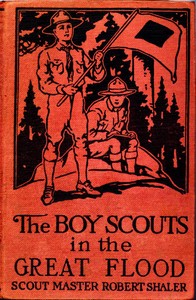
The source record for The Boy Scouts in the Great Flood — Context and Discussion measures this digital text at 33,263 words, 2 hr 25 min estimated reading time, and 5 detected text sections.
The text analysis averages about 19.4 words per sentence, while the detected sections provide another way to judge how the source is divided.
Project Gutenberg metadata also associates the work with “Mystery and detective stories,” connecting these edition facts with the source record’s subject description.
Explore this collection
These alternatives are selected using recorded categories and estimated reading time.
About 134 minutes
Childrens Adventures
30,659 recorded words. 11 minutes difference from this book's estimate.
View Gutenberg source #49338About 157 minutes
Childrens Adventures
36,032 recorded words. 12 minutes difference from this book's estimate.
View Gutenberg source #47071About 133 minutes
Childrens Adventures
30,486 recorded words. 12 minutes difference from this book's estimate.
View Gutenberg source #49269Search stored excerpts and compare books → Choose by your preferences →
Choices use stored catalog measurements. Estimates vary with reading speed. A shared category is a catalog label, not a claim that two books have the same argument or literary quality.
Search reads excerpt text stored with this catalog and links to its associated Gutenberg record. The connection is stored in the site database; this tool does not recheck that every excerpt is word-for-word identical to that external record. Excerpt search does not cover every chapter and does not verify historical publication dates.
Catalog snapshot checked: 2026-09-26. Coverage: 90 public books, 90 available source excerpts.
Calculated from edition completeness, EPUB availability, text structure and catalogue metadata. Not a user rating.
Total of 100 points, scaled to a 2.5-5.0 range. Editions with an empty description or a missing EPUB file are not scored.
Public-domain source text
The source text is kept in the dedicated reader, separate from this catalogue record and its commentary.
The Boy Scouts in the Great Flood opens with a conversation between Hugh and Billy that immediately establishes the central tension: a week of rain, melting snow, and rising river levels. Hugh’s observation that “the worst is yet to come” sets a tone of foreboding, while Billy’s complaint about the rain introduces a note of impatience. The dialogue efficiently conveys the setting—Oakvale boys stranded in Lawrence—and the looming threat of a washout. The author uses weather as both plot driver and mood setter, with the rain described as “pouring down in bucketfuls.” This opening anchors the reader in a specific moment of uncertainty, before the floodwaters have fully risen.
The excerpt relies heavily on dialogue to convey information and differentiate the scouts. Hugh speaks in measured, analytical terms, noting the “tremendous lot of snow” and the “bad combination” of rain and warmth. Billy, by contrast, uses colloquial expressions like “sick of seeing it raining” and asks for explanations, positioning himself as the reader’s surrogate. This pattern continues in the rescue scene, where commands are short and urgent: “Shall we try for some of their stuff, Hugh?” and “Count on me with you there.” The dialogue also reveals group dynamics—Monkey’s nickname and agility are mentioned, and Tip Lange’s desire for local troop credit introduces a subtle rivalry. The author uses speech to advance the plot without lengthy narration, a technique that keeps the pace brisk.
The rescue of the woman and her three children from a tilting house is the excerpt’s dramatic centerpiece. The scene is built around precise physical details: the house “gave an additionally severe roll,” the boat “rubbed against the side,” and the scouts are inside for “possibly not more than three minutes.” The author emphasizes the danger of lingering, with Hugh noting it was “the height of folly to linger another second.” The rescue includes a practical decision to retrieve clothing and quilts, underscoring the scouts’ focus on necessities. The house’s eventual collapse—rolling over and floating away—provides a stark visual of the flood’s power. The dialogue afterward, with Billy invoking “Wolf luck,” reinforces the scouts’ belief in their own resourcefulness, though Tip’s comment about “a favoring current” hints at the role of chance.
A subtle but persistent contrast runs between the visiting Oakvale Wolf Patrol and the local Lawrence troop. Tip Lange’s remark that “not all the credit of this rescue should pass from the local troop” reveals a competitive undercurrent. The Oakvale scouts, led by Hugh, take the initiative in planning the rescue, while Tip and Monkey join in to ensure the Lawrence troop shares the glory. Billy’s comment about “Wolf luck” suggests the Oakvale boys have a track record of success, which Tip hopes is “catching as the measles.” This dynamic adds a layer of social tension to the physical danger. The author does not resolve this rivalry in the excerpt, leaving it as an ongoing thread. The contrast is also evident in the scouts’ differing attitudes: Hugh is cautious and strategic, while Tip is eager to prove his troop’s worth.
Readers should pay attention to how the author balances action with character interaction. The flood is not just a backdrop but a force that tests the scouts’ training and their ability to cooperate under pressure. The rivalry between troops adds a human dimension to the survival story. The excerpt suggests that the narrative will continue to explore how the scouts adapt to escalating danger, with the flood serving as both adversary and catalyst for growth.
That moment when the scouts hold steady against the flood—it stayed with me, the quiet certainty in their hands. I felt something similar reading Dick Kent with the Eskimos — Background and Themes, where survival isn’t heroic noise but a slow, patient learning of place. Both left me thinking about how calm preparation meets wildness, and how much we carry from that.
Answer a few questions and save a private reflection on this device.