About 259 minutes
The River Motor Boat Boys on the Yukon: The Lost Mine of Rainbow Bend — Context and Discussion
Childrens Adventures
59,552 recorded words. 1 minutes difference from this book's estimate.
View Gutenberg source #50831
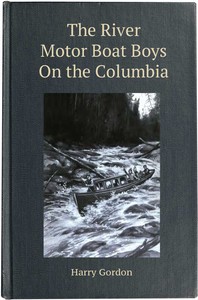
This digital edition of The River Motor Boat Boys on the Columbia; Or, The Confession of a Photograph — Text and Context is described by source-level measurements including 59,293 words, 4 hr 18 min estimated reading time, and 25 detected text sections.
The text analysis averages about 15.0 words per sentence, while the detected sections provide another way to judge how the source is divided.
Project Gutenberg metadata also associates the work with “Boats and boating -- Juvenile fiction,” connecting these edition facts with the source record’s subject description.
Explore this collection
These alternatives are selected using recorded categories and estimated reading time.
About 259 minutes
Childrens Adventures
59,552 recorded words. 1 minutes difference from this book's estimate.
View Gutenberg source #50831About 260 minutes
Childrens Adventures
59,785 recorded words. 2 minutes difference from this book's estimate.
View Gutenberg source #50132About 254 minutes
Childrens Adventures
58,332 recorded words. 4 minutes difference from this book's estimate.
View Gutenberg source #48377Search stored excerpts and compare books → Choose by your preferences →
Choices use stored catalog measurements. Estimates vary with reading speed. A shared category is a catalog label, not a claim that two books have the same argument or literary quality.
Search reads excerpt text stored with this catalog and links to its associated Gutenberg record. The connection is stored in the site database; this tool does not recheck that every excerpt is word-for-word identical to that external record. Excerpt search does not cover every chapter and does not verify historical publication dates.
Catalog snapshot checked: 2026-09-26. Coverage: 90 public books, 90 available source excerpts.
Calculated from edition completeness, EPUB availability, text structure and catalogue metadata. Not a user rating.
Total of 100 points, scaled to a 2.5-5.0 range. Editions with an empty description or a missing EPUB file are not scored.
Public-domain source text
The source text is kept in the dedicated reader, separate from this catalogue record and its commentary.
The Rambler begins its journey not on water but on a broken flatcar at the summit of the Rocky Mountains, propped upright on a spur track with a twenty-five percent pitch. This improbable image—a motor boat stranded above the timberline—sets the tone for a story that constantly mixes the familiar with the unexpected. The boys have already crossed Lake Michigan, the Soo Locks, and Lake Superior before being hoisted onto rails; now a derailment leaves them tilting like “a swaggering person with his hat set on the back of his head.”
From this opening, the narrative signals that its pleasures lie in inventive problem-solving and close observation. When Alex returns from the woods half-clothed, Clay deduces a grizzly attack not from a story but from the state of Alex’s wardrobe. Later, a waterproof envelope fished from the river contains a note that reads “Alex treed by a b…”—a fragment that the boys must interpret without the full text. The photograph of the title, never fully described in the excerpts, promises a similar puzzle: evidence that demands to be read, not just seen.
The Columbia River setting is more than backdrop; it dictates the plot’s rhythm. The boys must navigate rapids, portages, and the constant threat of losing their boat. Yet the story also pays close attention to mechanical and logistical details: how a motor boat is coaxed onto a railcar, how a broken wheel is mended, how a boat drifts within the circle of a prow lamp. These passages ground the adventure in practical know-how.
The river itself becomes a channel for communication. Gran’s note arrives not by hand but by current, thrown upstream so that it drifts down to the Rambler. The boys read the water as they read each other’s appearances: a torn sleeve, a missing coat, a boat’s silhouette in the dark. The mystery unfolds through physical clues—a ripped photograph, a waterproof envelope, a bear’s claw marks—rather than through confessions or interviews.
This emphasis on tangible evidence gives the story a detective-story structure even as it remains a river adventure. The boys are constantly interpreting signs: what does it mean that Gran was hiding in the prow of a stolen boat? Why did he signal with a thrown object instead of a shout? The answers lie in the details of the river’s behavior and the boys’ own resourcefulness.
When Alex returns from the woods “pretty well stripped,” Clay immediately guesses the cause: a grizzly. Alex is astonished—“What is there about me that tells you that I was treed by a bear?”—but the reader sees what Clay sees: torn clothing is a legible text. The scene is comic (Alex dropped matches on the bear’s “snoot”) but also instructive. The boys treat every visible detail as a clue.
This pattern recurs throughout the excerpts. Clay deduces that Gran has gone over the rapids because he saw a boat drift past; Alex confirms he saw Gran in the woods. The conversation moves by inference and cross-reference, not by direct narration. When Alex starts to describe what he saw, Clay cuts him off, and the mystery deepens. The story trusts its readers to keep up with these rapid exchanges.
The bear episode also introduces a recurring motif: the boys’ vulnerability in the wilderness. They are not invincible; they get treed, lose equipment, and misjudge situations. But their strength lies in collaboration and in reading one another’s experiences. Clay’s deduction is not magic—it is based on the same evidence any of them could have seen.
The waterproof envelope is a small but crucial prop. Gran has been carrying it “in anticipation of an emergency,” and it survives the river long enough to be netted by Clay. The note inside is incomplete—“Alex treed by a b…”—but it confirms what Clay already suspected. The photograph of the title, though not described in the excerpts, likely functions similarly: a piece of evidence that must be interpreted, perhaps torn or damaged.
This reliance on fragmentary communication gives the story a modern, almost forensic feel. The boys do not receive full explanations; they piece together events from scraps. The note, the photograph, the torn clothes, the drifting boat—all are partial records that require active reading. The story rewards attention to small details and punishes hasty conclusions.
The title’s phrase “The Confession of a Photograph” suggests that the image itself will eventually speak, but the excerpts show that the boys are already treating the world around them as a series of confessions. A ripped sleeve confesses a bear; a drifting boat confesses a secret passenger; a waterproof note confesses a message that the reader, like the boys, must complete.
Readers who enjoy puzzles embedded in action will find the Rambler’s voyage a satisfying mix of hazard and detection. The story does not pause for explanation; it moves as swiftly as the Columbia’s current, trusting its audience to notice the same clues the boys do. Pay attention to what is torn, what is thrown, and what is left unsaid—the photograph may confess, but so does every torn sleeve and drifting boat.
Sometimes a story lingers because of how its characters move through the unknown—by reading the river’s current or a stranger’s worn jacket. That quiet, methodical noticing reminds me of another old favorite, The Boy Scouts in the Saddle — Inside the Classic, where the landscape itself seems to whisper clues if you’re patient enough to listen. I think of both as gentle lessons in paying attention.
Your answers remain private and are stored only in this browser.