About 101 minutes
The Captain's Story; or, The Disobedient Son — A Reader’s Guide
Childrens Adventures
23,132 recorded words. 1 minutes difference from this book's estimate.
View Gutenberg source #51188
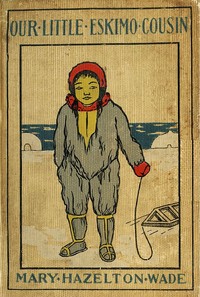
Before opening Our Little Eskimo Cousin — A Closer Reading, the edition data offers a quick orientation: 22,815 words, 1 hr 40 min estimated reading time, and 16 detected text sections.
The text analysis averages about 16.3 words per sentence, while the detected sections provide another way to judge how the source is divided.
Project Gutenberg metadata also associates the work with “Family -- Juvenile fiction,” connecting these edition facts with the source record’s subject description.
Explore this collection
These alternatives are selected using recorded categories and estimated reading time.
About 101 minutes
Childrens Adventures
23,132 recorded words. 1 minutes difference from this book's estimate.
View Gutenberg source #51188About 105 minutes
Childrens Adventures
24,074 recorded words. 5 minutes difference from this book's estimate.
View Gutenberg source #49081About 114 minutes
Childrens Adventures
26,165 recorded words. 14 minutes difference from this book's estimate.
View Gutenberg source #48999Search stored excerpts and compare books → Choose by your preferences →
Choices use stored catalog measurements. Estimates vary with reading speed. A shared category is a catalog label, not a claim that two books have the same argument or literary quality.
Search reads excerpt text stored with this catalog and links to its associated Gutenberg record. The connection is stored in the site database; this tool does not recheck that every excerpt is word-for-word identical to that external record. Excerpt search does not cover every chapter and does not verify historical publication dates.
Catalog snapshot checked: 2026-09-26. Coverage: 90 public books, 90 available source excerpts.
Calculated from edition completeness, EPUB availability, text structure and catalogue metadata. Not a user rating.
Total of 100 points, scaled to a 2.5-5.0 range. Editions with an empty description or a missing EPUB file are not scored.
Public-domain source text
The source text is kept in the dedicated reader, separate from this catalogue record and its commentary.
Mary Hazelton Wade's Our Little Eskimo Cousin (1902) builds its portrait of Arctic life through a series of short, self-contained episodes that follow the boy Etu from babyhood through a hard winter. The narrative moves repeatedly between the close, lamp-lit interior of the family's snow house and the vast, dangerous exterior of ice and ocean. This structural rhythm, paired with recurring images of light—the aurora, the seal-oil lamp, the brief winter sun—gives the book a distinctive pattern of withdrawal and return.
Within each episode, Wade often begins with a general statement (“Time passed by”) before zooming in on a specific incident. This pattern—from overview to close-up—gives the reader a sense of both the repetitive nature of daily life and the sudden disruptions that break it. The wolf attack in Chapter VIII, for example, is introduced as a sudden noise that wakes the household, then unfolds as a tense, immediate crisis.
This motif extends to the hunt. Etu searches for seal holes in the ice, where the only sign of life is a tiny breathing-hole in the snow. The contrast between the bright, open sky and the hidden, dark chamber of the seal’s den reinforces the idea that survival depends on reading the landscape’s subtle cues. The aurora, mentioned in the preface, is never described in the body of the text, but its absence underscores the harsh reality of winter.
Wade often uses the passageway—the tunnel leading from the house to the outside—as a threshold. When the wolves attack, the men “moved as quickly as possible down the passageway” to confront the threat. The passageway is both a link and a barrier, a liminal space that separates the domestic from the wild. Similarly, the seal’s breathing-hole is a passage between the water and the air, a point where the hidden becomes accessible.
Wade also uses animals to introduce information about Eskimo life. The description of the mother seal’s “dome-shaped house” and the baby seal’s habits is woven into the hunt episode, so that natural history is embedded in action. This technique keeps the exposition from feeling like a lecture, though it occasionally slows the pace. The wolves, the dogs, the seals, and the walruses each appear in specific chapters, giving the book a bestiary-like structure.
Readers may find it useful to pay attention to the way Wade uses the seasons as a framing device. The book moves from babyhood in spring through summer play, autumn hunting, and a harsh winter crisis, then ends with a feast. This seasonal arc gives the episodic chapters a sense of progression, even though the narrative does not follow a single conflict. The illustrations by L. J. Bridgman, though not reproduced here, would have reinforced the visual contrast between interior and exterior that the text establishes.
Reading about the lamp-lit warmth inside that Alaskan home made me think of my own childhood winters. Dick Kent with the Mounted Police — Text and Context carries a similar quiet pulse — light flickering against enormous dark cold. Both books feel less like adventures than like peering through frosted glass at lives held steady by small daily rituals.
Save your reaction, strongest insight, and memorable passage.