About 115 minutes
The Sunbonnet Babies in Italy — A Closer Reading
Childrens Adventures
26,450 recorded words. 1 minutes difference from this book's estimate.
View Gutenberg source #47177
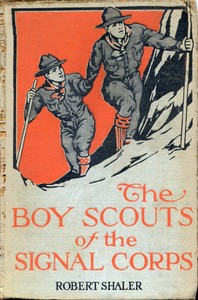
The catalog record for The Boy Scouts of the Signal Corps — Context and Discussion provides practical reading context through 26,165 words, 1 hr 54 min estimated reading time, and 4 detected text sections.
The text analysis averages about 16.7 words per sentence, while the detected sections provide another way to judge how the source is divided.
Project Gutenberg metadata also associates the work with “Mystery and detective stories,” connecting these edition facts with the source record’s subject description.
Explore this collection
These alternatives are selected using recorded categories and estimated reading time.
About 115 minutes
Childrens Adventures
26,450 recorded words. 1 minutes difference from this book's estimate.
View Gutenberg source #47177About 122 minutes
Childrens Adventures
27,982 recorded words. 8 minutes difference from this book's estimate.
View Gutenberg source #49117About 105 minutes
Childrens Adventures
24,074 recorded words. 9 minutes difference from this book's estimate.
View Gutenberg source #49081Search stored excerpts and compare books → Choose by your preferences →
Choices use stored catalog measurements. Estimates vary with reading speed. A shared category is a catalog label, not a claim that two books have the same argument or literary quality.
Search reads excerpt text stored with this catalog and links to its associated Gutenberg record. The connection is stored in the site database; this tool does not recheck that every excerpt is word-for-word identical to that external record. Excerpt search does not cover every chapter and does not verify historical publication dates.
Catalog snapshot checked: 2026-09-26. Coverage: 90 public books, 90 available source excerpts.
Calculated from edition completeness, EPUB availability, text structure and catalogue metadata. Not a user rating.
Total of 100 points, scaled to a 2.5-5.0 range. Editions with an empty description or a missing EPUB file are not scored.
Public-domain source text
The source text is kept in the dedicated reader, separate from this catalogue record and its commentary.
Robert Shaler opens The Boy Scouts of the Signal Corps with a burst of physical comedy: Hugh Hardin, the Wolf patrol leader, yanks Billy Worth from his bunk and dumps him on the floor. The scene is built on brisk, colloquial dialogue—'Scramble out of that bunky, my boy, in two wags of a Wolf’s tail'—and a precise sequence of actions: tickling, a sweep of arms, a thump, and a feigned injury. Shaler’s authorial choices here establish a tone of boisterous camaraderie and set up a narrative rhythm that alternates between slapstick and earnest problem-solving.
Shaler uses dialogue to define his characters quickly. Hugh speaks in commanding but friendly bursts: 'Wake up, son!' and 'First round is…' Billy responds with exaggerated complaints ('Ouch! whooped Billy') and sly asides. The exchanges are short, often interrupted by action, and peppered with patrol-specific slang ('bunky,' 'scout’s law'). This verbal economy keeps the pace lively and reinforces the hierarchical yet affectionate relationships among the boys.
The opening bunk scene relies on a chain of physical gags: a dangling foot tickled, a boy flung to the floor, a mock injury. Shaler controls timing by inserting brief lines of dialogue between actions—'Help! Murder!' yelled a scout—and then cutting to Hugh’s anxious query: 'Not hurt, are you, old man?' The pattern repeats later when Joe the halfbreed sings: the boys clap, Billy nudges Hugh, and the mood shifts to solemnity. These alternating beats of humor and gravity structure the narrative.
Shaler integrates signaling equipment and procedures as plot drivers. When a forest fire threatens, Hugh shouts: 'We’ve got our signal flags and heliograph with us!' The boys then use flags to relay the fire’s location to the other half of their party. The author specifies the heliograph and the need for 'clear, fullest, yet most concise' reports, grounding the adventure in real Signal Corps practices. These technical references are not mere decoration; they create urgency and require the characters to apply their training.
Joe, described as a 'halfbreed,' is depicted through a mix of stereotype and individual detail. He moves 'like an animal of the forest,' speaks in broken English ('See um, see um?'), and initially refuses to sing, suspecting mockery. Yet Shaler gives him a moment of depth: his song is 'wild and weird and full of unspeakable pathos,' and Hugh reflects that Joe knows 'no more of Indian history than a child might learn at school.' The portrayal is constrained by the era’s conventions but shows an attempt to grant Joe a distinct, if limited, interiority.
Readers should note how Shaler balances instructional content with entertainment. The signaling scenes are not lectures; they are integrated into emergencies that test the boys’ skills. The dialogue, physical comedy, and cultural details all serve a story that values competence and teamwork. Pay attention to how the author uses specific props—flags, heliograph, rifles—to advance the plot and define character roles.
Reading about the Scout patrols shouting their signal codes, I remembered my own grandfather’s old Morse key—that same urgent, secret rhythm. It felt like the brisk respect in Shaler’s dialogue. Dick Kent with the Eskimos — Background and Themes stirred something similar, a quiet awe for how young men find their footing in a vast, indifferent landscape. Both books hold that particular, vanished honesty.
Save your reaction, strongest insight, and memorable passage.