About 100 minutes
Our Little Eskimo Cousin — A Closer Reading
Childrens Adventures
22,815 recorded words. 1 minutes difference from this book's estimate.
View Gutenberg source #46484
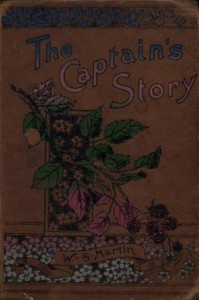
For The Captain's Story; or, The Disobedient Son — A Reader’s Guide, the stored edition analysis reports 23,132 words, 1 hr 41 min estimated reading time, and 5 detected text sections.
The text analysis averages about 24.2 words per sentence, while the detected sections provide another way to judge how the source is divided.
Project Gutenberg metadata also associates the work with “Sea stories,” connecting these edition facts with the source record’s subject description.
Explore this collection
These alternatives are selected using recorded categories and estimated reading time.
About 100 minutes
Childrens Adventures
22,815 recorded words. 1 minutes difference from this book's estimate.
View Gutenberg source #46484About 105 minutes
Childrens Adventures
24,074 recorded words. 4 minutes difference from this book's estimate.
View Gutenberg source #49081About 114 minutes
Childrens Adventures
26,165 recorded words. 13 minutes difference from this book's estimate.
View Gutenberg source #48999Search stored excerpts and compare books → Choose by your preferences →
Choices use stored catalog measurements. Estimates vary with reading speed. A shared category is a catalog label, not a claim that two books have the same argument or literary quality.
Search reads excerpt text stored with this catalog and links to its associated Gutenberg record. The connection is stored in the site database; this tool does not recheck that every excerpt is word-for-word identical to that external record. Excerpt search does not cover every chapter and does not verify historical publication dates.
Catalog snapshot checked: 2026-09-26. Coverage: 90 public books, 90 available source excerpts.
Calculated from edition completeness, EPUB availability, text structure and catalogue metadata. Not a user rating.
Total of 100 points, scaled to a 2.5-5.0 range. Editions with an empty description or a missing EPUB file are not scored.
Public-domain source text
The source text is kept in the dedicated reader, separate from this catalogue record and its commentary.
The Captain's Story opens not at sea but in a pastoral German valley, with a Wordsworth epigraph that signals homecoming. The narrative frame is established immediately: a retired captain tells his life story to a group of children, breaking off to ask their moral judgments. This layered structure—a story within a story—creates two distinct paces: the leisurely, descriptive present and the urgent, eventful past. The captain's voice dominates, shifting from reflective soliloquy to dramatic recollection, while the children's interjections (Mary's cautious approval, Willie's scriptural challenge) keep the moral lessons explicit.
The captain's narrative voice is the book's central device. It moves between personal confession and direct moral instruction, often within the same paragraph. When recounting his encounter with the beggar who had once robbed him, he first describes his anger—'I fixed my eyes sternly on his face'—then immediately undercuts his own righteousness by admitting, 'I did not even know my own heart.' This self-critical turn is characteristic: the captain presents his past actions not as models but as lessons in humility. The children's responses, especially Willie's reminder to 'love your enemies,' force the captain to refine his own interpretation, making the storytelling itself a vehicle for moral growth. The voice thus serves both as a cautionary example and as an evolving conscience, its tone alternating between remorse and didacticism.
The book's rhythm is defined by sharp contrasts in pacing. The opening chapter lingers over the Bergstrasse landscape—'the last rays of the setting sun were gilding the tops of the mountains'—in a style reminiscent of picturesque travel writing. This slow, descriptive tempo is abruptly abandoned when the captain's story begins: his youthful disobedience, flight to Amsterdam, and kidnapping compress years into a few paragraphs. The tempest scene, though brief, uses short, staccato sentences ('All hope lost—The Ship Founders—The only Survivor') to convey urgency. Later, the narrative slows again for domestic episodes (the beggar at the cottage door, the children's drowning) before accelerating through the pirate fight and final redemption. These shifts mirror the captain's emotional trajectory, from reckless haste to forced reflection.
Three motifs recur across the excerpts, each carrying symbolic weight. The portrait (mentioned in chapters IV and VIII) is never described but serves as a silent witness to the captain's guilt. The curse—the father's angry words—is invoked repeatedly: 'the curse of disobedience' haunts the captain even after his father's death, and its revocation in the final chapter provides closure. The wooden-legged beggar, revealed as the crimp from Amsterdam, literalizes the idea of past sins returning. These details are not merely plot devices; they are touchstones for the captain's moral accounting. The portrait, in particular, suggests an unseen judgment that the captain carries internally. By threading these elements through the narrative, the adapter creates a cohesive symbolic language that reinforces the theme of inescapable consequence.
Readers attentive to narrative voice will notice how the captain's self-awareness grows across the telling. The children's questions are not interruptions but catalysts: they push the captain to examine his own motives. This makes the book as much about the act of storytelling as about the story itself. The pace, too, rewards close attention—the contrast between the leisurely frame and the compressed past events creates a tension that mirrors the captain's own struggle between dwelling on guilt and moving toward repentance.
Reading The Captain's Story again, I found myself thinking about how a promise made in childhood can shape a whole life. The captain’s confession felt so heavy, yet there was a lightness in his telling. It reminded me of another old tale, Motor Matt's Promise; or, The Wreck of the Hawk — Reading Companion, where a boy’s word becomes his anchor. Both stories linger quietly in the same way.
Your answers remain private and are stored only in this browser.