About 126 minutes
Nabul, Our Little Egyptian Cousin — Background and Themes
Childrens Adventures
28,862 recorded words. 4 minutes difference from this book's estimate.
View Gutenberg source #44731
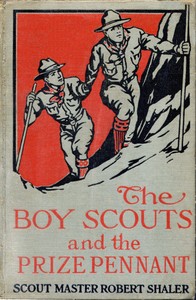
The Boy Scouts and the Prize Pennant — Text and Context can be approached with a clearer sense of reading commitment from its source measurements: 27,982 words, 2 hr 2 min estimated reading time, and 4 detected text sections.
The text analysis averages about 22.0 words per sentence, while the detected sections provide another way to judge how the source is divided.
Project Gutenberg metadata also associates the work with “Boy Scouts of America -- Juvenile fiction,” connecting these edition facts with the source record’s subject description.
Explore this collection
These alternatives are selected using recorded categories and estimated reading time.
About 126 minutes
Childrens Adventures
28,862 recorded words. 4 minutes difference from this book's estimate.
View Gutenberg source #44731About 115 minutes
Childrens Adventures
26,450 recorded words. 7 minutes difference from this book's estimate.
View Gutenberg source #47177About 129 minutes
Childrens Adventures
29,510 recorded words. 7 minutes difference from this book's estimate.
View Gutenberg source #48410Search stored excerpts and compare books → Choose by your preferences →
Choices use stored catalog measurements. Estimates vary with reading speed. A shared category is a catalog label, not a claim that two books have the same argument or literary quality.
Search reads excerpt text stored with this catalog and links to its associated Gutenberg record. The connection is stored in the site database; this tool does not recheck that every excerpt is word-for-word identical to that external record. Excerpt search does not cover every chapter and does not verify historical publication dates.
Catalog snapshot checked: 2026-09-26. Coverage: 90 public books, 90 available source excerpts.
Calculated from edition completeness, EPUB availability, text structure and catalogue metadata. Not a user rating.
Total of 100 points, scaled to a 2.5-5.0 range. Editions with an empty description or a missing EPUB file are not scored.
Public-domain source text
The source text is kept in the dedicated reader, separate from this catalogue record and its commentary.
The opening chapter, "The Value of Woodcraft," immediately establishes the troop's practical skills and group dynamics. Four Wolf patrol members—Hugh, Billy, Bud, and Arthur—are scouting for nut crops when a storm approaches. Hugh Hardin, recently promoted to assistant scout master, identifies the distant rumble as thunder, not an owl, demonstrating his woodcraft. The dialogue reveals distinct personalities: Billy is "good-natured, easy-going" but anxious, while Arthur is "a trifle more inclined to be timid." The scene sets up a pattern of observation, deduction, and action that recurs throughout the excerpts.
The middle excerpt shifts from storm survival to a dramatic rescue. The scouts find a crashed balloonist caught in a tree with a broken arm. Hugh takes charge, winding "the broad linen tape around the injured arm as neatly as any surgeon." The narrative emphasizes preparedness: Hugh uses a rope meant for cliff climbing and safety pins from his pocket. The aeronaut regains consciousness and explains he was trying to signal soldiers. This episode showcases the scouts' first-aid training and resourcefulness, a core theme. The rescue is methodical, with Hugh prioritizing bandaging before conversation.
Just as the rescue concludes, Arthur spots "two figures in strangely striped clothes" ransacking the balloon wreckage. Bud identifies them as convicts, recalling a visit to his aunt. Hugh confirms: "That's what they are, escaped convicts!" The chapter title, "The Value of Strategy," signals a shift from physical rescue to tactical problem-solving. The scouts must now protect the professor's belongings while outnumbered. This abrupt turn from medical aid to confrontation tests their nerve and planning, a pattern that likely repeats in later chapters.
Shaler's prose relies heavily on dialogue to advance the plot and reveal character. Lines like "Wasn't that the far-away hoot of an owl just then?" and "Oh! looky at what's happening to his things" drive the action. The narrative voice is straightforward, with occasional exclamations ("Gee whiz!") that reflect the boys' excitement. Chapters are short and episodic, each ending with a hook—such as Arthur's cry of consternation—that propels the reader forward. This structure suits serialized adventure fiction, making the story accessible for younger readers.
Specific objects recur across the excerpts, reinforcing the scouts' preparedness. The rope used for cliff climbing reappears to lower the balloonist. Hugh's pocket yields safety pins for the bandage. Woodcraft—reading clouds, identifying sounds—is a constant skill. These details are not merely decorative; they demonstrate the practical application of scout training. The excerpts also show a pattern of escalating challenges: from a storm to a rescue to a confrontation with convicts. First-time readers can anticipate that each chapter will introduce a new test of the boys' abilities.
These excerpts offer a clear window into the book's rhythm: a mix of outdoor lore, emergency response, and sudden peril. Readers should pay attention to how Hugh's leadership evolves and how the troop's collective skills are tested. The story does not dwell on introspection; it moves from action to action, with each chapter building on the last. For a first reading, focus on the practical details—the ropes, the bandages, the observations—as they are the keys to understanding the scouts' world.
There’s something tender about watching a story find its footing, the way The Boy Scouts and the Prize Pennant moves from quiet woodcraft to storm-torn skies—it reminds me of that other, stranger rescue, the one suspended above the ocean in The Motor Boys Over the Ocean; Or, A Marvelous Rescue in Mid-Air — Context and Discussion. Both feel like old friends remembering how to breathe.
Build a private reading journal entry for this title.