About 244 minutes
Trackers of the Fog Pack; Or, Jack Ralston Flying Blind — Story, Setting & Ideas
Childrens Adventures
56,015 recorded words. 1 minutes difference from this book's estimate.
View Gutenberg source #45973
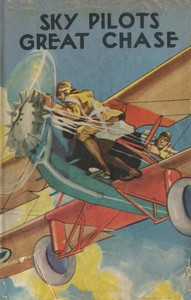
For The Sky Pilot's Great Chase; Or, Jack Ralston's Dead Stick Landing — Reading Notes, the stored edition analysis reports 56,151 words, 4 hr 5 min estimated reading time, and 31 detected text sections.
The text analysis averages about 28.3 words per sentence, while the detected sections provide another way to judge how the source is divided.
Project Gutenberg metadata also associates the work with “Detective and mystery stories,” connecting these edition facts with the source record’s subject description.
Explore this collection
These alternatives are selected using recorded categories and estimated reading time.
About 244 minutes
Childrens Adventures
56,015 recorded words. 1 minutes difference from this book's estimate.
View Gutenberg source #45973About 240 minutes
Childrens Adventures
55,087 recorded words. 5 minutes difference from this book's estimate.
View Gutenberg source #50102About 252 minutes
Childrens Adventures
57,817 recorded words. 7 minutes difference from this book's estimate.
View Gutenberg source #45262Search stored excerpts and compare books → Choose by your preferences →
Choices use stored catalog measurements. Estimates vary with reading speed. A shared category is a catalog label, not a claim that two books have the same argument or literary quality.
Search reads excerpt text stored with this catalog and links to its associated Gutenberg record. The connection is stored in the site database; this tool does not recheck that every excerpt is word-for-word identical to that external record. Excerpt search does not cover every chapter and does not verify historical publication dates.
Catalog snapshot checked: 2026-09-26. Coverage: 90 public books, 90 available source excerpts.
Calculated from edition completeness, EPUB availability, text structure and catalogue metadata. Not a user rating.
Total of 100 points, scaled to a 2.5-5.0 range. Editions with an empty description or a missing EPUB file are not scored.
Public-domain source text
The source text is kept in the dedicated reader, separate from this catalogue record and its commentary.
The novel opens with Perk's colloquial voice dominating the scene: “Well, I kinder guess now this here little ol’ ho-tel in Salt Lake City’s got our experience in Cheyenne knocked all to flinders.” This folksy, ungrammatical speech immediately establishes Perk as a comic, earthy contrast to Jack Ralston's more measured replies. The pair are operating under aliases—Perk as Gabe Smith, a woods guide, and Jack as millionaire John Jacob Astorbilt—for reasons the narrator promises to reveal later. The early chapters move at a leisurely pace, filled with banter and descriptions of meals, before the plot accelerates into airborne peril.
The excerpts show a sharp contrast in speech patterns. Perk's dialogue is peppered with contractions, slang, and exclamations like “Hot ziggety dog!” and “Gee whiz!” He speaks in long, rambling sentences, often addressing Jack as “partner” or “ol’ hoss.” Jack, by contrast, uses clipped, professional language: “Case of necessity—got to make a dead-stick landing—hold yourself steady now, Perk, and leave it to me!” This verbal divide reinforces their roles—Perk as the impulsive, grounded sidekick, Jack as the cool-headed pilot. The narrator also adopts Perk's perspective at times, using phrases like “flustrated” and “born luck,” blending the character's voice into the prose.
The narrative rhythm shifts markedly in Chapter XVII. Earlier chapters meander through hotel rooms and meals, but the dead-stick landing sequence compresses time into seconds. The narrator slows the action with internal commentary: “No wonder then, that for the brief few seconds previous to their pontoons striking, both of the chums…” This technique heightens suspense. The description of the landing is sparse—Jack's steady command, Perk's silent observation of the lake below—relying on the reader's knowledge of the stakes. The chapter title itself, “Jack’s Dead-Stick Landing,” signals a turning point, moving from setup to crisis.
Despite the adventure framing, the excerpts repeatedly return to domestic details. Perk praises the hotel's “eats” and compares the airplane's motion to a “traveler seated in the diner of a limited express train.” Jack, with his mouth full of sandwich, lectures Perk about modern airships with dining outfits and sleeping berths. These moments ground the high-flying action in bodily needs—hunger, rest, comfort. They also underline the contrast between old and new: Perk's nostalgia for simpler times versus Jack's embrace of aviation progress. The food talk serves as a counterpoint to danger, making the later crisis more jarring.
Readers should pay attention to how Newcomb uses Perk's vernacular to filter events—what he notices, misinterprets, or jokes about often signals the story's emotional tone. The dead-stick landing is not just a plot point but a test of the duo's partnership, and the language around it reveals who takes charge under pressure. The novel's episodic structure, with chapter titles like “The Wolf Pack” and “Dodging the Lookout,” suggests a series of set pieces; the excerpts hint that the most gripping moments occur when the dialogue falls away and action takes over.
Sometimes a story stays with you not for its plot but for its quiet moments—like that dead-stick landing, where everything goes still. I kept thinking of Molly and Kitty, or Peasant Life in Ireland; with Other Tales — Reading Companion, where hardship feels less like adventure and more like weather you simply live through. Both left me strangely peaceful, holding my breath without noticing.
Use these questions to collect your thoughts before moving on.