About 245 minutes
The Sky Pilot's Great Chase; Or, Jack Ralston's Dead Stick Landing — Reading Notes
Childrens Adventures
56,151 recorded words. 1 minutes difference from this book's estimate.
View Gutenberg source #45629
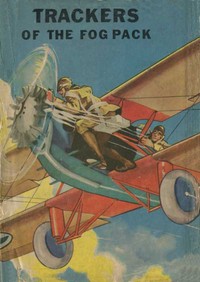
For Trackers of the Fog Pack; Or, Jack Ralston Flying Blind — Story, Setting & Ideas, the stored edition analysis reports 56,015 words, 4 hr 4 min estimated reading time, and 30 detected text sections.
The text analysis averages about 29.1 words per sentence, while the detected sections provide another way to judge how the source is divided.
Project Gutenberg metadata also associates the work with “Detective and mystery stories,” connecting these edition facts with the source record’s subject description.
Explore this collection
These alternatives are selected using recorded categories and estimated reading time.
About 245 minutes
Childrens Adventures
56,151 recorded words. 1 minutes difference from this book's estimate.
View Gutenberg source #45629About 240 minutes
Childrens Adventures
55,087 recorded words. 4 minutes difference from this book's estimate.
View Gutenberg source #50102About 252 minutes
Childrens Adventures
57,817 recorded words. 8 minutes difference from this book's estimate.
View Gutenberg source #45262Search stored excerpts and compare books → Choose by your preferences →
Choices use stored catalog measurements. Estimates vary with reading speed. A shared category is a catalog label, not a claim that two books have the same argument or literary quality.
Search reads excerpt text stored with this catalog and links to its associated Gutenberg record. The connection is stored in the site database; this tool does not recheck that every excerpt is word-for-word identical to that external record. Excerpt search does not cover every chapter and does not verify historical publication dates.
Catalog snapshot checked: 2026-09-26. Coverage: 90 public books, 90 available source excerpts.
Calculated from edition completeness, EPUB availability, text structure and catalogue metadata. Not a user rating.
Total of 100 points, scaled to a 2.5-5.0 range. Editions with an empty description or a missing EPUB file are not scored.
Public-domain source text
The source text is kept in the dedicated reader, separate from this catalogue record and its commentary.
The first chapter, 'Perk Sighs for Action,' establishes a pattern of contrast that runs through the excerpts: sunny San Diego is described in leisurely detail, yet Perk—introduced as 'this grumbler amidst such perfect surroundings'—immediately signals impatience. The narrative voice, formal in exposition but colloquial in dialogue, shifts quickly from tourist-brochure calm to the urgency of a bear siege. By Chapter XVII, the same bear has pinned the pair in a tree for over half an hour, and the tone has become claustrophobic and comic by turns. New readers should note how the author uses Perk's dialect ('some stickin'-plaster,' 'tent aout') to inject humor into tense situations, while Jack's measured replies ('Keep quiet, and don't do anything to stir him up') anchor the scene. The excerpts give no hint of the 'Fog Pack' or 'flying blind' promised by the title, so the ground-level ordeal may be a detour or a setup for aerial action to come.
The opening chapter devotes several paragraphs to San Diego's balmy breezes and tourist throngs before introducing Perk as 'one individual sauntering along Main Street' who does not share the general joy. This leisurely pace contrasts with the series' earlier titles—The Sky Detectives, Eagles of the Sky—which promise immediate airborne action. Instead, Newcomb uses the first pages to re-establish Jack and Perk as 'trusted members of Uncle Sam’s wide-flung Secret Service organization,' a recap likely aimed at new readers. The dialogue that follows is sparse; the narrator tells us Perk 'sighed for action' rather than showing him in it. This slow burn may test readers expecting a quick takeoff, but it also sets up the bear encounter as a sudden escalation from idleness to peril.
The excerpts reveal a clear division of roles through dialogue. Perk speaks in a heavy dialect ('Gee whiz! he sure is some wheeze, I’d say, Jack'; 'What if the ole geezer takes a notion to tent aout here at aour tree'), while Jack uses standard English and a reassuring tone ('Oh! let’s hope it doesn’t turn out so serious as all that'). This pairing is a staple of adventure fiction, but Newcomb gives Perk more than comic relief: his complaints about numbness and slow starvation ground the danger in physical discomfort. Jack’s warnings—'Keep quiet, and don’t do anything to stir him up more than he is already'—show him as the strategist. Readers can watch how this dynamic plays out when the action shifts from the tree to the air, if the later chapters deliver on the title's promise of flying blind.
The silver-tip bear is not merely an obstacle; it becomes a timer and a tension gauge. The excerpts track its behavior in detail: it 'moved around the base of the tree, now on all fours, and again raising up to his full height with ferocious growls.' Perk’s fear of a prolonged siege—'What if the ole geezer takes a notion to tent aout here at aour tree'—turns the animal into a threat of slow starvation rather than a quick mauling. Jack’s worry that the bear will interfere with 'any sort of business' hints that the pair have a mission beyond survival. The bear’s persistence also forces the reader to wonder how the story will resolve this standoff without violating the rules of the setting: no convenient rescue appears in the excerpts, and the characters have no tools or weapons mentioned. The resolution, when it comes, may test the story’s commitment to plausibility.
The full title—Trackers of the Fog Pack; Or, Jack Ralston Flying Blind—suggests aerial pursuit and obscured vision, yet the excerpts are entirely earthbound. The 'Fog Pack' does not appear; the only fog is metaphorical, in the sense that the characters are trapped without a clear escape. The phrase 'flying blind' might refer to a later incident, or it could be a metaphor for acting without full information—a state Jack and Perk certainly experience while treed. Readers should note that the excerpts cover only the first seventeen chapters of thirty, so the airborne elements likely dominate the second half. The bear siege may be a prelude, establishing the duo’s resourcefulness before they face a more sophisticated adversary. The contrast between the ground-level ordeal and the sky-bound title is itself a clue to the story’s structure: the heroes must survive the wilderness before they can take to the air.
These excerpts offer a narrow window into a longer work, but they reveal a writer who builds tension through physical detail and character contrast. Perk’s dialect and Jack’s composure create a familiar but effective partnership, while the bear siege shows Newcomb’s willingness to slow the plot for a set piece. Readers who enjoy the survival sequence may find the aerial chapters equally methodical; those eager for the 'Fog Pack' mystery should be patient. The story’s full arc—from San Diego streets to a tree in the wilderness to whatever skies await—remains to be discovered in the remaining thirteen chapters.
That same feeling of being caught between danger and wonder—Jack up that tree with the bear below—kept circling back to a quieter memory of the Ohio River nights. There's something about those old stories, like The River Motor Boat Boys on the Ohio; Or, The Three Blue Lights — Background and Themes, where the dark water holds its own kind of waiting. I found myself thinking about that long after closing the page.
Create a short personal record of your experience with this book.