About 252 minutes
The Bungalow Boys in the Great Northwest — Text and Context
Childrens Adventures
57,817 recorded words. 2 minutes difference from this book's estimate.
View Gutenberg source #45262
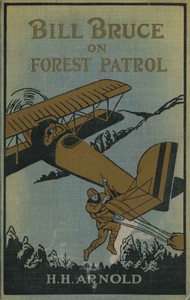
The catalog record for Bill Bruce on Forest Patrol — A Closer Reading provides practical reading context through 58,332 words, 4 hr 14 min estimated reading time, and 26 detected text sections.
The text analysis averages about 15.0 words per sentence, while the detected sections provide another way to judge how the source is divided.
Project Gutenberg metadata also associates the work with “Aeronautics -- Juvenile fiction,” connecting these edition facts with the source record’s subject description.
Explore this collection
These alternatives are selected using recorded categories and estimated reading time.
About 252 minutes
Childrens Adventures
57,817 recorded words. 2 minutes difference from this book's estimate.
View Gutenberg source #45262About 258 minutes
Childrens Adventures
59,293 recorded words. 4 minutes difference from this book's estimate.
View Gutenberg source #50123About 259 minutes
Childrens Adventures
59,552 recorded words. 5 minutes difference from this book's estimate.
View Gutenberg source #50831Search stored excerpts and compare books → Choose by your preferences →
Choices use stored catalog measurements. Estimates vary with reading speed. A shared category is a catalog label, not a claim that two books have the same argument or literary quality.
Search reads excerpt text stored with this catalog and links to its associated Gutenberg record. The connection is stored in the site database; this tool does not recheck that every excerpt is word-for-word identical to that external record. Excerpt search does not cover every chapter and does not verify historical publication dates.
Catalog snapshot checked: 2026-09-26. Coverage: 90 public books, 90 available source excerpts.
Calculated from edition completeness, EPUB availability, text structure and catalogue metadata. Not a user rating.
Total of 100 points, scaled to a 2.5-5.0 range. Editions with an empty description or a missing EPUB file are not scored.
Public-domain source text
The source text is kept in the dedicated reader, separate from this catalogue record and its commentary.
The opening chapter finds Bill Bruce lying on the bank of the McKenzie River, more interested in the Oregon woods than in a fish on his line. This casual beginning quickly gives way to a story that blends aviation with forest-fire fighting. The excerpts show Bill and his fellow pilot Bob Finch, both Army Air Service officers, working alongside Forest Service rangers. The catalog subjects list aeronautics, fire fighters, and Oregon, and the text indeed delivers all three, but the emphasis falls on the practical challenges of aerial patrol: navigating through smoke, locating fires, and coordinating with ground crews.
The excerpts repeatedly stress the difficulty of flying through smoke. Bill loses his location after going up through the smoke for twenty minutes. He relies on landmarks—a small river, a bald rocky peak—but admits he is lost. The text describes a “smoke pall” that forces low-altitude flying just above the treetops. Bill estimates a fire covers at least two thousand acres. The flight to Coos Bay takes three and a half hours, and Bill locates himself only after seeing a railroad crossing a bay. The smoke is not just atmospheric; it drives the plot, forcing the pilots to adapt their techniques.
When Goldy asks what a timber cruiser is, Kotok explains: a man who estimates timber volume for logging companies. This exchange, brief as it is, reveals the book’s interest in the practical knowledge of the forest. Kotok describes southwestern Oregon as “perhaps the least explored of any in the United States,” with no settlements and the risk that a man could get lost and never be found. The text thus positions the forest as both a resource and a wilderness that demands expertise—whether from a timber cruiser, a hunter, or an aerial patrolman.
The excerpts show a clear pattern: fly out, locate fires, return, compare counts. Bill and Kotok find eleven fires; Goldy’s crew finds twenty-four. The afternoon flight takes them deeper into the “little-traveled section” of Oregon, where the green carpet of trees looks beautiful until they hit smoke again near Rusty Butte. The fire season structure—patrol, report, return—is established early. The text also notes that fires are confined by geography, as when a river bends back on itself, creating a natural boundary. This rhythm, combined with the technical details of flying and fire spotting, gives the book a procedural feel.
Readers should pay attention to how the book balances aviation mechanics with forestry lore. The excerpts suggest that Bill Bruce on Forest Patrol is less about dramatic rescues than about the daily work of aerial surveillance in a challenging environment. The smoke pall, the reliance on landmarks, and the matter-of-fact tone all point to a story grounded in the practical realities of early forest-fire aviation.
Re-reading Bill Bruce on Forest Patrol, I kept thinking about that smoky haze hanging over the Oregon pines—how Bill had to trust instruments when the horizon vanished. It reminded me of another kind of uncertainty, the way a mystery’s answer hides in plain sight, like a fountain’s trick. That same quiet tension surfaces in The Haunted Fountain A Judy Bolton Mystery — Key Ideas to Explore, where clues scatter like drifting embers, each one waiting to be pieced together.
Save your reaction, strongest insight, and memorable passage.