About 163 minutes
Motor Matt's Hard Luck; or, The Balloon-House Plot — Reading Companion
Childrens Adventures
37,276 recorded words. 0 minutes difference from this book's estimate.
View Gutenberg source #47975
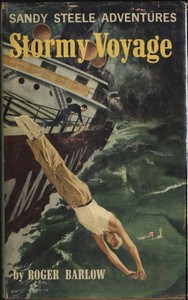
This digital edition of Stormy Voyage Sandy Steele Adventures #3 — Themes and Context is described by source-level measurements including 37,349 words, 2 hr 43 min estimated reading time, and 6 detected text sections.
The text analysis averages about 12.8 words per sentence, while the detected sections provide another way to judge how the source is divided.
Project Gutenberg metadata also associates the work with “Adventure and adventurers -- Juvenile fiction,” connecting these edition facts with the source record’s subject description.
Explore this collection
These alternatives are selected using recorded categories and estimated reading time.
About 163 minutes
Childrens Adventures
37,276 recorded words. 0 minutes difference from this book's estimate.
View Gutenberg source #47975About 162 minutes
Childrens Adventures
37,125 recorded words. 1 minutes difference from this book's estimate.
View Gutenberg source #47901About 161 minutes
Childrens Adventures
36,925 recorded words. 2 minutes difference from this book's estimate.
View Gutenberg source #48524Search stored excerpts and compare books → Choose by your preferences →
Choices use stored catalog measurements. Estimates vary with reading speed. A shared category is a catalog label, not a claim that two books have the same argument or literary quality.
Search reads excerpt text stored with this catalog and links to its associated Gutenberg record. The connection is stored in the site database; this tool does not recheck that every excerpt is word-for-word identical to that external record. Excerpt search does not cover every chapter and does not verify historical publication dates.
Catalog snapshot checked: 2026-09-26. Coverage: 90 public books, 90 available source excerpts.
Calculated from edition completeness, EPUB availability, text structure and catalogue metadata. Not a user rating.
Total of 100 points, scaled to a 2.5-5.0 range. Editions with an empty description or a missing EPUB file are not scored.
Public-domain source text
The source text is kept in the dedicated reader, separate from this catalogue record and its commentary.
The story opens with Sandy Steele vaulting from a jalopy and sprinting up his front walk, his long legs covering ground with “astonishing ease.” That physical energy—quick, purposeful movement—carries into the book’s central setting: the deck of a Great Lakes ore freighter. The narrative shifts between cramped cabins, dark passageways, and open water, each space charged with tension. From the first chapter, the author establishes a pattern of abrupt halts: Sandy stops short on his porch, and later, the boys are repeatedly brought up short by orders, accusations, or emergencies. This rhythm of motion and interruption shapes the reading experience.
The book’s structure relies on a recurring pattern: a character moves decisively, then is stopped. Sandy’s sprint to the porch ends with a sudden halt “as though tackled by an entire enemy football team.” On the ship, the boys are called to the captain’s cabin just after putting out a fire, their good deed cut short by suspicion. Jerry’s angry outburst is physically interrupted when Sandy “propelled him up the passageway and out of earshot.” These stops are not just plot devices; they mirror the boys’ loss of control. Every time they act, they are checked—by authority, by circumstance, or by their own caution. The reader feels the cumulative weight of these interruptions, building toward a breaking point.
The freighter is not merely a backdrop but an active force. The author uses the ship’s physical layout to create claustrophobia: passageways are narrow, cabins are small, and the crew’s hostility presses in. When Sandy and Jerry are ordered to report to Captain West, the passageway becomes a corridor of dread. The mate, Mr. Briggs, is described as “expert in spreading his falsehoods,” and his presence turns every space into a potential trap. Even the open deck offers no relief—the storm later transforms it into a danger zone. The ship’s isolation on the Great Lakes amplifies the tension: there is no escape, no outside help. Every decision is magnified because the setting offers no exit.
Two elements recur with symbolic weight. Fire appears first as a literal threat—the boys risk their lives to extinguish a blaze—but it also fuels the captain’s accusations. The fire becomes a weapon of false witness. Water, meanwhile, is both the ship’s medium and a source of peril: Sandy rescues a crewman from drowning, yet the captain resents the delay. The storm later turns the lake into an adversary. These elements are not merely atmospheric; they are tied to the boys’ moral position. They act rightly in the face of fire and water, but their good deeds are twisted against them. The author uses these natural forces to test not just courage, but integrity under pressure.
The dialogue carries much of the story’s emotional weight. Jerry’s voice is hot and impulsive—“I’m not going,” he says sullenly—while Sandy’s is measured, almost pleading: “You’ve got to stop talking like that!” The contrast between them creates a push-pull dynamic. Sandy’s warnings about the captain’s absolute power (“His word is law!”) are delivered in urgent whispers, while Jerry’s defiance is loud and open. The author also uses silence: after Sandy’s grim tightening of his lips, the reader knows he is holding back anger. These vocal shifts—from whisper to shout, from calm to fury—keep the tension alive even in scenes of static confrontation.
Readers who enjoy stories where setting becomes antagonist will find the Great Lakes freighter a memorable one. The book rewards attention to small physical details—the slam of a screen door, the squeeze of an arm, the narrowing of a passageway—because these moments carry the story’s emotional logic. Approach it not as a simple adventure but as a study in constrained action, where every movement is shadowed by the threat of being stopped.
There’s something about the constant tension aboard that ore freighter, the way every wave and grudge feels heavier than it should, that made me recall another voyage, the one in Vine and Olive; Or, Young America in Spain and Portugal A Story of Travel and Adventure — Reading Companion. Both stories carry that same ache of being young and far from shore, learning that maps never quite show the weather inside people.
Your answers remain private and are stored only in this browser.